Why does discipleship look so hard in Luke 9?

The lectionary reading for Trinity 2 in Year C is Luke 9.51–62, and the epistle is Gal 5.1, 13–25. Commentary on the gospel reading follows below. For video discussion of the gospel reading, see here; for video discussion of Gal 5, see here. The gospel reading from Luke 9.51–62 consists of a brief narrative of …

Continue Reading

Jesus delivers the Gerasene demoniac in Luke 8

The lectionary reading for Trinity 1, Year C, is Luke’s version of Jesus meeting and healing the demon-possessed man in the ‘region of the Gerasenes’ (Luke 8.26–39). See below for commentary on this passage. The epistle for this week is Galatians 3.23-29, and you can watch the video discussion of that passage here, and the …

Continue Reading

Preaching on the Trinity and John 16

The Sunday gospel lectionary reading for Trinity Sunday in this Year C is John 16.12–15. It is another very short reading (four verses) from the ‘farewell discourse’ of Jesus, and I think is actually quite a difficult reading to preach from. Like much of this part of the Fourth Gospel, it is reflective, repeats things …

Continue Reading

The gospel crosses to Europe in Acts 16

The Sunday lectionary reading for this week, Easter 6 in Year C, is Acts 16.9–15. We are continuing in this season to focus on the reading from Acts, which (the lectionary tells us) must be the first or second reading. This is a pivotal moment in the gentile mission, since it is the time when, …

Continue Reading

Why is the raising of Tabitha in Acts 9 important?

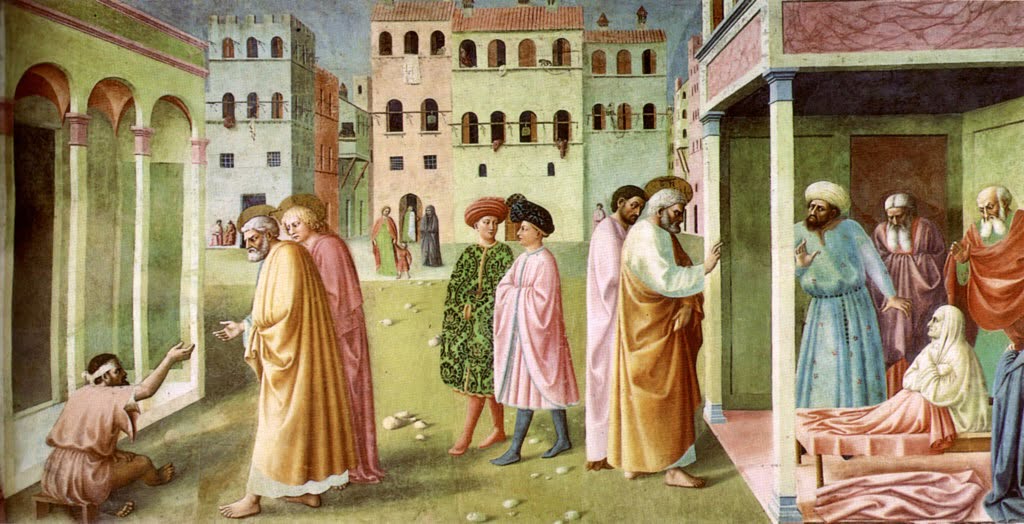
The lectionary readings for Easter 4 in Year C include three substantial readings: Acts 9.36-43, Revelation 7.9-17 and John 10.22-30. There is a note which says: ‘The reading from Acts must be used as either the first or second reading’, which suggests that this reading is thought to be particularly important—and this is characteristic of …

Continue Reading