The Trinity, Matthew 28, and the Great Commission

The Sunday gospel lectionary reading for Trinity Sunday in this Year A is Matt 28.16–20. As with the readings in Years B and C, it is short and compact. (See below for commentary on this, and here for video discussion of it, and here for video discussion of the epistle from 2 Cor 13, both also linked at the end.)

But many will not preach on this passage! For some reason, this is the one Sunday of the year when those preaching feel they should depart from the Scripture readings, and (sometimes for the only time in the year) try and preach on a theological idea. I can understand the temptation; Stephen Holmes, in his Quest for the Trinity notes the influence of Karl Barth, who commented:

The doctrine of the Trinity is what basically distinguishes the Christian doctrine of God as Christian…in contrast to  all other possible doctrines of God (cited in Holmes p 4).

I think this is true, and you only realise how surprising this is if you ask someone who has not thought about it: what is the central distinguishing feature of Christian faith? I remember being asked this when I started ordination training, and still feel my sense of surprise, first, that I hadn’t ever really considered the question and, second, that this was the answer.

But focussing on preaching on the Trinity is a bad idea for several reasons. First, why depart from preaching on Scripture on this day of all days? Secondly, why choose to preach on the Christian doctrine which, although distinctive, has been the biggest and most challenging that theologians have wrestled with down the centuries? Thirdly, why preach on something that so many get so badly wrong, with illustrations of clover leaves or ice, water and steam that alternately lapse into tritheism and modalism or (even worse and more common) make the false analogy between the ‘persons’ of the Trinity and human persons in social Trinitarianism? These problems might be a good reason to do some teaching—but whether this can be done on one Sunday of the year, in a service of worship, is another matter.

Is the Church of England growing at last?

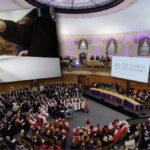
This week, the Church of England released headline figures for church attendance in 2025. This is collated from the parish returns done in October each year, and Ken Eames and the statistics team in Church House do a great job.

Before plunging into the numbers and offering some reflection, it is worth addressing the common objections to doing this at all.

‘We shouldn’t be obsessed with numbers.’ Yet we should be obsessed with people, and numbers represent people. Every number stands for a person who has come to church, and (hopefully) comes to living faith in Jesus. If your numbers in church are going down, you can be sure that fewer people are encountering his life-changing grace.

‘Weighing pigs doesn’t make them heavier.’ No, but unless you weigh them you don’t know if you are feeding them aright, and seeing a change of weight might prompt you to change their diet. The Church of England is in the remarkable position of having substantial historic assets, and has choices to make about how those historic assets are used. We have a duty before God to make decisions that might lead to people coming to faith, rather than not. And we have a duty before the Charity Commissioners to make decisions in the best interests of our organisation—based on evidence. Counting attendance numbers provides that evidence.

Empty tomb and risen Jesus in John 20

The discovery by two disciples of the empty tomb, and Mary Magdelene’s encounter with Jesus, in John 20.1–18, is one of the main options for the gospel reading for Easter Sunday in Year A (the alternative is Matt 28.1–10). And it is, in many ways, the most appealing choice, because of its polished literary form, … Continue Reading

What has happened to the Quiet Revival?

In April last year, Bible Society published a report called The Quiet Revival, and I interviewed the main researcher behind it, Rhiannon McAleer. The report made a number of claims, based on research by YouGov, including both a significant change in attitude amongst young people, and a significant change in church attendance. It provoked much … Continue Reading

Is the Church of England growing—again?

Marginally later than in some previous years, the full details of the annual returns on attendance for the Church of England has been published (‘Statistics for Mission’). This is in two parts, both linked here: a report, giving the main statistics and trends, helpfully illustrated with graphs; and the detailed breakdown by diocese in a … Continue Reading

Zacchaeus meets Jesus in Luke 19

The lectionary reading for the Fourth Sunday before Advent in Year C is the story of Zacchaeus’ encounter with Jesus in Luke 19.1–10, a story found only in this gospel. Video discussion of the passage can be found here, and is posted at the end. The epistle for this week is the challenging passage of … Continue Reading