I write a quarterly column for Preach Magazine, and for this next edition I have written an article on the nature of prophecy in Old and New Testaments. This is my draft—any comments welcome.
Prophecy forms a substantial part of the Bible—but there is much debate about the question of prophecy today, and how contemporary prophecy is related to what we find in Scripture.
Scripture as prophecy
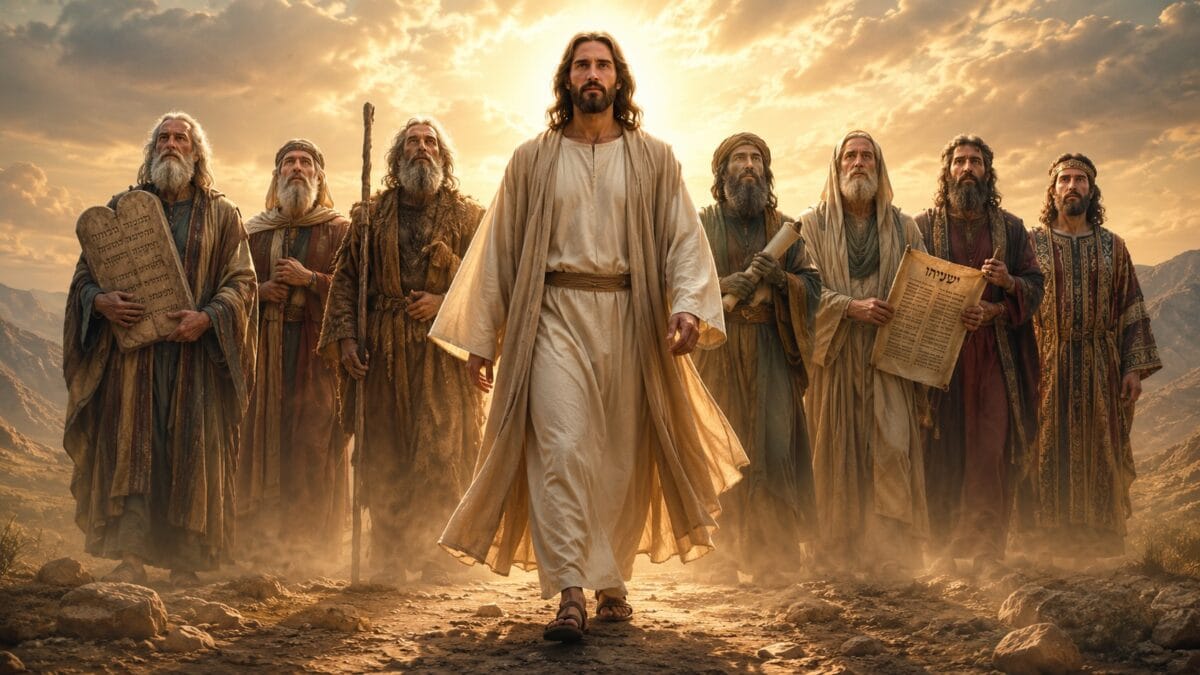
The Hebrew Bible (that is, the Bible for Jews that we call the Old Testament) is traditionally divided into three sections: the Torah (sometimes called ‘the law’); the Prophets (Neviim: which for Jews includes what we call the history books); and the Writings (Ketuvim: Psalms, Proverbs, and many of the later writings). Jews take the initial letters of these three terms to make the word Tanakh, which is how they refer to the Bible.
Two things are very striking here. First, the Prophets form a substantial part of the Old Testament; they are central, and not at all marginal—so we find Jesus and others referring to Scripture as ‘The law and the prophets’ (Matt 22.40). Secondly, including what we call the history books (Joshua, Judge, Samuel and Kings) as the ‘former prophets’ gives us an important clue as to what prophecy is about. Whilst it might include particular experiences on the part of the prophet, the main function is to give God’s perspective on what is happening. By calling these books ‘histories’ we are in danger of making the mistake of thinking that they claim to be objective accounts of the events they describe. In fact they are highly selective, and set out what is important from God’s perspective rather than ours.
The means of prophecy…
We therefore need to reflect on two things: what was the means by which the prophets operated; and what are the ends, the goals, of prophetic ministry.
There are two terms used in the Hebrew Bible for ‘prophet’. The earlier term is ro’eh meaning ‘seer’ or ‘one who sees.’
Formerly in Israel, when a man went to inquire of God, he said, ‘Come, let us go to the seer’; for today’s ‘prophet’ was formerly called a ‘seer.’ (1 Sam 9.9)
So the prophet was one who had insight, who could see things that others could not. Specifically, this was someone who could see God’s purposes in the events around them, when these purposes might not be clear to the ordinary person.
But the second term mentioned here is the more common, navi (plural neviim). There is debate about the derivation of this term, but it likely includes the sense of someone who is called and appointed to this role by God, and someone who is a herald or a spokesman.
Thus we commonly find ‘call narratives’ at the start of prophetic books, especially Amos, Isaiah, Jeremiah, and Ezekiel, where the prophet describes the encounter with God which (sometimes reluctantly) leads them into this ministry. Amos’ account is especially interesting, since he protests that he is ‘neither a prophet nor the son of a prophet’ but a herdsman and farmer—yet God called him to prophesy (Amos 7.14).
This sense of individual call appears to be in tension with a description of the office of the prophet. At different times in Israel’s history, there appear to have been bands of prophets who had a recognised role.
Soon after he has been anointed at king, Saul meets a band of prophets, and ‘the Spirit of God rushed upon him’ and he begins to prophesy with them. The surprise of the people shows that the prophet was an office distinct from the of being king. Something similar happens again in 1 Sam 19.23.
These groups of prophets appear to have developed around the ministry of Samuel, and we find explicit mention of ‘the sons of the prophets’ associated with Elijah and Elisha (see 1 Kings 20.35, 2 Kings 4.38–44, and 2 Kings 6.1–7).
These groups appear to have at times been ‘seized’ by the Spirit of God—and the major prophets all seem to have had what we might call visionary experiences. As prophecy developed into apocalyptic (in Ezekiel, Daniel, and Zechariah) these visions appear to be more outlandish, and requiring careful interpretation to make sense of them. So we need to reflect on their purpose.
…and the ends of prophecy
The prophets, whilst themselves looking up to God, invite the people of God (including those in positions of power) to look both backwards and forwards.
The prophets often functioned God’s ‘covenant reinforcement mediators’ (in the words of Gordon Fee and Douglas Stuart), calling Israel back to faithfulness. They confronted kings, priests, and the people over injustice, idolatry, and social oppression—on the basis of God’s past action and his call to his people to live distinctively, reflecting his character. We see this especially in Amos, Isaiah, and Micah.
But the people have not only broken God’s law (Amos), they have also broken God’s heart (Hosea). So the prophets also call the people back to their first love—and proclaim that, when exile comes, this is God’s aim, to woo them back to faithfulness. This was the dominant function of OT prophecy.
Allied with that, they also looked forward—negatively, warning the people about what would happen if they continued in disobedience, but positively, anticipating the time when God would restore his people, and they would be transformed in love and obedience to him. They point forward to a new covenant (Jeremiah 31), a suffering servant (Isaiah 53), a restored Israel (Ezekiel 37), and an outpouring of God’s Spirit on all people (Joel 2).
Yet God’s plan is much bigger than the covenant with his people; his ambition is to restore all of creation:
It is too small a thing for you to be my servant to restore the tribes of Jacob and bring back those of Israel I have kept. I will also make you a light for the Gentiles, that my salvation may reach to the ends of the earth (Isa 49.6).
God does not merely want to undo the failure of his people; he wants to undo the very causes of that, and remake the world (Is 65.17).
The new dawn of prophecy
The New Testament both inherits and transforms the OT understanding of prophecy, particularly in light of Christ and Pentecost.
Jesus is presented as the ultimate prophet (see Deut 18:15 quoted in Acts 3:22), and his coming fulfils the OT prophetic trajectory. Like the prophets of old, in his teaching he called people back to the law from God—not to the letter as interpreted by the Pharisees and scribes, but to its heart intention, and this was the main cause of his conflict with other Jewish leaders.
And he looked forward too—to his death and resurrection, to the destruction of the temple, and to the time when he would reign at God’s right hand, and eventually come again to unite heaven and earth.
But where prophecy was limited to a defined group, and key individuals, now in Jesus Moses’ hope that all God’s people would prophesy (Num 11.29) is fulfilled. The outpouring of the Spirit at Pentecost, says Peter, is ‘that about which the prophet Joel wrote’:
In the last days, God says, I will pour out my Spirit on all people. Your sons and daughters will prophesy, your young men will see visions, your old men will dream dreams (Acts 2.17)
The new promised age to come has broken into this age of sin and death, and all God’s people now enjoy that ministry which was once the privilege of the few—to see what God is doing, to bring his perspective on what is happening in the world, and to proclaim this to those who need to hear it.
So it is no surprise that Paul includes prophecy as a gift of the Spirit given to the people of God in Jesus (1 Cor 12–14). He ranks it highly—even above tongues—because it edifies the church. Its purpose is strengthening, encouraging, and comforting believers (1 Cor 14:3). This is a central part of what the Spirit does amongst his people.
(We should note in passing that, despite so many of the prophetic figures in the Old Testament being male, this gift of prophecy is now for all—young and old, male and female. Thus in Acts we meet both Agabus the prophet in Acts 11:27–30 predicting famine and in Acts 21.10 Paul’s arrest, as well as the daughters of Philip who prophesied in Acts 21:8-9.)
It will cease when ‘what is perfect’ comes (1 Cor 13.8–10)—not the perfection of the formation of the canon of Scripture, as some claim, but the perfection when the kingdom of God is fully realised at the return of Jesus, when God will be present with his people (Rev 21.3–4). Until then, God and his purposes remain hidden from many, and we need the prophetic to make it known.
Prophecy in action
If we are to ‘follow the way of love’ for one another and the world around us, we should ‘eagerly desire spiritual gifts, especially the gift of prophecy’ (1 Cor 14.1). The same criteria apply now as apply previously: the prophetic word must be tested against reality (does it come true? Deut 18.22); and against the true worship of God (does it teach truth? Deut 13.1–5).
We recently had a wonderful experience of the gift of prophecy. My wife was diagnosed with breast cancer last year, despite there being no history of cancer in her family. The week that we received the news, I also had a message from someone whom I had met just once or twice. ‘I wanted to let you know that I have been praying for you.’ Why in particular? ‘Because three nights this week God has given me a dream in which he told me I should be praying for you both.’
It was a wonderful reminder to us that ‘There is a God in heaven who reveals mysteries’ (Dan 2.28) and that we were not forgotten. He has supremely revealed his mysteries in the person of Jesus, and he has poured out his Spirit on all those who follow him, so that we might speak prophetically into the lives of those around us who need to know the love and purposes of God.
 Buy me a Coffee








Ian, this is all good and useful – thank you. A few tentative questions / suggestions …
(1) Would you be able to note how the OT prophets grew into their role? (Jeremiah is a particularly good example, beginning with simple “picture” / visions and apparently only later hearing more abstract, entirely verbal messages.) This could both encourage your readers to expect to “start small” but also challenge those who claim great authority from the first time they feel God’s prompting.
(2) In the light of Rev 19:10, what is the relationship between witness (whether individual testimony or wider comment on society today) and prophecy?
(3) Thinking of John 14:26, should we not expect part of prophetic ministry to be that the Holy Spirit points us to areas of Scripture which are pertinent for a particular situation but which we had not thought to consider?
(4) Paul’s words in 1 Cor 14:26-33 situate prophecy as a gift to the church, to be weighed by the church, not simply an “individual” ministry – is that a development from the way the OT prophets operated? And another useful corrective for today?
Thanks Martin. I was constrained on space, because of this being a magazine column, so I am conscious that there is much more to be said!
I like the idea of encouraging people to start small. I agree that testimony and the prophetic are close—as is preaching. My own view is that preaching is closest to the prophetic gift in Paul, as we are seeking to hear what God is saying through Scripture to the congregation.
I sense that Paul’s invitation for prophecy to be weighed is simply the outworking of the concerns in Deut 13 and 18…
‘My own view is that preaching is closest to the prophetic gift in Paul,’
and yet the example you give of prophecy in your own life has nothing to do with preaching.
No. It is both/and.
The old “prophesy is preaching” argument is invariably used by those who either have a pulpit, or regularly preach on one.
While I of course appreciate and love the teaching when it has the edge of prophesy, and is indeed prophetic in that it’s content is made alive by the relevance to the listeners in every day life as it should, I would defer to the Ephesians 4 list of gifts to the church where they are quite distinct.
I often wonder why church leaders and commentators often seem to think that they have to fulfil all of them, and how that impacts on how team ministry is developed.
Several places on OT people are told to consult a “wise woman”. Such a gift of “wisdom” may be synonymous with “prophecy”. The OT prophets are littered with words like ” The word of the Lord came to me saying…” The words are often good psychology and that is a gift. I have been going into church with a super sermon prepared only to feel that it is not right for today. Some visitors asked me afterwards how I knew that passage had been a problem to them and not it was clear. There are many sorts of prophecy.
On the origin of na.vi – ‘prophet’, BDB gives a possible origin as a weakened form of the verb na.va (differing in consonants in having an ayin rather than aleph as the third). This means “flow, spring up, bubble, pour out.” The connection might be ecstatic speech. This might illuminate, for instance, 1 Sam 10:6-11.
That is interesting, thanks. I felt it was important to distinguish between the *form* that prophecy took, and the *purpose* of it.
In 1 Corinthians 13:8-13 we have six gifts in two groups: prophecy, tongues, and [miraculously given] knowledge; faith, hope, and love.
Paul says first group ceases when the perfect [i.e. ‘complete’] comes – if that thing is ‘heaven’ it means the second group continues in the age to come? Which Romans 8:24 seems to deny?
In contrast, it appears that Paul isolates love as the only gift of those two groups that will survive the second coming?
I don’t think faith, hope, and love are ‘spiritual gifts’ like the others. They are qualities of life, virtues.
The gifts are: message of wisdom, message of knowledge; faith [that a particular prayer will be answered], healing; power of miracles, prophecy; gift of discernment, speaking in tongues.
Of course this list is not exhaustive.
But ISTM that the gifts are given because the kingdom is only partially realised, and that we are not yet perfected. Hence the gifts are to build us up towards perfection.
Does that make sense?
I outline just some of the most basic problems that this passage presents to the charismatics – apart from the clear chain of authority that the NT presents directly from Christ to the Apostles at Pentecost and beyond in regard to prophecy.
But I am old. And the biggest problem for me is claiming you have a word from God if it proves not to be true. Every charismatic I have known has admitted that this at some time has happened to them. Nonetheless, Exodus 20:7 does not seem to bother them. In contrast,I think we need to be cautious before advising young believers to speak this way.
Of all the sins that I need to seek forgiveness for I am not going to add to the list claiming to have a prophecy.
And I have seen so many prophecies that turned out to be not true that I would never be bound, influenced, or take any action based on any prophecy any believer told me that they had been given.
I heard a sermon a long time ago that said, “Just saying ‘Jesus is Lord’ is prophetic.”
Just think, if we answered the question, “Whatever shall we do about politics, the economy, climate change” and so on with, “Jesus is Lord, therefore…” This is the sort of prophecy St. Paul was thinking of.
most of the rest is witchcraft, an attempt to seduce.
You think my example was ‘witchcraft’…?!
No I don’t think your example was witchcraft. He didn’t want money. He didn’t have some spooky insight. He acted as an angel bringing reassurance that God is in your situation.
I think the gift of prophecy in particular must start with the boldness to speak the Gospel into peoples lives in the situation one is in. Just like St. Paul who started out on a small missionary trip and slowly expanded his horizons… literally!
Early this month we went out on the street to witness; God answered two specific prayers as we set out; one immediately and the other an hour later.
So what do you do with Paul’s injunction: ‘Eagerly desire the spiritual gifts, especially the gift of prophecy’? You don’t appear to be very eager…
I am very cautious. I want to want the gifts but after 55 years of failures since I was 14 I want to keep short accounts.
Could you explain what you mean by your ‘failures’ please Steve?
Chris,
What were my failures? I’d rather not say. I’d tell you face to face if it was operationally necessary! So to speak.
Looking back on my life I’d say getting the gift of tongues at the age of 15 opened my mind to what the Bible was all about. It wasn’t just a gift of babbling, it made me aware of how things are.
All the gifts are to be known operationally. Two soldiers who have fought back to back know how things are. Back at the parade ground they may be laughed at for not knowing the proper procedures. They know something that isn’t worth their time communicating to others. All they can say is, “Next time, join us, and you’ll find out”.
Ian Paul – firstly my prayers for your wife and hopes for a speedy recovery. We’re trusting in the grace and mercy of our Lord.
I did read through Calvin’s commentaries in my younger days – and it was clear to me that he took ‘prophesy’ to mean preaching. Preaching certainly is a gift – not all sincere and committed Christians can do it.
We are warned very bluntly in Scripture to be extremely sceptical about dreams – Job 4:12-16 Eliphaz builds up the thrilling and spooky experience he had with a dream in the night (‘oh – you must listen to me – I’m super-spiritual and have to be listened to – and I’ve had a vision in the night to prove it!) – and then every commentator points to the triviality of what was actually revealed to him in the dream (Job 4:17). The major question one has to ask Eliphaz is, ‘did you really need a dream to tell you that?’
This super-spiritual person then goes on to say things that are just plain wrong – so that we understand that wherever his convincing vision in the night came from, it wasn’t from God (and there is only one alternative). Eliphaz – who had had this very convincing vision in the night – was very seriously in error.
How fascinating that we find so many reasons to avoid the clear teaching of Paul that we should ‘earnestly desire the gifts the Spirit gives, especially the gift of prophesy’!
Ian Paul – so you have just said that it is ‘fascinating’ that John Calvin is finding so many reasons to avoid the clear teaching of Paul.
I disagree with much of Calvin, but I found his commentary on 1 Corinthians right on the button on just about every point (except for women in the ministry). What I find particularly fascinating is that you choose to insult serious Christians (e.g. John Calvin) who have put a lot of work into earnestly seeking the clear teaching of Paul – and endeavouring to implement it.
Jock, I was commenting on the discussion, not Calvin per se.
But my understanding is that Calvin was cessationist, and believed these gifts were for the early church alone.
Am I wrong?
This I do not know. I do remember quite clearly that in his commentary on 1 Corinthians 14:3, he thought that the gift of prophesying still existed (and hence hadn’t ceased), but the way he understood ‘prophesy’ didn’t connect it in any way with foretelling future events. For him, ‘prophesy’ meant particularly good communication skills – preaching that was able to edify and exhort people, also bring comfort.
Whether he was right or not with his definition of ‘prophecy’ is a different story, but I’m sure everyone will agree that good preaching is actually a gift.
I remember that he did suggest that the sign gifts (healing, etc …) didn’t seem to be around at the time he was writing – he also seemed to think that their importance had passed (they were important for the early church) so he probably was to all intent and purpose a ‘cessationist’. He certainly wasn’t looking for the sign gifts, so he was at the very least a ‘soft cessationist’.
Well I understand that in his commentary on 1 Cor 12, he says that God “adorned the commencement of the gospel with miracles” but that is not the case now.
And in the Institutes, he says “the gift of healing, like the rest of the miracles, which the Lord willed to be brought forth for a time, has vanished away in order to make the preaching of the Gospel marvellous for ever” (Institutes of the Christian Religion, Bk IV:19, 18).
The idea that ‘prophecy’ is now biblical exposition and teaching is common amongst cessationists, but bears no relation to the semantic range of the term or Paul’s meaning.
There is a nice summary here: http://www.the-new-way.org/apologetics/conf_gifts_of_the_spirit_1_have_ceased.html
I don’t think that Calvin took a different view from yours of what Paul meant by ‘prophesy’ *because* he started out as a ‘cessationist’; rather, his experience was that he didn’t see the gift (as you understand it) around at the time – and drew conclusions that were arguably wrong (e.g. that the sign-gifts were for the early church).
The intent and purpose seems to be the same though – a clear word for exhortation and encouragement, just as the surprising and unexpected word you received from the person who was praying for you in a very difficult time.
I’m inclined to agree with Calvin, though that, just as he didn’t see the sign gifts (including the prophetic gifts as you understand them) around then, nowadays I see lots that is clearly counterfeit and I’m not at all sure I’ve seen anything genuine. I more-or-less agree that it is incorrect to go from this observation to the conclusion that these sign gifts have ceased.
Also – the thing that really brings the book of Job to life is that, despite the exaggerated wealth, the characters that we meet in the book – their attitudes, errors, strengths, groping in the dark over very difficult issues that we meet in Christian circles today.
I think we can take it that Eliphaz lived in a time when there really were prophetic gifts, dreams and visions that came in the night. The ‘cessationist’ question therefore really does no arise from study of the book of Job and drawing conclusions from it (and if you think that these sign gifts are around today, all the more reason to take it seriously). Firstly, he used the very fact that he had had a vision to big up his spiritual credentials and secondly – what was revealed to him in the vision was both trivial and wrong – proving that in his case the vision was not of God (and there is only one alternative).
In that case, our experience has become our authority over Scripture.
All of Scripture, including Paul, says that we are in the ‘end times’ age of the Spirit. So should expect to see the Spirit at work in these ways, counterfeits notwithstanding.
The response to wrong use is not no use but right use.
Experience is very important; I think that seeing the life-transforming effects of faith in my mother’s family and father’s family gave me a very strong push towards coming to faith myself.
Calvin assessed that the gift of prophecy (as you understand it) hadn’t been around for 1000 years – so it isn’t hard to see why he concluded that this particular gift was no longer active (and hence turned his commentary towards important gifts that were active).
By the way – I’m not a great Calvin fan. I started with Calvin by reading his commentary on John and found it hilarious when he described Servetus as ‘that worthless Spaniard’. It was a bible commentary written in precisely the way that bible commentaries shouldn’t be written (and refreshingly un-sanctimonious). I went right off him when I discovered that he had actually had Servetus burned at the stake (and ordered green wood to be used – so that the death would be slower and more painful).
But – as I said – I thought that his commentary on 1 Corinthians was right on the button.
Have you ever experienced an example similar to Agabus in Acts 21:10-14? That was real prophecy – and if there is anything like that present today, I’d change my mind in an instant. Right now, all that has been presented to me which passes for prophecy looks counterfeit to me – and I’ll take the cessationist line until I see some convincing evidence to the contrary.
Well, how often in a lifetime would you need to experience an Agabus? In the 30 years of Acts, only one such incident is recorded.
I would say my supernatural example above is quite close to this.
Ian Paul – so I’m beginning to get the idea that the spiritual gift of ‘prophecy’ could be a sign of our weakness rather than our spiritual strength. If I meet someone (perhaps for the first or second time) who comes across as a man of God and who is proclaiming the Word effectively, I should be making the assumption that that person needs my prayers. I should also be making the assumption that Satan is hard at work finding ways to undermine him. If I don’t make these assumptions, then this suggests something seriously wrong with my own Spiritual life. God appearing in a dream three nights in a row to communicate this to me should hardly be necessary ….
Maybe if we implemented Deut 18:20-22, perhaps by excommunication rather than execution, people would be less inclined to claim that they were speaking from God.
Years ago I read a blog post by a church planter in Japan (which gave him significant credibility iny eyes). It contained a reading of Exodus 20:7/Deut 5:11 which considered that saying “The Lord is saying”, when He is not, is a violation of that commandment.
Prophecy and the prophetic are fundamental aspects of building a church as opposed to a pulling one down. Eph.2:19 Now therefore
ye are no more strangers and foreigners, but fellow citizens with the saints, and of the household of God;
2:20 And are built upon the foundation of the apostles and prophets, Jesus Christ himself being the chief corner stone;
We are familiar with the creedal aspirations of the Church: –
to be Catholic, Apostolic, Prophetic; for some the prophetic is reduced to but preaching or proclamation of the Scriptures.
If one or a church to desire the best gifts of prophecy is a valid aspiration
If one is so inclined it would be politic to study the OT. Prophets
For they will tell you that you are entering into a furnace of resistance especially from the religious and semi religious they will attempt to kill you, undermine you and slap you across the face[as per Jeremiah Christ]
It will produce much weeping and lamentation [Jeremiah Jesus & Paul]
It may require being stripped to the bone, isolation, wandering in desert places, it will demand an over- coming faith against all odds.It will require profound spiritual warfare.
It will require profound intercession,
It will require much travail of preparations to be a mouthpiece of God. E.g.Moses required about 80 years, it seems the greater the depth of preparation the greater the impact on the people and nations.
Some were called minor prophets who spoke only to the local issues to build the Church.
Yes “would that all God’s people be prophets” Shalom.
I love this testimony of one minister- David Rauf [excerpt]
THE HIDDEN CURRICULUM OF THE PROPHETIC CALL!
The making of a prophet is not an event,,,, it is a furnace.
Before God uses a man to speak to nations, He first teaches that man the language of pain, silence, and obedience.
Every genuine prophet of God is a product of divine breaking before public blessing. You cannot truly carry the voice of God until His dealings have passed through your tears.
Many are called to speak for God, but few are trained to feel what He feels.
That training is what births the struggle.
The prophetic journey begins not with applause, but with warfare. Not with visibility, but with obscurity. The early years of every growing prophet are full of confusion, misunderstanding, and questions that heaven seems too silent to answer. I can attest to that…..
You will cry prayers that sound unanswered. You will see dreams you cannot interpret. You will sense burdens you cannot explain. You will watch others rise while you remain hidden. You will love deeply and be misunderstood easily. And just when you think you are ready to be used, God will call for another level of surrender.
This is not punishment; it is preparation.
Every prophet who will represent God must first be stripped of self.
You cannot speak for the throne if your heart still seeks attention. You cannot represent heaven if you still crave validation from earth.
Before Elijah could call fire, he had to live by a brook. Before Moses could confront Pharaoh, he had to die to Egypt in the wilderness. Before John the Baptist could prepare the way, he had to grow in the desert until his voice carried the sound of heaven.
God hides His prophets because He is working on their roots, not their reputation.
The struggle of a growing prophet is not a sign that God has forsaken you; it is proof that He is investing heavily in you. The deeper the foundation, the higher the destiny. Many desire the mantle but despise the making, yet it is the making that sustains the mantle.
I wish I can share my low moments in the prophetic ministry, where I gave up several times and parked my bag to relocate somewhere else several times and yet the Lord will say NO.
Do you have any comment on the “word of knowledge” in relation to prophecy? I suspect that most of what most charismatics call words of knowledge are in fact examples of prophecy and the word of knowledge is something entirely different: a gift of insight/fresh understanding of scripture/theology. I think this has been argued by Wayne Grudem and Mike Stibbe (and maybe others). Any thoughts?
I have not thought about it at depth. We do need to note that Paul is here gifting examples, not an exhaustive list.
My sense is that ‘word of knowledge’ is God granting someone to know something they could not otherwise. Prophecy is bringing God’s perspective whether the situation is known or not.
I love the idea of Wayne Grudem and Mark Stibbe agreeing!
Thanks for this article, Ian. You’ve added a few aspects I’d never thought of.
Thinking about the relaionship of “tongues” and “prophecy”, many years ago I came across what I found to be a very helpful perspective which I included in my recently self-published book, “The Call to Care –A practical handbook for pastoral friends”. Here’s what I wrote:
* Preparation for moving in spiritual gifts *
The one who speaks in a tongue edifies himself; but the one who prophesies edifies the church. Now I wish that you all spoke in tongues, but rather that you would prophesy…
1 Corinthians 14:4-5 (NASB®)
In the Nestle Interlinear Greek Literal Translation, verse 5 reads:
Now I wish all you to speak in tongues, but rather in order that ye may prophesy…
1 Corinthians 14:5a
Combining those two together, we can be faithful to the Greek and read it as follows:
“The one who speaks in a tongue edifies himself; but the one who prophesies edifies the church. Now I wish that you all spoke in tongues [in order that you edify yourself], but rather [in order] that you would prophesy [and so edify the church] …”
Clearly, a valid use of tongues is to build up the individual for their own benefit. But it seems that there is a benefit to be received from praying in tongues which can become a blessing to our brothers and sisters. We find that when we’re personally built up by praying in tongues, we’re in a better position to hear God and move in prophecy and so build up ‘the many’.
That doesnt seem to be what Paul said.
He contrasts tongues with prophecy, not that one leads to the other. Indeed he explicitly said tongues was only as valid as prophecy when an interpretation of tongues was given so others would benefit.
For those interested in understanding and pursuing more of the meaning of prophetic ministry
Tom Austin – Sparks in his work on the prophetic ministry suggests a coherent definition of it in “Prophetic Ministry”
“The prophetic function is brought into operation at a time when things are not well with the people and work of God, when declension has set in; when things have lost their distinctive Divine character; when there is a falling short or an accretion of features which were never intended by God. The Prophet in principle is one who represents – in himself and his vision – God’s reaction to either a dangerous tendency or a positive deviation…. That which constitutes this prophetic function is spiritual perception, discernment, and insight. The Prophet sees, and he sees what others are not seeing. It is vision, and this vision is not just of an enterprise, a “work”, a venture; it is a state, a condition. It is not for the work as such that he is concerned, but for the spiritual state that dishonours and grieves the Lord.”
that doesnt make sense given that few would argue things were not well with the people of God at the beginning of the church when the gifts were initially distributed.
Many thanks, Ian, especially appropriate as I am in the early stages of preparing to write some daily devotional notes on Zechariah. I am interested that most of the comment has been along the lines of prophecy in the charismatic sense. For me there is another important aspect to the way we view prophecy and that is the misappropriation and misapplication of biblical prophecy, notably the more ‘apocalyptic’ bits to current events in our world. It may be a minority interest at lest on this side of the Atlantic and I may be overly influenced by a member of our church who is firmly convinced that I am a heretic because I do not believe in a pre-tribulational rapture (and frequently tells me so), but I fear that Late Great Planet Earth although old has left its mark and Left Behind has not helped. Quite a bit appears in my social media feeds. But I know you share these concerns.
Yes, it has, though I think that is a separate issue to how we view the prophecy found in eg 1 Cor 12
Eight exploratory questions:
1. How do you see NT prophecy relating to the synagogue’s open discussion period, given that first‑century synagogues did not yet have sermons in the later rabbinic sense? (M.B. in support of that finding, Mosser quotes Philo and Josephus et. al.)
2. Could “word of exhortation” in Acts 13 carry a prophetic, rather than homiletic, meaning, in light of its usage in Jewish sources? (For example, as Mosser mentions, in Second Temple Jewish literature, παράκλησις often appears inprophetic warnings, calls to repentance)
3. If sermons were not a standard feature of Second Temple synagogue worship, how might that reshape the way we interpret prophetic speech in the NT?
4. To what extent might NT prophecy reflect Spirit‑empowered scriptural interpretation, rather than spontaneous personal revelation?
5. How do you account for the communal, dialogical nature of synagogue instruction, where multiple voices evaluated and responded to one another (something Paul seems to preserve in 1 Corinthians 14?
6. Could the early Christian experience of prophecy be better understood as a continuation of Jewish synagogue practice, rather than a distinct charismatic innovation?
7. If prophecy played a significant role in the tensions that led to Christian expulsion from synagogues, does that suggest a more public, confrontational, or eschatological dimension than modern categories assume?
8. Might our modern sermon‑centred church experience be shaping how we read NT prophecy, and if so, how can we guard against that anachronism?
I heartily commend Carl Mosser’s ‘Torah Instruction, Discussion and Prophecy In First-Century Synagogues’: https://1drv.ms/b/c/78572f0b068429cb/IQDLKYQGCy9XIIB4ZFIAAAAAAZedFn2tz7YPow-0rH1iWVk
3)
A lifeboat adrift. Everybody is focussed on staying alive until rescue, following the rules, obeying the leader. Then someone , observing the sea and the birds shouts, “Land ahoy! That way! Get rowing!”
But some refuse to row. They want to follow protocol. They have set up a system that works. Why expend energy on an unseen objective. Why start something new.
Prophecy is, or should be, directly inspired words from God. Jeremiah 20 describes it:
‘If I say, “I will not mention him,
or speak any more in his name”,
there is in my heart as it were a burning fire
shut up in my bones,
and I am weary with holding it in,
and I cannot.’
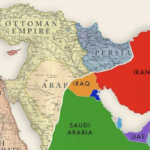
The New Testament offers the examples of the warning about an forthcoming famine (Acts 11) whilst many people warned Paul that if he went to Jerusalem he’d be taken prisoner (Acts 21). A 19th century example of a prophecy is the story of a man inspired to warn Armenians to flee the Ottoman Empire and go to California.
https://opentheword.org/2015/02/08/was-kim-kardashians-family-saved-by-a-near-two-hundred-year-old-prophecy/
1.The offices of Prophet, Priest and King coalesce on Jesus.
2. He is the true exemplar. How did he exercise the office of Prophet during his life on earth?
3. How does he exercise it now?
4. Are the ways of human agents/disciples (dis) similar.
5. Do the various understandings of prophecy form the basis for the various understanding of the book of Revelation?
6 There seems to be a difference, between words of knowledge, relating to personal information, that could only be known,through Divine relation of the Holy Spirit and no other way, such as Ian’s deeply personal illustration and prophetic in the Old Testament sense of sin, repentance, turning to God, depending on him, in obedience and trust.
7 The truly prophetic is the Good News of Jesus Christ: a call to Him in reptentence and faith. He is alive and active calling and caring. A role for all disciples in the Kingdom service of the King is it not?
8 Discernment is needed between true and false.
9 Ultimately, who is getting the glory, who is it pointing to?
10 Maybe it is an age thing with me, but a Clive Calver saying comes to mind:
All Word and you dry up; all Spirit and you blow up; Word and Spirit and you grow up.
The life and death of David Watson gives us all cause to pause for discernment.
‘ ” … your brothers who have the testimony of Jesus. Worship God.” For the testimony of Jesus is the spirit of prophecy.’ Rev 19:10
Whoever follows Jesus and testifies as Jesus testified, testifying of him as he testified of the Father, is a prophet; for Jesus was a prophet.
The gospel – Jesus’s testimony concerning the coming kingdom of God – is a prophetic message. Thus the synoptic gospels are prophecies, in the same tradition as Isaiah and Jeremiah.
Revelation is from first to last a prophetic book (Rev 1:3, 22:7).
Immediately before the kingdom of God breaks in, young and old, male and female, will again prophesy with Pentecostal power (Joel 2:28f, Rev 7).
The Kingdom of God has broken in, in Jesus the Christ, God the Son, in his incarnation, life, death, resurrection, ascension, the giving, descent of God the Holy Spirit: the Kingdom of God is now, but not yet. For believers, there is a mutual indwelling in union with Christ.
O for
John Grayston
May 30, 2026 at 6:53 am
Hi John, good to hear of your project on Zechariah [the prophet of hope]
Reminds me of that classic by F B Myer of the same name.
Also reminds me of our one time great friends and your parents Tom and Joan during their time in Beeston,Notts.
Responses do seem to be mixed and the Ministry of Prophecy
erg “He gave to the Church …. some to be Prophets alongside the Gift
or manifestation of a prophecy which to me chimes with the OT.
Some had a ministry of prophecy and some occasionally manifested the
gift of prophecy as the Spirit gave them utterance as Paul says “you may all prophecy [ but not all will,]
A further comment:-
The function of the Prophet has almost invariably been that of recovery. That implies that his business related to something lost. That something being absolutely essential to God’s full satisfaction, the dominant note of the Prophet was one of dissatisfaction. And, there being the additional factor that, for obvious reasons, the people were not disposed to go the costly way of God’s full purpose, the Prophet was usually an unpopular person… If it be true that prophetic ministry is related to the need for the recovery of God’s full thought as to His people, surely this is a time of such need! Few honest and thoughtful people will contend that things are all well with the Church of Christ today”. Austin-Sparks – Prophetic Ministry. Shalom.
Ps. There is a great resource at The Consecrated Believer
“The making of the Prophet”
consecratedbeliever.com/post/the-making-of-the-prophet.
PLUS other great papers on The Calling, Burden and Rejection of the Prophet
One of the prominent pieces of evidence given by almost every religion on the planet for its veracity is fulfilled prophecies by that religion’s seers and prophets. Yet, it is odd that if one asks AI for “who was the greatest predictor of future events in human history” the answer is invariably: Nostradamus. Isn’t that odd?
AI: When evaluating figures historically credited with “prophecy,” scholars point to figures like Nostradamus or ancient religious prophets to explain how these claims actually work. Here is how historians and scientific skeptics view these historical figures:
The Vagueness Principle: Figures like Nostradamus are the most famous “predictors” in history. Historians note his writings are so symbolic and metaphorical that his “accuracies” are actually just the result of confirmation bias and retroactive interpretation, where vague verses are matched to real events after they happen.
Historical Analysts: Many ancient “prophets” were often astute political observers and social commentators. Figures like the biblical prophets (e.g., Isaiah or Jeremiah) or political advisors in China were deeply analyzing the geopolitics, cultural trends, and structural vulnerabilities of their times, allowing them to make highly educated political forecasts.
Cold Reading & Observation: Oracles and seers throughout history relied on broad, sweeping observations of human nature and society, making it easy for people to connect the predictions to their own lives or specific future crises.
Ultimately, academics categorize these predictors as talented writers, shrewd politicians, or mystics utilizing vague language, rather than individuals with true clairvoyance. For verifiable, data-driven forecasting rather than historical folklore, scholars look to modern futurologists (like Ray Kurzweil) who rely on technological trends, or forecasting historians (like Peter Turchin) who analyze data cycles to predict large-scale societal changes.
Gary: Let’s take for example Jesus’ alleged prophecy of the destruction of the Temple. If we had undisputed evidence that a man in Palestine in the early 30s CE said to a crowd of people: “In 70 CE the walls of this Temple will be pulled down by a foreign army” that would be an amazing prediction because that exact event did happen in 70 CE. But we don’t have undisputed evidence that anyone prior to 70 CE made such a precise prediction. We could debate the evidence, but the fact is the claim that Jesus made this prediction prior to the event predicted is disputed.
Ditto for all of the “prophecies” in both the Old and New Testaments.
Gary,
You run a blog called “Escaping Christian Fundamentalism.” Those of us who suspected you were an ex-Christian coming here not for information but a fight were correct.
Persons who have never been Christian sometimes turn up for fights too, and some of them get converted. You are different because of Hebrews 6:4-6. This is not a statement that Jesus has no power to save apostates, but a statement that those who backslide too far never wish to return to his fold.
Your blog has the catchline “Some prefer the comfort of faith. I prefer the cold, hard truth.” Let me assure you that nothing is harder than seeing loved relatives reject Jesus. As for the comfort of faith, you should set that against the difficulties of temptation and the likelihood in many times and places of persecution. It is foolish to suppose Christian life is easy. What it is, is rewarding. You write: “You don’t need a degree in theology to determine the probability that first century virgins were impregnated by ghosts or that first century dead men really could rise from the dead.” Your satire would be effective if not for the fact that these things – and many others which came to pass – were predicted centuries before within the same culture. We have an Isaiah scroll that is reliably dated to more than a century before Christ and which predictes him fairly specifically – not to mention a second return of the Jews to their land (i.e. not the return from Babylon), this time from all parts of the world (Isaiah 11:11-12). Just like the last 120 years. No other people has retained their identity in an exile in which they had no political hegemony anywhere for anything like 18 centuries.
You tell us to read Bart Ehrman, a biblical scholar who lost faith. No doubt his words struck a chord in you at a time you were on that path, but your opponents aren’t going to read entire books written from points of view they disagree with. If you were really on top of your position you could summarise Ehrman’s views in a paragraph or two. According to his Wikipedia entry, he found the problem of suffering decisive. That is his choice. (CS Lewis wrote a rather good book about the problem.) But God did not make us puppets, and some of us are going to make wrong decisions having harmful consequences – especially if we have messed with evil and let it get into our heads.
You ducked that invitation on a previous thread. Are you going to duck it again?
First, this is Ian’s blog. If Ian doesn’t want me here he can ask me to leave. My comments are on the topic of the post. If this blog is for believers only, why not state that at the top? I am challenging Ian’s critical thinking (and that of anyone who holds his position). If he is not interested in being challenged, again, he can say so and ask me to leave.
Anthony: [Gary says on his blog,] “You don’t need a degree in theology to determine the probability that first century virgins were impregnated by ghosts or that first century dead men really could rise from the dead.” Your satire would be effective if not for the fact that these things – and many others which came to pass – were predicted centuries before within the same culture.
Gary: I’m not going to debate your alleged evidence. I am not a scholar, but neither are you. The fact is that the overwhelming majority of Jewish Bible scholars reject the passage you refer to as having anything to do with Jesus of Nazareth is very telling. It is a disputed issue. It is not the slam dunk you infer. If Isaiah were the great prophet (predictor of the future) that you believe him to be, his name should be mentioned before Nostradamus in history text books. It is not. Bottom line: Most of the prophecies of the Old Testament (and New) are vague. The OT also has some spectacular prophecy fails, such as Daniel’s failed prophecy about the death of Antiochus and Ezekiel’s failed prophecies about the obliteration of Tyre and Egypt. Of course Christian (and Jewish) apologists have intricate, mind-bending harmonizations for these epic prophecy failures just as Mormons have similar bizarre harmonizations for their prophecy failures.
The Vagueness Principle: Figures like Nostradamus are the most famous “predictors” in history. Historians note his writings are so symbolic and metaphorical that his “accuracies” are actually just the result of confirmation bias and retroactive interpretation, where vague verses are matched to real events after they happen.
Ditto for Isaiah.
Anthony: But God did not make us puppets, and some of us are going to make wrong decisions having harmful consequences – especially if we have messed with evil and let it get into our heads. You ducked that invitation on a previous thread. Are you going to duck it again?
Gary: Christianity has long resorted to threats of eternal punishment for those who challenge its supernatural claims. This shows the true danger of supernatural belief. Christianity alleges that your thoughts are crimes. Why should any person be punished for what he or she believes or chooses not to believe? That is the epitome of tyranny. One reason why I continue to engage Christians like yourself is to help them see this evil aspect of their belief system. It is my hope than one day Christianity will evolve into a social movement which follows the humanitarian and humanistic teachings of Jesus but drops all the supernatural superstitions and fear-mongering.
You are using the subject of this thread as an excuse for a fight. That is your purpose, I claim. Ian may ask either of us to desist, and he has not asked me.
“I’m not going to debate your alleged evidence. I am not a scholar, but neither are you.” I am, although in another subject, and I know how to export academic standards into theological argument. I’ve not been through theological college, which is all too often taught by apostates. I am happy for the world to challenge my faith via word and action, but I can do without bible teaching by hypocrites who get paid to teach it yet don’t believe it. In any case my qualifications are irrelevant: if I am not a scholar then you should find it easier to knock my arguments over.
You changed the subject when I gave my explanation of why bad things happen in a world created by an omnipotent good God: because God did not make us puppets and we are capable of making wrong choices, especially when we have tainted ourselves with a draw to darkness. You respond by talking about judgement and hell. *You* raised that subject, which has nothing to do with the problem of pain that caused Ehrman to lose his faith. Why did you divert? Please knock my explanation over, if you can. Feel free to summarise Ehrman but in your own words, please.
I invite readers to check out the specificity and accuracy of the prophecies that are specified in our dialogue for themselves. I will add that Isaiah’s ‘suffering servant’ cannot be Israel, as some rabbis claim, because in some passages the servant’s ministry is to Israel.
“I invite readers to check out the specificity and accuracy of the prophecies that are specified in our dialogue for themselves. I will add that Isaiah’s ‘suffering servant’ cannot be Israel, as some rabbis claim, because in some passages the servant’s ministry is to Israel.”
If you can find a modern Chinese, (Asian) Indian, or Japanese public university history textbook which marvels at the incredible accuracy of Old Testament prophecy (predictions of events in the future), I will eat my hat.
I’m not interested in jumping through your hoops. I am interested in how many of my questions you duck in front of Ian’s readers.
You won’t find prophecy like “A man called Adolf Hitler will come to power in the Roman province of Germania in 19 centuries time and will cause the death of 6 million Jews” because everybody would then believe that God existed but this would do nothing to cause people to want personal relationship with him. God is not obliged to jump through your hoops.
I confess I am not finding these tit for tat exchanges enlightening.
If you want to have an argument here, please stick with substantive issues.
An atheists response is foreseeable: topped off with a delicious unabashed reliance on artificial intelligence which contributes nothing to the article.
Many supernaturalists do not like AI because they don’t want skeptics to have quick access to an authority which can immediately shoot down the supernaturalist’s weak claims. If one’s positions are supported by good critical thinking skills, AI should support their position.
You blow a lot of hot air, Geoff. I suggest you back up your claims with evidence from respected sources instead.
AI an authority? Remember LLMs (Large Language Models, not Licensed Lay Ministers) simply generate stuff from what word is most likely to follow another word. There is absolutely no actual conceptual understanding. Any AI system is GIGO: garbage in, garbage out. Its output is only as good as the majority of texts entered in.
Fairly recently, I was seeing something from different people saying “this is amazing.” So, I entered a Google search for the subject to see if I could dig out some source for this. The “AI” search result confirmed this amazing thing. However, all the immediate search results were Facebook posts! Further down I found a search result which specifically, with reasons, contradicted these posts – although it itself was flawed.
You are correct, David. AI is not an authoritative *primary* source. A more accurate description would be: AI is a a powerful synthesis and brainstorming tool. It can be used to quickly shoot down “statements of fact” which are not facts but disputed claims.
I stand corrected.
Gary – if you don’t allow anything of the supernatural *at all* then you’re simply left with laws of nature – which are deterministic – and hence no free will (for example, you’re own reaction against religion would then simply be a logical consequence of your genes, upbringing and life experience). It would be difficult to attribute moral guilt or culpability to criminals if everything proceeded according to well defined laws of nature. If you’re happy with that, then that’s fine – but you do need some sort of ‘supernatural’ creeping into your thinking somehow if you want to avoid this and if you consider people to be morally responsible for their actions and the choices they make.
Actually, while the heart and guts of Christianity is our sinnerhood, resulting estrangement from God and His redemptive plan involving the crucifixion and resurrection, if we’re getting side-tracked by philosophical trivia, then I’d say that Christianity is probably the approach to life which minimises the supernatural. If one is a Christian, one believes in a creator God, who created the laws of nature – and there is an assumption at the back of one’s brain that He didn’t make a botched job. There is also the assumption that there was one supernatural event of overwhelming importance, when God entered history and the lowest point in history, ‘crucified under Pontius Pilate.’
One corollary of this (following your first post) is that people who have grasped the laws of nature, how they work, including social interactions, etc ….. are much more likely to be able to make predictions with a level of accuracy than those who haven’t (and are sitting around waiting for supernatural intervention).
I’d better stop here – it wouldn’t be a good idea for me to state clearly on this particular forum what I thought about much of the ‘supernatural’ claptrap that seems to be accepted as being from God in some Christian circles.
Jock: if you don’t allow anything of the supernatural *at all* then you’re simply left with laws of nature – which are deterministic – and hence no free will (for example, you’re own reaction against religion would then simply be a logical consequence of your genes, upbringing and life experience).
Gary: Arguably the smartest man of our generation, Stephen Hawking (an Englishman!), said you are wrong, Jock. Hawking believed that ample evidence demonstrates no need for the supernatural to explain any process on earth. I don’t debate non-experts on issues about which the smartest people on the planet have not reached a consensus.
Jock: I’d say that Christianity is probably the approach to life which minimises the supernatural.
Gary: You’ve got to be kidding. Christianity is based on the premise that the shed blood of one human being appeases the righteous anger of the creator god. You celebrate this ancient human sacrifice in a memorial meal every Sunday in which you pretend to eat his flesh and drink his blood! No, of all the major world religions, Christianity has to be based on the most immoral, barbaric of superstitions.
Stephen Hawking was a good physicist among many good physicists . He was no ‘smarter’ than many. Indeed John Lennox wrote a short book showing Hawking was wrong in his thinking and conclusions.
John Lennox is a mathematician and theologist. How could he possibly know more about any scientific issue than Stephen Hawking, a world renowned cosmologist and physicist??
Stephen Hawking was highly capable of making basic errors not in science but in logic and so-called philosophical foundation. For example, he would state an argument of the shape ‘Quantum physics allows something to exist because it allows a fluctuation between something and nothing’. This fails in two ways- firstly, anything that is something as much as it is nothing is clearly not nothing and cannot therefore predate existence. Second, quantum physics is a feature, and a contingent non necessary feature at that, of a reality that already exists. It is not a law that pre exists anything existing, since that would be a self contradiction.
A further likely error that he made was to accept a multiverse far too glibly. Even if such were tightly defined, which it is not at all, it would still break Occam’s razor more fully than anything else real or imagined could ever do.
Hawking once said, “Because there is a law of gravity, the universe can and will create itself out of nothing.”
This is patent nonsense.
Hawking was an expert in black holes, and little else.
It is patent nonsense, exactly. The idea is triply wrong:
(1) that the laws have to be as they are;
(2) that the laws predate existence itself (as though they themselves were not something existent);
(3) that their predating existence would not just throw back the problem of existence by one stage.
Well said, Jock. Modern charismatics and mediaeval Catholics have more in common than they realise in their approach to miracles. Craig Keener’s book ‘Miracles Today’ is helpful.
A certain (apocryphal) story related by Adrian Plass concerned a charismatic church who exhorted their members whether they had a word of knowledge.
One member who was somewhat deaf replied
‘ Yes – it’s north of Ipswich! ‘
There is a simply wonderful excerpt of St. Ambrose
Combining the Triunity of God with Fire and the
Preparation of the Prophet who will answer the call
“Who will go for us”
“A fire shall burn in His sight.[before him] Ps.50 v 3.
“And the light of Israel shall be for a fire.” Is.10 v 17
@https://biblehub.com/library/ambrose/works_and
_letters_of_st_ambrose/chapter_xiv_each_person_of.htm
The prophet John the Baptist was described by Christ as “a burning and shining light.”
Significant of Pentecost –
Purification and Sanctification: Fire is often associated with purification in Scripture. The Holy Spirit’s descent in the form of fire suggests the cleansing purification and sanctifying work that He performs in the lives of believers, refining them to be vessels for God’s purposes.] Shalom.
Jennifer Eivaz – How God Processes His Prophets @ mycharisma.com
Has some pertinent insights into the centrality of the prophetic in all Scripture.
Most of the prophets in the Bible seemed to emerge out of nowhere and from humble places. E.g. Amos 7:14,15
J. Lee Grady, contributing editor for Charisma magazine. wrote
, “True prophets will go through periods of hidden-ness[obscurity] and intense brokenness. God must deal with pride, greed and
self-centeredness.
The prophet must also learn to live in a place of intimate fellowship with God where the praises of men don’t affect him.”
God seems to care more about your heart than your platform and spectacular public ministry.
Have I mentioned yet the spiritual warfare that prophets endure? This is not the ordinary stuff. It’s the kind of warfare that is so personal and ridiculous, one would never talk about it except to just a few, very trusted people.
Prophets are not spared from severe difficulties but seem to have them more than most.
With each difficulty, however, there is a divine expectation to overcome, because every victory is the catalyst for spiritual promotion and genuine increase in authority (Rev. 2:26).
2:26 And he that overcometh, and keepeth my works unto the end, to him will I give power over the nations:
2:27 And he shall rule them with a rod of iron; as the vessels of a potter shall they be broken to shivers: even as I received of my Father.
2:28 And I will give him the morning star.
Prophets learn to obey the directives of the Spirit
In conclusion she remarks:-
So why would you or anyone want to endure this?
Because it’s the only way to experience Him for who He really is and authentically know His ways. A prophet who carries weighty authority does so because they know Him and know Him well.
May God raise up prophets like unto Him.
Gary,
Fancy that: your critical thinking reduced to the authority fallacy. A double fallacy of authorative AI!
As David Wilson puts it GIGO, with a fuller example as merits his Doctorate.
What a marvellous laugh. Wonderful, thanks Gary.
I think we generally have a problem of not being open to or expecting prophecy enough. As I understand it, Jewish people consider everything written in the prophetic Scriptures to be prophecy. I think this helps to understand Matt 2:15 quoting Hosea 11:1. How is that prophecy? It’s a statement of fact! But Matthew sees it as prophecy. A different (is that allos or heteros?) example is Hannah’s response to Eli in 1 Sam 1:17-18. We might well interpret Eli as expressing a good pastoral wish. Hannah took it as prophecy, and behaved accordingly.
A friend of mine is living abroad, but his wife has never learned the local language. I expressed concern that as they grow older he might need to make arrangements for them to return to the UK in case the day comes when he can’t do all the communicating on their behalf. He later told me he took that as a word of prophecy, something I had never considered. And they have now bought a house near a daughter in the Borders.
Acts 2:17 ,,,, sons and daughters shall prophecy.
Here is an exegesis. From old mediators to One mediator: knowing God personally.
https://learn.ligonier.org/podcasts/things-unseen-with-sinclair-ferguson/the-glory-of-pentecost
Some occurrences I’ve seen in our church have sometimes been wonderful. For example a friend from another town miles away came for the first time. The minister came and said quietly what had been happening in my friend’s life (unknown to the minister) and gave some very encouraging thoughts. I’ve seen that sort of things a few times. I’d call that prophecy. A few times it has involved physical healing. Not often.
I might be a cessationist – in that I don’t think folk are widely going round healing like Jesus and the Apostles did. But I do think Gifts of the Holy Spirit continue.
I’ve been a Christian nearly 50 years and ‘prophetic’ things happen to me sometimes. Here is one from a decade ago. What do you make of it / call it?
I woke one morning with a dream still in my memory. A man made of water walked from his allotment plot to mine. That was the dream. I had seen the gardener of that plot but had rarely talked to him, so I thought that maybe God wanted to do something in his life…so I briefly prayed that he would, before I got up and dressed. Later that week, I went down to the allotment to cut a cabbage. The man walked over to me and started telling me about a painful progressive illness that was impinging on his life. I remembered the ‘water man dream’. I asked if he’d mind if I put my hand on him and pray. So I did…and he said that he’d tell me in a fortnight if it worked. A fortnight later he came to my plot again. I said “don’t tell me it’s worse!” He said “no, it’s been great. Since you put your hand on me I’ve been pain free, stopped taking the medicine for it and have slept like a baby. I’ve been going round telling folk that this bloke from a church put his hand on me and I’m better”. Over the next few months, one or two folk told me they’d been in a café and a man had been telling that story. He stayed well like that for eleven months before becoming ill again. More prayer didn’t work. I asked him what he thought of that. I’d have been upset myself, but he said he cherished those months.
I don’t know if that’s dream / vision / prophecy / word of knowledge…I’m not really bothered about the name. It’s rare in my life. It’s like a sign that God is with us. I don’t know how to do it. I can’t do it. It’s an occasional gift given to me for someone else.
I pray that God will give these gifts to folk in our church.
What a fascinating story. Thanks for sharing.
Having prophecy happen is actually humbling.
I’ve dozens and dozens of stories similar to the one above. It’s always about folk having God real to them, an encouragement in their lives.
I’m more impressed by love and patience I see in people that would never dream of preaching or speaking.
Once in a while the prophetic is funny as well as humbling ! A couple of years ago our vicar offered an evening about Spiritual Gifts. I was up the front of the church for some reason…as I walked back to my chair, I saw a man in the congregation and immediately in my thoughts came the word “steak knife”. Odd I know. It stayed with me through the service. When I saw him leaving I just had to go and offer it to him, somewhat hesitantly – introducing myself by saying “this might seem nuts, tell me if it is, I’m just learning”. So I said that I’d noticed him and had the word in my thoughts “steak knife “….and he laughed out loud. I was disappointed until he said “what you don’t know is that I can’t come to that evening as I have a steak meal arranged with a friend that night!”.
We both took it as encouragement that God knows us and that he needn’t feel FOMO about missing the evening.
Right then God put into my head some personal encouragement about a situation he was facing – that I had no human knowledge of…which he confirmed was accurate. That helped him some more and left me close to tears.
The point of me telling this is that prophecy – or whatever you call that stuff is really alive and kicking. It’s an expression of God’s love. It helps folk in their relationship with Jesus. I often ask God to give me gifts for others and for him to gifts to others for others. Every now and then he does.
Scripture encourages us to ask for such things in the context of love.
I still don’t know ‘how to do it’ despite several hundred experiences over about 50 years. I think that’s what gifts are. We don’t do them …we are given them for others. It’s an unexpected gift every time…one I’m rarely sure of!
Here’s just one more example. It shows I don’t know how to do it. It’s something our Loving Father – sometimes gives.
I woke up one morning having had a vivid dream. Cutting it short…an old lady was in her kitchen, in a dressing gown, holding a toothbrush, sitting against a tall fridge – absolutely petrified because her husband was doing devil worship in the living room. But, also in the dream, she was actually having a psychotic episode and her husband was only watching a war documentary.
I woke up. What on earth was that about? The Bible mentions riddles…I couldn’t fathom it and neither could my wife.
As we had breakfast, an elderly lady from our congregation rang up saying “help! My husband is worshipping the devil and I’m stuck in the kitchen”. I was amazed and said to her not to be worried, God had already told me- and I’d be round at 9am.
I went round. Her hubby was still watching WW II documentaries and she was still in the kitchen just as I’d dreamed of. I didn’t think I could pray for her healing…but asked “have you stopped taking the tablets?” She had. So we went together into her living room, found the tablets and a phone number of her psychiatric community nurse…who went round and helped her.
2 Cor 4 mentions treasure in clay pots. I felt I’d experienced that.
I saw that in the lady too. One day she saw a new neighbour. She walked up to this big man, grabbed his beard affectionately and said “You need Jesus, come to church!” He did…and a nearby church was just starting an Alpha Course, so I went with him for several weeks….
I’d like some comments please. I only think it’s God’s work and don’t have any firm theological categories for what happened.
These are great—thank you.
Those are wonderful encouraging stories Dave! Thank you for sharing.
You are welcome!