The epistle for Trinity 1 in Year A is Romans 4.13–25. Many people are put off preaching on Romans, and Paul’s language here is dense and compressed.
 Yet the central message is this: salvation is not the result of a contract, in which we exchange God’s grace for our obedience. It is a gift that must be received by faith.
And it is a gift that is not a legal function, and merely a change in status. It is one that starts to change our lives from day one.
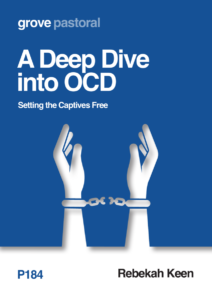
The Grove booklet on OCD that we mention in the middle can be found here.
This Sunday is often used to celebrate the feast of St Barnabas from Acts 11.19–30. The video discussion of that can be found here…
 Buy me a Coffee








Thank you for making so much sense of Romans 4! A very helpful ‘Usain Bolt’ (if you get my drift) through this complex passage. Keep up the good work, of yes, and keep faith!
Thanks! Glad it was so useful.
I think the pastoral appropriation of what he is saying has been more helpful than the theological deep dive!
Fully agree with your comment on Bible passages on screens decontextualising the text – I am very happy for the text to be screened but people need to be following along in their own Bibles. Maybe getting rid of pews – as well as hymnbooks and church Bibles – has reduced attention and focus.
Having Bibles with some prayers in the endpapers would help people, especially in communion services where there is a lack of focus as people get up and move around.
I don’t think Wright’s understanding of ‘dikaiosune tou theou’ succeeds in Philippians 3.9.
Yes, I would agree. But is this determinative of all examples? (What does Tom Wright say on this verse?)
Good question Ian. James, what does Wright say about Phil 3:9, especially since the text doesn’t say ‘dikaiosune tou theou’? Are you focussing on individual words again?
I find it interesting that Luther was a lawyer but went into the Church, and Calvin was destined for the Church but went into the law. Might the legal background of both influenced Protestant theology?
Fascinating. I am sure so! They do offer a forensic theology…
1. Thank you James for clarity of 5 fold division of Romans ch.4. A real gift.
2. The term ‘legal fiction’ for God accounting us right in his sight won’t do. Just as when Edwd Heath signed us into the Common Market we all entered, so thanks to Jesus’ federal headship and our union with Christ we really are righteous in God’s sight, on His coat-tails. That’s not a legal fiction, it’s a fact, including in the verdict of God’s law.
3. I suggest you miss out a lovely truth when apparently using covenant and contract interchangeably. Contract implies (to me) two partners agreeing on terms and closing with them. The covenant was something God set up sovereignly, whether we wanted him to or not, tying both parties to their respective covenant obligations. That gives the joy of knowing it was on his initiative and the assurance of his achieving its objectives.
4. Re the real change in our lives: //with 1.18 a righteousness from God is more than revealed, it is conveyed to us. //here re logizomai = more than reckoned, it is conveyed to us, hence the changed lives.
Legal fictions are not fictional. When a court declares you not guilty, you ARE not guilty.
I don’t think thr term should br quickly dismissed,
thanks James
If believers really are righteous in God’s sight, why are they still judged for unrighteous behaviour?
M.Poole has “Christ did meritoriously work our justification and salvation by his death and passion, but the efficacy and perfection thereof with respect to us depend on his resurrection… This one verse is an abridgement of the whole gospel” he says.
Faith in the historical events of the life of Jesus will not save.
· Faith in the beauty of Jesus’ life will not save.
· Faith in the accuracy or goodness of Jesus’ teaching will not save.
· Faith in the deity of Jesus and in His Lordship will not save.
· Only faith in what the real Jesus did for us on the cross will save.
In this chapter, Paul clearly demonstrated that in no way does the Old Testament contradict the gospel of salvation by grace through faith. Instead the gospel is the fulfilment of the Old Testament, and Abraham – justified through faith – is our pattern.
The Holy Scriptures [OT.] says Paul, make us wise concerning Salvation, while the Law was given through Moses, the ultimate revelation of grace and truth came through Jesus.
I like Piper’s expansion of the term grace to include not only the Goodness of God but also of the practical Power of God [the mighty power that works in us] on a daily basis as seen in
2 Corinthians 12:9: Jesus says to Paul, “My grace is sufficient for you, for my power is made perfect in weakness.”
1 Corinthians 15:10: “By the grace of God I am what I am, and his grace toward me was not in vain. On the contrary, I worked harder [that was the effect of grace] than any of them, though it was not I, but the grace of God that is with me.” Shalom.
I think that The Message nails it
— by Shae Bynes
Finding the Unforced Rhythms of God’s Grace in Work
“Are you tired? Worn out? Burned out on religion? Come to me. Get away with me and you’ll recover your life. I’ll show you how to take a real rest. Walk with me and work with me—watch how I do it. Learn the unforced rhythms of grace. I won’t lay anything heavy or ill-fitting on you. Keep company with me and you’ll learn to live freely and lightly.” Matthew 11:28-30 (The Message)
As a child of God, you are blessed with an invitation from Abba, your Heavenly Father, to transform the way you live and work so that you can experience His best. In other words, you don’t have to strive endlessly to make things happen. You simply need God’s empowering presence and everything else is going to flow from there. Grace is that empowerment. It enables you to successfully do what God has called you to do and to do what you could never do on your own. It’s by God’s grace that you are able to do extraordinary things, have supernatural results and eternal impact through your life and business.
https://faithdrivenentrepreneur.org/finding-the-unforced-rhythms-of-gods-grace-in-work/
Alan, thanks for pointing out the Message version.
Peter Parker
June 1, 2026 at 9:59 pm
Peter God has judged our sin in Christ so there is now “No condemnation to those who are in Christ Jesus’
Hence we are not judged by God but we are chastened .
A subject rarely explored. The spirit of the age counsels not to chasten a child at risk of damaging their mental well being
.Scripture teaches us that chastening is the expression of a loving Father ” that we be not condemned with the World “.
For those interested in this aspect of God”s love for His children see
victorious.org/pub/chastening-lord-612
Thank God for this vital aspect of His love. Shalom
And yet Paul said ALL will stand before the judgement seat of Christ. Sounds like judgement to me.
Believers have already been judged in union with Christ, have died in union and raised in union with Jesus.
Believers are credited with the active/passive obedience of Christ in a divine exchange and are now as righteous as Jesus. (‘His righteousness is ours’Donald MacLeod: Christ Crucified)
“Justification and credited righteousness are themselves the same thing. To be justified is to receive credited righteousness. This is what Luther called ‘ passive righteousness’ and what theologians call ‘imputed righteousness’.
Luther put it this way: simul justus et pecator- at the same time both righteous and sinful.”
Timothy Keller: Romans 1-7 For You, (The Good Book Company)
The denuciation of ‘legal fiction’ becomes of itself a (theologians?) fiction because of a believers Union with/in Christ.
But Geoff, that doesnt explain why ALL, incl believers, will stand before the judgement seat of Christ. Paul wasnt saying that had already happened for believers.
Peter Parker
June 2, 2026 at 10:35 am
Peter your question demands and requires a cogent answer which space here will not fully allow so at the end I give a reference for useful explanation.
Yes we all will stand before the Bema Judgement seat .
In the Bible, the Bema (Greek: bēma) is a raised platform or tribunal where Roman officials, kings, or judges sat to make official decrees, conduct trials, or award prizes to victors in athletic games.
This judgement is where we get our “degrees” of rewards
in Paul’s letter to the Romans (2:5–7) where he refers to “The revelation of the righteous judgement of God,” and then says (in verses 6–8), “[God] will render to every man according to his deeds: to those who by perseverance in doing good seek for glory and honor and immortality [he will render] eternal life; but to those who . . . do not obey the truth . . . [he will render] wrath and indignation.”
Paul listed certain kinds of deeds and said, “those who do such things shall not inherit the kingdom of God” (Galatians 5:21; 1 Corinthians 6:9–10). In other words, when these deeds are exposed at the judgement as a person’s way of life, they will be the evidence that their faith is dead and they will not be saved. As James said in James 2:26, “Faith without works is dead.” That is what will be shown at the judgement.
Jesus said in John 5:28–29, “An hour is coming in which all who are in the tombs shall hear his voice, and shall come forth; those who did the good deeds to a resurrection of life, those who committed the evil deeds to a resurrection of judgement.” In other words, the way one lived will be the evidence whether one passes through judgement to life or whether one experiences judgement as condemnation.
The parable of the Talents in Luke 19:12–27.
Indicates rewards to stewards [we are all stewards] of varying degrees.
And degrees of rewards are indicated by Jesus in Revelation to the Over-comers receiving varying rewards of which or what value we cannot yet fully appreciate or evaluate.
In Matt. 7 v 21 Jesus declares “Not everyone who says to me, ‘Lord, Lord,’ will enter the kingdom of heaven, but the one who does the will of my Father who is in heaven. 22 On that day many will say to me, ‘Lord, Lord, did we not prophesy in your name, and cast out demons in your name, and do many mighty works in your name?’ 23 And then will I declare to them, ‘I never knew you; depart from me, you workers of lawlessness.’
See John Piper’s .desiringgod.org/messages/what-happens-when-you-die-all-appear-before-the-judgment-seat-of-christ. Shalom.
Alan, I find that a confusing picture as you simultaneously refer to ‘degrees of rewards’ and final condemnation in the same breath.
Now Alan, you have thoroughly tested the waters referencing John Piper. Even mentioning reward seems to be provocative in these parts; the comments section.
And my comment is a serious, cogent, coherent, and glorious response to Peter’s question and to the allegation of ‘ legal fiction’ which carries some well known Anglican theological heft, perspective on Paul.
And. just who is a believer’s Advocate?
Righteousness/justification, salvation in Jesus, is not of works, merit, nor perfect obedience, as demonstrated by Abraham and King David;
It is all of grace.
Also sanctification is frequently confused with righteousness/justification/salvation and too often it is thought that justification/ righteousness/salvation depends on our sanctification. But sanctification is also of grace: an outworking of salvation in union with Jesus.
Much could be said about reward, and has been.
I have RT Kendall’s 3 Volume Understanding Theology which contains much in a concise style but under different headings.
Kendall may not be so well known and may not draw so much contention on this site as Piper. I have high regard for both as well others, some of a Presbyterian persuasion, even so called Puritans.