
The theme for the Tyndale New Testament Study group this year is Paul within Judaism, and we are meeting from Wednesday 1st to Friday 3rd July 2026 at High Leigh Conference Centre in Hertfordshire, just 20 minutes north of London by train and 45 minutes from Cambridge.
The subject of Paul within Judaism has been a major theme of recent scholarship. It promises to be a fascinating exploration, with an international cast of contributors, including leading scholars in the field—we hope you can join us! You can book online here, and there are discounted rates available until 12th February 2026.
 It is an excellent site, with good accommodation and beautiful grounds. We will be meeting simultaneously with other groups, so there a chance to interact with members across the whole of the Tyndale Fellowship.
Wednesday
Matthew Novenson (Princeton Theological Seminary): “Paul within Judaism” and Christian Theology (The Tyndale Lecture)
John Barclay (Durham): Paul, Judaism, and Christocentrism: The Irony of History
Adiel Schremer and Yotam Schermer (Bar Ilan University; The Hebrew University): Beyond Salvation: Reading Paul Within “Non-Pauline” Judaism
Thursday session 1
Golan Broshi (One for Israel Bible College): From Paul back to Saul: How Israeli Scholarship Reclaims the Apostle’s Jewish Identity
Tyler Hoagland (University of St Andrews): Hermeneutics or Humanity? 2 Corinthians 3 and the Start of Something New
Gideon S.S. Paulraj (Tamilnadu Theological Seminary): Paul and the Politics of Belonging: Torah, Table, and the Transformation of Identity
Tom Wilson (St Philip’s Centre, Leicester) Is Evangelical Protestant interpretation of Paul potentially antisemitic?
Thursday session 2
Neil Martin (University of Oxford): Regression in Galatians – Book thesis
Responses from Peter Oakes (University of Manchester) and Ben Blackwell (Westminster Theological Centre)
Ben Blackwell (Westminster Theological Centre): Justification and Paul within Judaism
Friday
Filip Sylwestrowicz (Warsaw Baptist Theological Seminary): Paul’s Practices of Cursing and Blessing within the Broader Jewish Tradition
Thomas Christenssen (MF Norwegian School of Theology): Reconfiguring Jewishness through Paul’s Figure in Acts
Jason Myers (Gordon College / WTC): Paul the Pharisee in Acts: Renewing the Portrait of the Jewish Paul
James Morgan (Université de Fribourg): The very Jewish question posed by the apostles in Acts 1:6, and Luke’s use of ‘Paul within Judaism’ in response to that question for his own readers
The theme for 2027 will be: The Book of Revelation and apocalyptic in the New Testament.
 Buy me a Coffee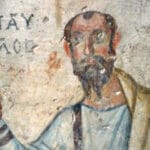

























These look like very interesting topics, especially with John Barclay present and in light of the occasional comment on other threads on whether Tom Wright has properly interpreted Paul or forced a grid onto his writings. Simon Gathercole’s 2016 review on Wright’s (very) big book on Paul made interesting reading.
Gosh!
For over 40 years I lived in a thought world where God has a single plan for everyone – to repent and believe in Jesus Christ.
And then I moved from London to the south coast and I discovered that the Jewish issue has as much power to split the Church in half as the gay issue. There are plenty of people here who are convinced the Bible teaches that God has one plan for Gentiles – to repent and believe in Jesus Christ – and two plans for Jews, viz. a) to repent and believe in Jesus Christ and b) to have the Land restored and to live there in physical security.
Lacking relevant expertise, I have no plans to come to High Leigh. But I have made a note to pray for you all. I fear there may be as much passion under the politeness as ever there was in Shared Conversations.
Jamie, you sound like just the person who needs to go to High Leigh.
Just to note, it is an academic conference for evangelical academics…
Hi James. Thank you for your kindness. As I understand this is a conference for academics, which doesn’t include yours truly. But maybe you can recommend a couple of books you think would help people like me?
Jamie, Stephen Westerholm’s books on justification in Paul are said to be a good defence of the “Lutheran” understanding, against the (now old) ‘New Perspective on Paul’. Simon Gathercole’s ‘Where is boasting?’ is a good read too.
Tried to post a comment several times without success; Is there a problem your end?
No. Your comments are here.
Puzzled. other posts are receiving comments at this time.
Ian Paul
January 22, 2026 at 7:55 pm
Quite cryptic Ian, I am intrigued.
Acts 17:10-12
Cf: Acts 17:13-14
Along with Acts17:16-21
1.Reasoning with Jews
and God fearing gentiles, in Synagogue and marketplace.
2. Epicurians and philosophers preaching, babbling, strange new deities by preaching Jesus and the resurrection. Wanting to know what Paul means.
3. Spend their time in nothing other than telling or hearing something new.
Ah yes… ‘Something new’. Let’s hear and tell this something new…
Hi. Jamie Wood @January 23, 2026 at 10:26 am
Paul within Judaism
christophheilig.substack.com
“The Future Past of Paul within Judaism” is a report
on a similar seminar to High Leigh which Christoph Heilig
attended with some of the same speakers at this years’
SBL meeting in San Diego, where leading figures of PwJ [Paul within Judaism] addressed some central “problem texts,” followed by responses from scholars specializing in Judaism and Paul’s letters.
https://christophheilig.substack.com/p/the-future-past-of-paul-within-judaism
Might give a “flavour” of what attendees at HL might expect.
Hope you/ folks profit from it. Shalom
Thanks Alan!
OK, so Christoph Heilig considers that “Paul within Judaism” is a proposition that you can agree or disagree with. And if you agree with it, there are bible texts that challenge the proposition.
But what is the basic proposition?
Hi Geoff @ January 23, 2026 at 12:13 pm
Heiig’s report above suggests PwJ require not something new but
something more on Berean lines, which was in line with my initial thinking to help folks understand the Scriptures better. Shalom
Alan, A key aspect of the Paul’s addresses to the Bereans, was the response of belief by Jews and gentiles.
Would a focus on Judaism alone, of itself (insular?), confined within Judaism alone, even outside of scripture, have been likely to have reaped as it did to both Jews and Gentiles, without an implicit focus on the good news of the person of Jesus.
What is more, is not Paul’s undeconstruct able focus on the Person of Jesus.
And I’m not sure how that plays out within Judaism, then or now!
And how do Messianic Jews fit within the narrative of the continuation of Judaism in the Jesus dominated New Testament era?
Much of this reminds me of the debate an number of years ago over whether Paul was ‘converted’. I have a book along the lines of arguing that he wasn’t convwrted, but saw his Acts encounter with Jesus as an intensified progression of Judaism.
But, there you go, I’m not a scholar.
PS Forgot to include in my last post
michaelfbird.substack.com
The End of Paul within Judaism?
where he argues for an ” adjustment within PwJ itself—a development into a more constructive and, thus, more convincing discourse.”
Yes. Michael Bird a lot more accessible than Heilig for the uninitiated!
Where does the Trinity fit within Judaism, and Paul’s heavy implication?
In “The Christianized Paul, the New Perspective Paul,
and Paul within Judaism
postost.net/2015/06/christianized-paul-new-perspective-within-judaism
The “Paul within Judaism” view
Comes to this conclusion
“The question arises, finally: if not in the New Testament, where is the chronological boundary between the Jewish narrative and the Christian narrative to be drawn? In my view it is in the writings of the Apostolic Fathers that we see the story of Israel begin to disintegrate and fall away from the apocalyptic narrative that has been inherited from the New Testament; and then with Justin Martyr, say, a new narrative about the pagan journey towards knowledge of the true God takes over.
What exercises my mind greatly is “How will this gathering at HL
edify the church? Will it be but a nice jolly for Academics,
a telephone box/echo chamber?
On a day when there is a National counting of birds;
Who is aware of the lesser spotted pew dweller or
the even lesser spotted ordinary reader?
Who will edify them?
Paul a master builder whose daily struggle/care was his daily care
of all the Churches who gave attention to those of low degree etc.
who poured out his life as broken bread and poured out wine
for the perfecting of the Church/Saints. who travailed
with birth pangs until Christ was formed in his churches.
In the masterful eloquent words of — J. Dodd Jackson’s
“The Note of Edification”
“She needs a definite and not a nebulous belief. She needs a living and burning enthusiasm; a joy that will not be silent, and a hope that will not cower before the pessimism of the age. She needs such a piety as shall furnish a splendid contrast to the lives of all around her. In short, she must realise the ideals of her Founder, and every glorious prophecy shall be fulfilled.
“The care of the churches!” — how heavily it lay upon the shoulders of those early ambassadors whose confessions of fear concerning failure are written in the epistles. How it has driven to the Mercy Seat for help and guidance those whose work it has been in tubulous times, to keep the flock of God committed to their custody! The feeding of the sheep in the wilderness, the care of the lambs, the strengthening of the weak, the endless, patient, prayerful striving needed in the pursuit of erring, foolish, falling ones, that all may be presented perfect in Christ Jesus — what demands do these make upon the preacher’s noblest powers!
It is said, moreover, that the Church is so divided, sub-divided and sub-sub-divided that it is impossible to be sure as to where the true Church may be found.
There are vast multitudes in the Church whose religious life — if indeed they have such a life — is absolutely parasitical. They render no service; they offer no sacrifice; their only confession of faith is a more or less intermittent attendance at the public sessions of worship.
To build up the Church we must preach the Church. She needs the sense of herself.
https://biblehub.com/library/jackson/the_message_and_the_man/chapter_iv_the_note_of.htm
It needs those called, anointed and who have sanctified themselves,
who will “Feed My Sheep”. Shalom.
Alan – 1. The Church is so divided, sub-divided and sub-sub divided … but we don’t need to worry about the True Church, because Jesus warned us it would be like this and that he will sort it out (Matthew 13:30.)
2. If the conference helps to reconcile those of us who care more about our Jewish brothers and sisters with those of us who care less, it will be doing Kingdom work.
Would Paul have been honoured, delighted, thrilled to have so much time and attention, devoted to him? Or Apollos? Worship in effect as a false god?
He be horrified.
Pointing always to Jesus.
What do we do with Jesus, within or without Judaism?
Reject, ridicule, denounce, mock, ignore, crucify again?
Or worship as God. May we know Jesus as Paul knew Jesus.
Worship Him. With minds, hands and hearts. And it is Him indwelling by the Spirit that we need in order to do so, albeit imperfectly.
Or we are all sunk by all manner of tides and tsunamis.
Turn to Him as ‘ark’ of the new covenant.
All beliefs start somewhere. Did Paul’s finish where they started? If not, why not, how not?
Didn’t he go missing for a few years? After what? His whole life changing, turn-around encounter with the risen Jesus? Did he, like the Bereans, search the scriptures? ( Likely given his credentials in Judaism.) Was this his lengthy Emmaus Road seminar, study period for him? With Jesus?
He was a different man, a different name; small, different motives, drivers, ambitions, desires, fulfilments. Where did he worship and how and who and why? Certainly, Jesus was pronounced as God , a blasphemy within Judaism, sufficient to seek out his death. Sufficient for Him to be ready, willing, and able to be beaten, imprisoned and die for.
Did he invent Christianity? Preposterous, All this aligns with the gospels and with the scriptures, the extant canon in their fulfillment.
So did Paul’s beliefs end where they started ? No and yes. Yes in continuity: no in discontinuity, but in fulfillment replete and complete, yet not yet execute by Jesus , Christ’s return .
Just a thought or two from a non Pauline scholar, not scholar of any stripe. But, a converted believer in Jesus.
Apologies if, as unlikely as it is, it rains on the parade of gathered scholars.
Jamie Wood @ January 24, 2026 at 10:16 am
Jamie, I have no worries about the Jews
They were in The Plan long before the Christians were “Grafted In”.
I would encourage folks to read the O T Prophets more and get
God’s point of view on the matter as ordinary readers might and
Pray for the peace of Jerusalem. When God Sovereignly elects a
people to show forth[Him in} His praises they stay elected.
If that were not the case what confidence could Christian’s have
In a Trumpian god?
What to think of the Jews?
Rom 3:2 Much every way: chiefly, because that unto them were committed the oracles [thoughts, words and covenant promises]of God.
Act 7:38 This is he, that was in the church in the wilderness with the angel which spake to him in the mount Sina, and with our fathers: who received the lively oracles to give unto us. Shalom.
Of the HL [road show?] gathering one does hope that there is something of Edification to be gained, not just because it is at HL
OR That there are expert analysts on this form of studies.
I am just beginning to grapple with issues of modern Israel, Judaism etc. As a result my unread book pile is growing…
One comment I would make is that it is probably wrong to talk of “Paul and Judaism”. At the time of Paul, and Jesus, there was not one ‘Judaism’. Broadly, there were the Pharisees, Saducces, Essenes, and perhaps Zealots represented a very political Judaism. There were commonalities but distinct differences, and probably variations within these broad categories.
Therefore, one should talk of ‘Judaisms’ not ‘Judaism’.
In a way, initially Christianty would have seemed to most Jews of the time as another diverging strand of Jewish belief.
(In addition, Judaism today has distinct variations all of which probably have developed from Pharisaical Judaism, but none of which are identical to that.)
But isnt Christianity the same today? Logically then we should refer to Christianitys. But we dont.
Well then, is there not a commonality? Scripture perhaps?
Paul aka as Saul was a Pharisee of pharisees ahead of others He would have been known and was notorious in persecution believer s. Was he only a type, or an exemplar of biblical Judaism at the time of Jesus, Jesus who he persecuted to death Jesus who the leaders of Judaism found guilty and manoevered for crucifixion, death, for blasphemy
Was there a commonality of belief in Judaism over blasphemy?
Sure, it is not at the level of scholarship, but it is suggested that it is a good enough overview of Judaism, its commonalities and irreducible beliefs.
https://faithinspires.org/jewish-beliefs/
And a commonality of belief in Judaism is that Jesus was/is not the Messiah.
Good point Peter!
There seems to be a comminality issue amongst Christians.
The embryonic church had its problems with the Concision
Hence the Jerusalem Council, where Paul stated and gained his point
In the early Christian church, there was significant debate regarding the necessity of circumcision for Gentile converts.
Despite this decision, some Jewish Christians, often referred to as Judaizers, continued to insist on the necessity of circumcision for salvation, leading to significant tension within the early church.[Topical Bible @ Biblehub]
Berean Literal Bible
[Paul]Beware of the dogs! Beware of the evil workers! Beware of the false circumcision!
Paul spent some column inches on this question and denouncing these and Jewish understandings; one could argue that Paul was antisemitic but also anti-Christian towards this iteration of Christianity.
Paul’s argument is that true circumcision is not a physical act but a spiritual transformation brought about by faith in Christ. In Philippians 3:3, he states, “For it is we who are the circumcision, we who serve God by His Spirit, who boast in Christ Jesus, and who put no confidence in the flesh.”
This kind of thinking still exists today [ I am thinking off Christian sect like
International Churches of Christ (ICOC) or the splinter group International Christian Churches (ICC/Sold-Out Movement), often noted for their intense, campus-focused evangelism and strict discipling, which historically led to controversy regarding high-control practices. These sects practice “cutting off” friends and family etc Isolation, also from any other Christian grouping.
Even amongst Christians some take the line that piety and Holiness require a certain type of self – improvement behaviours {the “oughteries}
My feeling is that PinJ has far more questions to answer than possible Conclusions.
Perhaps these may be addressed at HL or will people be encouraged to “Get with the programme”?
Interestingly Ian’s’ choice of photo at the head of this post is
One that appears on.bibleodyssey.org/
? affiliated to HL Conference on Paul In Judaism
Of the few articles on that site I am able to read [limited]
They are quite coy, they proport to want to help the
Common pew dweller “understand the Scriptures better”,
Similarly,
st-andrews.ac.uk/en/activities/bible-odyssey-journal/
Limits access to Academics not the ordinary reader?
Read their brief remarks on Peter’s Epistles
Goodness me, what happened to the Promised Holy Spirit
Who Will lead us into All truth?
Or St. John’s assertions
1 John 2:27 But the anointing which ye have received of him abideth in you, and ye need not that any man teach you: but as the same anointing teacheth you of all things, and is truth, and is no lie, and even as it hath taught you, ye shall abide in him.
1 John 5:20 And we know that the Son of God is come, and hath given us an understanding, that we may know him that is true, and we are in him that is true, even in his Son Jesus Christ. This is the true God, and eternal life.
This PinJ seems to me that”properly£ educated Academics are the ones to help the common people understand the Scriptures at all, this is not
a local conference it is a Global Movement.
Isn’t St Andrews Uni the (former?) home of emeritus prof. N T Wright?
Not sure how much influence he has over this particular stream of scholarship, as he has his own web sites.
Personally, I’m pleased to be excluded, unqualified. Unedified? Yet edified! Qualified by Jesus.
Wow!!?
All this from a photo and a St Andrews link that doesn’t work
My apologies Alan. ‘Bible Odyssey’ did get hits on the St Andrews website. But it is simply a reference back to the Bible Odyssey web page. So Geoff’s comment still deserves a Wow!!?
Pleased to have impressed you Bruce. But I’m not swayed by flattery even as it is oblique.
I have now read John Barclay’s 12 page review of Wright’s “Paul and the Faithfulness of God” (2013), and it crystallises for me a number of the concerns I had about Wright’s work and why his grand thesis hasn’t convinced many scholars of Paul. Barclay mentions Wright’s ‘baggy’ style, excessive rhetoric, tendency to caricature other viewpoints, and most of all, his ascription to Paul’s thought of many things that Paul never actually says, all in the interest of a grand meta-interpretation of Paul. (Part of this is Wright’s claim that Paul is engaged in anti-Roman Empire polemic, Christ vs. Caesar, as well as “Israel is still in exile” meme.) Of course, there are other things in Wright’s work that he commends, even if he finds the overall thesis unpersuasive. It’s well worth downloading the review from Barclay’s university homepage.
James, it’s also ‘well worth downloading’ and reading:
https://www.academia.edu/36452939/N_T_Wright_s_Narrative_Approach
Thank you, Bruce. I am travelling this week, so it may be a little while before I can look in detail.
And beyond that, James, have you read the report by Christoph Heilig that Alan referred to?
It is suggested that Barclay would have a significant contribution to make to Paul and Judaism, judging from his work, listed on his Durham University site: one a collection of essays on ‘Pauline Christians and Diaspora Judaism’ , but there is more.
For those who are unfamiliar with Barclay work, as I was (other than publication of The Gift) here is a link.
https://www.durham.ac.uk/staff/john-barclay/
Bruce Symons @ January 25, 2026 at 11:06 pm
I do so agree “Wow”
One does need to choose your Academics carefully.
“Discern the spirits” so to speak.
This “movement” boasts some 8,000 adherents
Who knows if they are the 7,000 spoken of by Paul ROM.11 V 2 – 5?
For Elijah they were just there but not on the front line
facing the slings and arrows as a chosen vessel appointed by God.
They were as yet not yet “examined”, being in the shadows.
A Church was commended for it’s discernment REV.2 V. 2
For the moment I am not yet convinced. Shalom.
I do confess that I did touch a few nerves along the way
but Ian was able to sort those out.