
One of the (many) great paradoxes of the Book of Revelation is that, at one and the same time, it is experienced as both very difficult to interpret, yet also very easy. This explains the very different reactions to it as a biblical text; those who instinctively sense that it is difficult to interpret find it quote opaque, and so tend to avoid it. But there are others who seem very confident that it is very easy to understand, and more specifically very easy to see how it is predicting the events of our own day. As I have previously explored, it turns out that Christian readers in almost every age have felt the same—that the text is specifically and uniquely about the events of their own day!
 How can a text offer both possibilities to different readers? There are lots of reasons for this, connected with both the context in which the book is written, and the way John makes use of language in it. The first is that it is intricately connected with its historical context in ways which fundamentally affect the way we interpret it. (For a fuller exploration of all these issues, see my commentary on Revelation in the Tyndale series here.)
Perhaps the best-known example of this is the question of what it means to be ‘lukewarm’ in the message to the ekklesia in Laodicea in Rev 3.15–16. It is usually assumed that to be ‘hot’ is to be fervent (a good thing) and to be ‘cold’ is to be indifferent to faith (a bad thing). So how could the risen Christ prefer us to be cold than to be ‘lukewarm’ (usually assumed to mean being neither one nor the other—Anglican in fact!). But in its historical context, hot and cold are both good things to be.
 Across the valley in Hierapolis (modern day Pammukale), the hot springs bring healing. Further up the valley in Colossae the cold springs bring refreshment. But in Laodicea, the hot water has to travel some distance, so by the time it reaches the city it is lukewarm, and with its dissolved calcium carbonate, if you drink it, it makes you want to—spit it out! Hot and cold are both good for something, but lukewarm water is good for—nothing. It is then that we notice what the verse actually says: not, ‘I know your faith‘ but ‘I know your works—and you are being ineffective’ (Rev 3.15).
A less obvious example is the depiction of worship in chapters 4 and 5. There are elements here we might recognise from the Old Testament—the rainbow from Genesis 9, thunder and lightning from Moses’ encounter with God on Sinai, living creatures from Ezekiel 1, and so on. But there are plenty of other elements (such as the elders in white casting down their crowns) which we don’t recognise. Ironically, popular commentary often treats these elements as a quasi-literal depiction of what is happening ‘in heaven’, but in fact these other elements correspond with what we know from the ‘worship’ of the Roman emperor. The central passage in the book, chapter 12, also offers similar challenges. We recognise the characters from the story (more or less), but the plot baffles us, unless we are familiar with the myth of Leto, who gave birth to Artemis and Apollo. The great temple of Artemis was located in Ephesus, and the emperor was often depicted as a kind of Apollo figure. (For a fuller exploration, see the post ‘Is our God greater?’)
The second reason why we find Revelation difficult is its constant allusion to the Old Testament. In its 405 verses there are something like 676 allusions (I know; I counted them!) so if we do not know our OT very well, we will be baffled by just about every verse in Revelation. The surprising thing here is that the books most alluded to are Isaiah and Psalms, which is probably not what we expected.
But there is something even more fundamental about the way Revelation uses language that not only makes it difficult to read—it also explains why there are so many different, apparently conflicting ways that it has been interpreted. Revelation’s language is thoroughly metaphorical, and that in itself gives us enough problems. But like many other ‘apocalyptic’ texts, it deploys metaphor in a particularly challenging way.
According to Paul Ricoeur, metaphor has three elements to it: the subject (what the metaphor is referring to); the vehicle (the term which is used metaphorically); and the tenor (the sense the metaphor is communicating). So if I say ‘My friend is a pig’, then the subject is my (former) friend, the vehicle is ‘pig’ and the tenor is whatever ‘pig-likeness’ communicates, either greed or unkindness (though in fact pigs are neither greedy nor unkind…but that is another story). Metaphors are easiest to make sense of when we know all three. So when the assembly at Ephesus is told that it is [like] a lover who has grown jaded, or those in Sardis that they are [like] guards who have fallen asleep, then we don’t have too much trouble making sense of this—which is why these chapters are the only ones ever preached on!
But what happens when the subject disappears from view? These seven oracles are to be spoken to the ‘angel’ of each assembly. Is that a person, perhaps the leader? Or is there really an angel attached to each place—either as the ‘spirit’ of the assembly or as some sort of guardian angel?
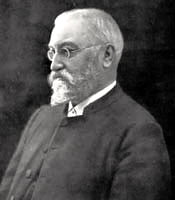 This kind of metaphor is surprisingly common in everyday speech; you can hear it on football terraces, or in any context where the subject of the metaphor is understood without the need to specify it. Its technical name is ‘hypocatastasis’, from the Greek for ‘arranging’ and ‘under’. The only other modern commentary on Revelation I have found it in in Greg Beale’s in the NIGTC, but the term was first popularised by a Victorian clergyman called E W Bullinger. Bullinger was an advocate of hyper-dispensationalism who believed that the ‘church era’ only began at the end of Acts 28, so we should not take any of the teaching of Acts, or the gospels for that matter, as now applying to us. (So Bullinger believed that reciting the Lord’s Prayer as Jesus taught it belonged to a previous dispensation, and was not relevant for Christians…!) For his troubles, he was denounced by regular dispensationalists as purveying an “absolutely Satanic perversion of the truth”! But along the way, in 1898 he wrote Figures of Speech as Used in the Bible, which you can still buy online and which continues to be influential (along with his other teaching) amongst certain groups on the Continent. Here is what Bullinger says:
As a figure, it differs from Metaphor, because in a metaphor the two nouns are both named and given; while, in Hypocatastasis, only one is named and the other is implied, or as it were, is put down underneath out of sight. Hence Hypocatastasis is implied resemblance or representation: i.e., an implied Simile or Metaphor. If Metaphor is more forcible than Simile, then Hypocatastasis is more forcible than Metaphor, and expresses as it were the superlative degree of resemblance.
For example, one may say to another, “You are like a beast.” This would be Simile, tamely stating a fact. If, however, he said, “You are a beast” that would be Metaphor. But, if he said simply, “Beast!” that would be Hypocatastasis, for the other part of the Simile or Metaphor (“you”), would be implied and not stated.
This figure, therefore, is calculated to arouse the mind and attract and excite the attention to the greatest extent.
My favourite example of hypocatastasis comes from the penultimate scene in the film Pretty Woman. Richard Gere is returning a $250,000 necklace to the hotel manager, Mr Thompson, after his relationship with Julia Roberts has apparently come to an end. Thompson asks permission to open the box, and after looking at the necklace, says to Gere:
It must be very difficult to let go of something so beautiful.
This illustrates the power and problem of hypocatastasis perfectly. The subject here is not specified—so we could simply take it as a literal, non-metaphorical reference to the necklace. But precisely because the subject is not specified, it is very easy for the reference to change. Thompson goes on:
Darren [the chauffeur] took Miss Vivian back to her apartment last night.
Now the statement transfers to another subject and becomes metaphorical; it is Vivian who is the beautiful thing that is hard to let go of. And Bullinger is quite right about the power of hypocatastasis; this is the most powerful single moment in the film.
 These three features—of possible literalism, of transferability, and of power—are writ large on the history of the interpretation of Revelation. Some have read it thinking there really will be beasts emerging from the sea, that there are living creatures and rainbows in heaven, that our destiny is to sit on clouds playing harps (chapter 14), and that we will pass through pearly gates. Others have been able to identify people and institutions in their own world quite happily with the beasts and dragons, the woman clothed with the sun and the harlot riding the beast. And every generation has found this to be a text of extraordinary power—for good or otherwise. And it all comes down to hypocatastasis.
You might by now be thinking ‘I wish John had made himself a little clearer, and used less powerful but less ambiguous language.’ Perhaps so, but it is also worth pondering: if you knew that the church was about to enter 200 years of intense testing, what would you write?
With power comes responsibility. The great power of Revelation, and its hypocatastatic metaphors, comes the need for great responsibility in its interpretation. Like a powerful chemical, which could do great things but also cause great damage, we need to handle with care.
(And just for fun, here is the first scene when the necklace makes an appearance. Gere’s snapping of the box on Roberts’ fingers was improvised, and you can see Roberts look around at the camera crew before regaining her composure.)
 Buy me a Coffee










We had a hyper -cat. The dogs didn’t stand a chance. It certainly wasn’t hypo. Although named Ziggy, he didn’t play guitar.
The Sunday evening service is going through the whole book of Revelation.
The whole of chapter 7, on its own, struck me as a summary of the whole canon of the Old Testament.
Is this from ‘Ziggy Stardust and the Vicars from Mars’ album?
Yes, it is Chris. The CoE is on planet Mars.
Thew Book of Revelation is claimed by every era because of excessive spiritualisation of its message inspired by Greek philosophy. But the main portion – involving the seals, trumpets and bowls – are said to describe events in heaven, and their (terrible) counterparts on earth are specified. Since heaven means the spiritual realms, the conterparts on earth must mean observable events on our material earth. And they don’t fit anything in world history. So they haven’t taken place yet. So they lie ahead.
It is claimed by every generation first because people are egocentric, second because they know little history, third because the Bible is not sufficiently read through an historical lens, and fourth because it is written at a crisis point and others who live at crisis points recognise and identify with the patterns of events and personalities.
‘Heaven’, ha.shamaim in Hebrew, note the plural form, so properly “the heavens”, and ouranos in Greek, sometimes plural but frequently singular even when translating the Hebrew but retaining the definite article, is first found in Genesis 1, where it separates the water above from the waters below. There are a number of instances in Revelation where ouranos is not translated ‘heaven’. You might like to find them.
Therefore, if ouranos is, in some places, being used to refer to some non-material, spiritual realm, this is a figurative or metaphorical use. This opens the door wide to describing events on earth in a figurative/metaphorical/symbolic way.
SHAMAYIM appears in Genesis even earlier, in the first sentence/verse in which God created the SHAMAYIM and the ARETZ.
I do not agree that ‘apocalyptic’ began as a literary genre. It might have become one later under Greek influence, but in scripture it is simply an attempt to describe events for which the prophets had no vocabulary at that time, such as nuclear detonations (Joel 2:30, ‘blood and fire and pillars of smoke’) and meteorite strikes (Revelation 8:7 – 9:2). The Hebraic prophets were always realists, and God intends us to know when a specific prophecy has been fulfilled.
Apocalyptic became the name of a genre by mistake. Just as the gospel writers were keen to have the most apt first word[s] at the head of their gospel, and not a bit concerned to fit into existing genre boxes, though obviously they wanted to speak about Jesus’s ‘bios’, so John heads his work with ‘Apokalypsis’ because the colossal statue of Nero had recently been unveiled and he wants to compete with that, get revenge for that, get one over on that, because he has a greater King whose claims he is presenting. Just as Mark gave the euaggelion of Jesus as opposed to the proclamations of the great deeds of the emperors which were also called ‘euaggelion’. John’s work was so white hot and momentous that it is no surprise that he had imitators.
It would be fantastic to have table of verses in Revelation with the verses alluded to in the OT, for those of us who have poorer familiarity with the OT text.
Some cross reference Bibles have this. For example Nestle-Aland, or the New Jerusalem Study Bible, etc etc.
However, I think you mean a comparison of OT and NT wording in full. There is a lot of internet interest in this. The commentaries that lay verses out in comparison include Beale and Buchanan, though neither is comprehensive in that regard.
If we *is* in Jesus then it should read for us today.
The article mentions Beale. Beale sees the book of Revelation, as ‘pastoral’, if I’m not mistaken.
On my count, Isaiah is clearly the most alluded to book. While not being at all the most important structurally.
In the second division are Psalms, Ezekiel; in the third, Jeremiah, Exodus (if you count the plagues singly), Genesis; then comes Daniel (whose themes are broad-based) and then Zechariah.
This compares with John’s Gospel where Isaiah and Genesis are the two most drawn on, with importance given to the Exodus Moses story, the Lamb ritual, and Psalm 118. Ezekiel has some importance. It has been said that Wisdom does (unlikely).
Ezekiel late on in Revelation, I think.
Symbolisms’
I recently attended a Baptismal Service of several candidates at a packed to the gunnels church. The priest referred to the immersions as “a symbol”of what has happened internally previously in the candidates”.
Was this an oversimplification? perhaps for those who had little knowledge of baptismal significance?
Baptism is in fact at the epicentre of the Gospel; it is the apotheosis of
Christian aspiration {Phil 3:10}
Following on, in his sermon Bishop Julian spoke eloquently
On “The whole armour of God” another symbolism, of the conflict
that is entered into {when one has “died” and been raised to newness
of life { re- created resurrection life, into and in Christ } following
entrance into the Christian Life.
There is a whole world of difference between a symbol and the actuality.
If one is only engaging in a symbolic act and not in an actual reality
the symbolism is of none effect.
Resurrection life is being raised into a new world, a new dimension,
that for me,takes more than a lifetime to understand and realize the wonder, the hight and depth, the length and width of, every day a marvel of divine wisdom and power.
Shalom.
Symbols are a tool for conveying profound spiritual truths that might be difficult to express directly. They draw the reader into a deeper understanding of God’s character, the state of the world, and the church’s situation.
Ethical and spiritual transformation: The symbols serve to inspire and call the reader to action, encouraging them to live a faithful life in response to the ultimate reality of God’s plan to make all things new. { AI }
Symbols say in brief concepts that might be beyond comprehension e.g.
the nature of the ferocity of the heavenly warfare in heavenly places.
The clearest part of Revelation is Christ estimates of the churches.
and His looking for Overcomers who will be elevated.
“How then shall we then live”? to quote Francis Shaeffer.
Well perhaps like those who appeared at the first Advent of Christ
A few years ago the Bishop of Nottingham at the inauguration of our new Vicar said “The Church is growing old” which chimed with our spec.for our Vicar – to bring new, younger blood into our church.
When many churches are becoming aged and, to some, ready to die out
What can the aged do in their declining health and vigour?
Given that the breaking of the worlds institutions, Truth, the Church, even Democracy are in danger of falling in the global chaos.
Well, become Overcomers like the aged Simeon and Anna.
I just read an enthralling book by Tom Austin – Sparks speaking on the End Times 70 years ago.
“ The Work of God at the End-Time “ CH.I
Chapter 1 – The Peculiar Conditions of an End-Time
{ End-Time Principles Set Forth in Simeon}
Quote “The Lord seems to be concentrating upon bringing out spiritual values, making spiritual men and women, and if I am not mistaken (and I claim no gift of prophecy, in the foretelling sense), we are going to see, and are already seeing, the removal of so much, the external things, upon which Christians have been relying as though these things constituted their Christian life. We are going to be forced back to the place where the one question that faces us is,
After all, what have I got of the Lord Himself? Shalom.
Eerdmans have recently issued The Rise and Fall of Dispensationalism, by Daniel Hummel.
Bullinger’s scheme of thought and his numerology continue to have a following among the late Victor Paul Wierwille’s organisation The Way International.
Fascinating backstory to this Bullinger chap: Canterbury-born and therefore named Ethelbert; Anglican clergyman, a flat-earther creationist who believed the gospel was written in the stars and a Lambeth DD awarded by the Archbishop of Canterbury. Shows what you can do with one year’s theological training at King’s College London!
But he was secretary for most of his life of the Trinitarian Bible Society which produced Delitzsch’s Hebrew translation of the NT, of which I am delighted to have a copy.
He was also a descendant of the Swiss Reformer Heinrich Bullinger. He had a fine turn of phrase, e.g. “God has warned man of judgment to come, and all man does is to set it to music and sing it in the churches…” (Great Cloud of Witnesses in Hebrews 11, ch.2).
The book of Revelation self-describes as a prophecy, and that word primarily denotes a message from God about the future. Everything from Rev 4:1 is expressly about the future.
In the Old Testament, prophets typically warned of impending judgement on a nation – primarily Israel/Judah, but also the surrounding Gentile nations – urging Israel/Judah to repent of the sins provoking the wrath of their Creator. Rarely did they do so. Apart from Hezekiah, I can think of not one instance in Isaiah (though much of the prophecy relates to days far off), and can think of only one in Jeremiah (Jer 34:15), except that those concerned subsequently slid back. Also not in Ezekiel. The outstanding instance was when Gentile Nineveh repented, an example which Jesus later recalled to the shame of his Jewish contemporaries.
That is the pattern: the people of God turn back on what has been revealed to them, God warns them, but they take no notice – Matt 13:14ff. In due course they suffer the consequences.
So it is today. Before closing the canon, Jesus gave the Church one last prophecy, primarily concerning what would happen in the lead-up to the end of the age, to be followed by the full force of his wrath and then the kingdom of God. Christians ignore the book, treat the prophecy as mostly concerned with the 1st century world, or deny that it is a prophecy at all. A few accept that the prophecy describes the end of the age but do not think that the end is near, or if it is, do not think that knowing what Jesus says in it will make any difference. He might have kept silent for all the good it would do. “Che sera, sera,” they say.
Almost no commentaries on Revelation understand the book as applying primarily and specifically to the present time. I wrote When the Towers Fall: A Prophecy of What Must Happen Soon to show that in his final revelation Jesus, on the contrary, was speaking purposely to us. This can be illustrated in many ways, but to give one example, the ‘something like a great mountain, burning with fire’ thrown into the sea is not Mount Vesuvius (which did not move in AD 79 and did not kill a third of all creatures in the ocean) but an asteroid. It is only in the late 20th century that we came to know about asteroids.
The message for Christians is: “Come out of her, my people, lest you participate in her sins, and in her plagues you share.”
“Behold, I am coming soon, bringing my recompense with me, to repay each one for what he has done.”
Soon, Stephen? Has not your prophesied date for Christ’s return passed by, giving something lie to the substance of your hermeneutic on which it was based?
Where did you go wrong, take the wrong turn, move?
Why do you continue to seek to promote your book, without revision, it seems?
No, Jer 51.25 satisfactorily accounts for the details of this reference in a unitary way.
The genius of the Gospel story is the personal pronoun! To know that God so loved the world that He gave His Son John3:16 is history. To know for God so loved ME that He gave His Son for ME is salvation. I’ve learned that believe and receive are synonymous and therefore we must move into the realm of truly knowing Jesus for He said to some who thought they knew Him ‘I never knew you’. Of course Revelations is type and allegory. A woman sitting on seven hills would have a huge rear end ! But the sobering chapter for me is the clear message in Rev 13 that as it was historically for the Head – Jesus Christ so shall it be for the Body – The ruling political Roman state and the ruling religious powers united to kill Christ. The end times will see world political power uniting with a religion of the lowest common denominator (perhaps led by climate change policies) to destroy the true Body of Christ. When satan has assembled his final solution to destroy God’s precious children is when God will step in. We are seeing the move towards universal digital ID of everyone on earth where one cannot buy or sell without allegiance to this world power coming to your neighborhood soon.
except the number of the beast 666 specifically referred to Nero in the 1st century, so that part at least is situated then.
Added to which, it is not remotely likely that it dots around chronologically in its references.
Can you find any early church writings that identify 666 as meaning Nero? According to Tony Higton at least, Christians of the time never took that meaning, which is a strong argument against. You also get 666 from NERO CAESAR by transliterating it into Hebrew and using gematria, but John wrote Revelation and the 666 prophecy in Greek.
The early Christian fathers whom we can read did not understand ‘Nero’ from 666/616. But because of the 666/616 variant (3rd century), where BOTH options fit Nero, and the lectio difficilior fits him better, then we know that the Nero identification was made by then. And of course it is likely to have been known to John’s first-century contemporaries. They were living in the circumstances of which he writes.
Two variant spellings, the addition of a title, and a cherry-picked language (Hebrew) are necessary in order to obtain the desired outcome of ‘Neron Kesar’ expressed in Hebrew.
Normally such machinations would be sufficient to rule the explanation out.
However it is quite certain from the historical references to Nero in Revelation, and the way these are embedded in a broader scheme of historical references, that Nero is referred to.
This means that the procrustean nature of the gematria lies in John wanting to find a neat number to fit the person whom he had *already* decided it should refer to. The person came first, the number next. To be worth using, it needed to be clever.
The need for covert reference is obvious (Christian lives were at stake, and Nero himself prowled around questioning people, just like the lion – cf. 2 Tim 4 – of 1 Peter 5, which may be in part a reference to Nero) and is mirrored by the Claudius/Restrainer of 2 Thess 2 and the ‘let the reader understand’ of Mark 13.
A single standout use of gematria in Hebrew within a Greek work is again employed by (I think) the same writer in his 153 fish, if we agree with the ‘children of God’ solution pushed by Bauckham and others.
Who is the earliest extant Christian writer to identify 666 (or 616) as Nero, and how long after Nero was that?
1830s Germany, apparently.
The church fathers often disagreed on things, for example, they disagreed on how to understand the millenium. Indeed some didnt even think Revelation should be in the canon at all, or were suspicious of it. I dont see how that is a strong argument.
The fact that John uses both Hebrew and Greek in calculating the name of the man is to me strong evidence he was trying to ensure if his writing fell into Roman hands they would most likely not get the reference to Nero.
Per Christopher’s points below Im convinced 666/616 = Nero.
What makes you think John wrote Revelation before Nero died?
We can’t be certain – either way – but I think there is merit in the idea that committed Christians got confused when Jesus didn’t return during the destruction of Jerusalem (AD70), and that John was told to write Revelation to explain that the Plan was even greater in time and geography. As to why there is no mention of Jerusalem’s destruction in this Book, it is the record of an unfolding vision which John was commanded to write down, and forbidden to edit afterwards. John hiumself tells us those things. Imagine taking a jotter into the cinema – that is why the style differs from his gospel and letters.
I don’t think anyone at all thinks John wrote Revelation before Nero died. Apart from Gentry and Ford.
Then why do you believe John was concerned to hide Nero’s identity?
Because he like many did not think the 30 year old Nero was really dead. He has a track record of deceit and disguises, and such rumours always swirl when a bogeyman dies and no one has seen evidence of their death. A false Nero appeared at the time of writing, 69.
There is nothing compelling the idea that he thought Nero was alive in any form other than that of his breathing speaking statue. Particularly when people are said to have marvelled at the beast’s resurrection when the only thing they actually saw and marvelled at was the statue, not some unveiling of a returned resurrected man. Although the statue, commissioned 64-5, is depicted in Nero coinage of, I gather, 67, and echoed in the Rev 10 angel which trumps it, not least by the volume of its speech, the second beast (Vitellius) was active in promoting the cult of Nero and is associated by John with three things – encouraging worship of the statue, animating it by priestcraft (he was pontifex maximus, as emperors were, and much derided for his grotesque unsuitability for the role: Dio) and giving a sense that those who did not join in would be blackballed.
The fastest news to go round the Mediterranean was death of an emperor, because Rome’s legions were required to swear allegiance as a matter of priority – to reduce the risk that they might try to install their own commander, as so often in the first century BC.
Exactly.
Unfortunately in the nature of the case a death cannot always be definitively established. What does one do in that circumstance? You can spread the news as much as you like, but that will not make it become the sort of thing one is sure about if one is not.
Secondly it is a fact of history that 3 false Neros gained some traction.
Thirdly, the rival emperors thing did indeed kick in in that very year pat excellence (69).
Fourthly it was hard for it not to as Nero had no offspring.
Fifthly news can travel only at a certain speed. By which time many rival claimants could already exist, their number limited only by the fact that each had to gain the loyalty of a similar number of legions to the most popular claimant’s number.
Par excellence
Christopher, there might be confusion for a month or two in Rome itself about whether an emperor has died, but it would not persist in that city for long.
Secondly, it would then propagate with high priority throughout the empire.
Thirdly, you say there were some false Neros but don’t say how widely believed they were. That is crucial; I could claim to be King Charles’ brother but nobody would believe me. So details please.
Fourthly, what point are you trying to make about the dating of Revelation? I am aware that many scholars take it to have been written before AD70 because it makes no mention of the destruction of Rome, but I have explained why that argument is bogus (John was told to jot down a record of an unfolding vision and then told not to edit it), and I have given an argument (not conclusive, admittedly) why it might have been written later: to explain, to committed believers who did not see Jesus return in AD70 and wondered if he had broken his word, that the scale of his return really was the whole globe and thousands of years.
Fifthly, then, I am sure John would have known that Nero was dead no later than when Jerusalem was destroyed in the summer of AD70, which was two years after Nero died (summer of AD68). So, *if* John wrote after that, there is no reason for him to conceal Nero’s identity. When do *you* think John wrote?
Sixthly, as I (and others) have said, John wrote in Greek and the gematric identification of Nero with the code given in Revelation 13:18 works in Hebrew. There is wisdom in the maxim that arguments are to be weighed, not counted (let the reader understand!), and this argument is not so lightly dismissed.
Hi Anthony/Christopher
Re Nero, I thought John didnt choose to name him was simply because Rome was still in power and it would be folly to refer to any Roman Emperor as a ‘beast’, given how different emperors had persecuted followers of Jesus.
As such I do not see how it is relevant whether or not Nero was alive or dead at the time of writing (I think he was dead). Anthony – if you think it’s because John was writing down a vision of the future, that is incorrect as he is explicitly told at the beginning to write down what was, is and is to come. Past, present & future.
John’s hiding of Nero’s name to a wider audience aligns with his choice to openly name the Jewish High Priest under whom Jesus was executed. At the time of writing his Gospel, it was either because the family of Ananias (Caiaphas being his son in law) no longer had any influence amongst the Jewish authorities as others had taken over the role, or the Jewish authorities had no influence at all and were not in a position to persecute Christians from say 66 onwards, but particularly after 70. If John was writing his Gospel after that time he had no need to worry about consequences of highlighting the specific HP, unlike Mark who chose not to name him due to the earlier time of his writing, when the Jewish authorities very much still had a lot of clout and were persecuting the church.
So John’s rule was – authority in power and in a position to persecute Christians? – dont explicitly name relevant individuals; not in power, ok to name them.
Peter
Yes, and if they are dead then OK to name them!
Anthony – if you think it’s because John was writing down a vision of the future, that is incorrect as he is explicitly told at the beginning to write down what was, is and is to come. Past, present & future.
Indeed Peter, but John might not have known where the join came.
Peter, you make some good points. Anthony, he certainly knows the second woe is past, and the putative time of writing is explicitly put between woe 2 and woe 3, so he effectively knows where the join is. Of course, 9.22 and 11.14 could be marginalia added later by someone else, but they would have to be incredibly early to make it into the accepted text. Generally in Johannine literature, bits that could be suspected as later additions are in fact in the same style as the remainder, and also have logical interconnections within one overall unified pattern.
When you have died in hiding, been cremated and been buried privately, and you are a trickster and have a lot of support in the east where lies Parthia the only power that is Rome’s equal, and when you could be perceived to have given up too early and too young, and when you are a bogeyman, and when emperors who have the most of anyone to live for had never committed suicide before- then a lot will not believe you are dead, and few know for sure that you really are dead.
It is not a matter of a random person claiming to be Nero. It is a matter of looking sufficiently like him and being able to play the harp . Only 1 in 1000 fitted that specification. Hence I limited myself to those false Neros who had gained ‘traction’. The final one, at a date when appearance will have been less an issue ( the first two were comparatively dead ringers), almost set off a war vs Parthia. Various articles have been written on the false Neros.
You suggest Rev date ‘later’ but ‘later’ is not a date.
‘The time is near’ and the tone is urgent, 2 of the 3 woes are already complete and the third comes soon. 1000 years of context exist but the vast body of events predates Rev 20.
Fall of Jerusalem is never mentioned. A fall of Rome is envisaged, only the temple’s outer courts are touched, and the saints are set for victory. People must have been amazed when Vespasian twice did not besiege Jerusalem when that was the logical next step of his rampaging through the land.
The dating early 70 is based on the date breathed by the entire work, with too many factors to count, even sequential. But also all the enervated and detailed and recent and Victorian (classically trained) apologias are for that date, more or less. Then too there are the interrelationships with other NT books and the sequences of these.
The fall of Jerusalem could be chosen by you because it is the event from around then that most people know about.
You need to distinguish between knowing for sure that he was dead (few did) and treating him as dead to all intents and purposes, as the city and empire did.
John writes in Greek, very bad Greek. Most NT scholars think Hebrew was his first language. Which it ought to have been as he was from the Holy Land.
By the time he wrote John, which also has precisely one showcased piece of gematria, which is again in Hebrew, he has reached the next stage of being able to write correct simple Greek. There was no alternative but to write in the lingua franca.
So loved… is reference to the cross of Christ, God the Son, in all his humanity and divinity.
Heaven.
Paul was caught up in the third heaven.
2 Corinthians 12:2
https://biblehub.com/q/what_is_'third_heaven'_about.htm
Egregious? Or integral to the Gospel of Jesus? The Coming/Final Judgement.
A timely contribution (yesterday)?
https://learn.ligonier.org/podcasts/things-unseen-with-sinclair-ferguson/the-coming-judgment
And, what will heaven be like?
(A central message of Revelation 4 and 5 !)
https://learn.ligonier.org/podcasts/things-unseen-with-sinclair-ferguson/what-will-heaven-be-like
Hi Ian. Excellent article.
More generally I wonder why, knowing your thoughts on women in key roles, you persist in using the ESV. It’s translation team had no female scholars on its main Oversight and Review Committees and the core translation effort was exclusively male.
The ESV’s primary translation and review bodies did not include any women. Contributors: While the ESV Bible is a product of a team of over 100 scholars, editors, and pastors, they were all male. Surely, when diversity and input from all is important – women have a contribution to make to a Bible translation.
I note James uses NRSV – when you do a video blog.
Hi John
If you look at the translation team for most Bible translations, it is very male heavy in the majority of instances. The ESV cannot necessarily be singled out, therefore, although 0 from 100 is pretty spectacular.
The word diversity is a fashionable word that people sometimes use unthinkingly. There are 1000s of ways to be diverse, and what people usually mean is the same 2 or 3 ways. If they are just 2 or 3, that analysis is as un-diverse as one can get.
Moreover, some much vaunted ‘diverse’ categories are as superficial and irrelevant as one can get, e.g. pigmentation. They are the sort of differentiations that a young child would begin by making, but would then move on.
When you say ‘women have a contribution to make to a Bible translation’, that is the same as ‘men have a contribution to make to a Bible translation’ – the truth is that some do and some don’t. Translators get down to work, rather than wasting time being self conscious about their gender.
The reason why there are more male Bible translators may be similar to the reason why there are more male Bible commentators. The discrepancy is particularly stark in NT, and less so in OT. It is interesting seeing the differences between core male attributes and core female attributes. To assume that the two of them *must* be the same (says who?) is not thinking but dogma; and also less interesting than the alternative.
Christopher, are you being deliberately Anglocentric here or just commenting without thinking? You like evidence and statistics. So can you support your claims?
Anglocentric now, am I?
Having never mentioned the topic.
Cultures are not all equally good, obviously, and the English culture of 2025 is less equal than many others which easily outstrip it in family life and values.
Get a list of critical commentaries and see who the authors are. Word, Sacra Pagina, Interpreter’s Bible Commentary, NICOT and NICNT, Pillar, Anchor, NIGTC, ICC, Hermeneia.
Most Bible translations in common currency are over 35 years old or are revisions of earlier ones.
Christopher, Anglocentric (that is, counting English only) again.
You say ‘Most Bible translations in common currency are over 35 years old or are revisions of earlier ones.’ Based on what? Bible Society statistics? Do you have any idea of what is happening in the world today? Or only in the English-speaking world? So how is ‘Anglocentric’ an inaccurate description of your statements about Bible translation?
Ok now I understand your comment about Anglocentric. I thought (forgivably) that the topic of the discussion was the translations that contributors are reading.
If, however, we are talking translation in general, of course, then Wycliffe Bible Translators and the Bible Society are overseeing a phenomenon, and I gather that female translators are a large slice wherever translators are found and wherever missionaries are found. The principles of how many genuinely ambiguous verses there are are not changed by this, since the only different ingredient is languages irrelevant to the understanding of the ancient Mediterranean. Nor of course is the correct understanding changed at all, because that is based in the realities that were first expressed in Hebrew and Greek.
Christopher your final two sentences here are so dense it is impossible to sort out what you are trying to say. Are you saying that the only two reference books needed to do translation from one language to another are dictionaries for each (and maybe a grammar)?
No. I said that the only difference between translating into English and into any other language is the language it goes into. Otherwise things are identical, because the language, grammar, and culture of the original-language text is identical either way.
Also, it is of course not a case of ‘one language into another’ as though all languages were equal in this respect. It is a case of from original language to some non-original language.
I wonder, Christopher, whether your statements here rest (again) on an inadequate view of how language works. Because communication does not depend only on ‘the language, grammar, [are these different?] and culture’.
To illustrate, how would it come about that most English translators in committees and duly authorised!? say in Amos 4:6 ‘I gave you cleanness of teeth in all your cities’? Is this is an adequate translation? If so, what is translation?
Bruce, the answer to many of your comments is the same. As I have said many times before. Namely-
You require everyone to have so much theoretical prolegomena, that every comment would be 60 lines long and it would take a long while ever to come to the point.
And, Christopher, as has been pointed out to you before, when it comes down to discussing actual data, you shift the goalposts.
The question here is quite simple: is the code view of communication (illustrated in some views of translation, including in the ‘scholarship’ that you repeatedly appeal to and some talk about the ‘plain sense of scripture) adequate or helpful? Or are there recent models of ‘how language works’ that might be more helpful?
I am very particular not to shift goalposts.
I know what goes on in my brain.
You do not.
And you know you do not.
Shifting goalposts describes a conscious deliberate act.
Therefore you are not only wrong, but knowingly wrong.
If I have deficiencies in linguistics (which I certainly do, though I compensate by more basic and general analysis), so do 99.9% of others.
That is even before I come to your implication that I never write anything without shifting goalposts (something that actually I do 0% of the time, consciously). 100% is not 0%. You should have said something like ‘You sometimes shift goalposts’. That would still have been inaccurate, but it would at least have given the impression of not rubbishing the entirety of my output as though it were all much of a muchness and uniformly of a low level.
As for ‘as has been pointed out to you’, that is patronising – how can you not see it. Firstly, for an assertion to be made obviously does not make that assertion true. Secondly, it is only the dense that characteristically need to have things ‘pointed out to them’ by the self-styled wise.
As for ‘the plain sense of Scripture’, I never talk about it. Scriptural writings are just as plain or non-plain as any other writing: there is no difference in that regard. Why would there be?
I never mentioned the code theory of translation either. Translation should maximally render in the inadequate modern language what was understood by the author and first readers.
As to why you put ‘scholarship’ in inverted commas, thus writing off millions of [wo]man-hours at the high end of human endeavour, the mind boggles.
Christopher, I introduced actual data — the translation of Amos 4:6. And on the other occasion I recall at the moment, in response to a statement you made about context, I asked you how you know the meaning of ‘box’ without context. In both cases you leave off discussing the examples. Couldn’t we call this, ‘shifting the goalposts’?
Maybe some questions about your ‘I never mentioned the code theory of translation either. Translation should maximally render in the inadequate modern language what was understood by the author and first readers.’
In what ways are modern languages ‘inadeqate’? What is an inadequate language?
Maybe you didn’t *mention* ‘the code theory of translation’ but neither did I. But does your (frequent) reference to the ‘accurate’ or ‘inaccurate’ meaning of words reflect an inferential view of communication or the code view of communication?
Also, does ‘what was understood by the … first readers’ reflect an inferential view of communication or the code view of communication?
Of course translation is very often inadequate, firstly because languages do not map onto each other perfectly, and second because realities and events are so complex that language can render them only imperfectly.
The more imperfect, the less accurate, by definition.
This bifurcated point is my main point.
Though it is a true point, the rest is beyond my pay grade.
In his writings St. Luke Sportrays women in a remarkably prominent and positive light, especially when contrasted with the prevailing patriarchal culture of the first century. He consistently depicts women as faithful, devoted, and active participants in Jesus’ ministry and the early Church, highlighting their spiritual equality with men.
See AI, OR “What About Anna?” — By: Larry R. Helyer @
galaxie.com/article/pp23-4-02
Anna and Simeon are reckoned to speak the first prophecies after a
400 year hiatus .
Or see T. Austin – Sparks enthralling account in his “The Work of God at the End-Time.
Hell (and the Church of England?) Reality.
https://learn.ligonier.org/podcasts/things-unseen-with-sinclair-ferguson/the-reality-of-hell
The book of Revelation is by its very title a book of revealing
Not concealing, not esoteric, reserved for an initiated cabal.
The symbolisms would be well understood by any Scripture reader.
Even a half-educated Roman would understand symbolic references to the empire, and its ruling classes’.
Just as we understand grotesque cartoons of say a political figure
e.g. Gerald Scarff and the literary cartoon of Orwell’s Animal Farm.
There is a very interesting paper @
understanding-ministries.com/docs/Symbols in Revelation.pdf
detailing most of the symbols in Revelation and their uses throughout
the Holy Scriptures [OT]
.gci.org/articles/revelation-book-of-cosmic-symbols-2/ by Paul Kroll
Gives insights into “the spirit of the age” which were no doubt understood by subsequent ages of the Church detailing and contrasting, as it does, the purity and holiness of the Bride/Church and it’s calling to be patient and faithful in it’s testimony and trusting that God will do what He says he will do; and the gross abominations of Babylon and it’s fate and incremental
judgements of God. The Soverainty of God is I believe it’s over-arching
motif