Gerry Lynch writes: Starting in 1972, the animal psychologist Francine Patterson began to teach an infant gorilla named Koko a modified form of American Sign Language. Patterson claimed Koko could sign a thousand words and understand twice that number in English. I remember seeing Koko speaking on children’s programmes when I was a kid, where we were told that this was absolutely the case.
Other researchers, however, found that while Koko could indeed use signs to request food, play, or affection, her handlers were, to a large extent, seeing what they wanted to see and ignoring the many times that Koko signed arrant nonsense in search of a reward. Koko could only use signs in a simple, isolated way, with no evidence of the complex, rule-based sentences that even young human children use.
Koko’s life was not in vain, however. She transformed public attitudes to gorillas, previously seen only as dangerous and brutish, just as their habitats were coming under terrible pressure and needed protection. She died eight years ago at the ripe old age – for a gorilla – of forty-six.
Those with longer memories recalled a horse in early 20th Century Germany nicknamed Clever Hans, whose owner, Wilhelm von Osten, claimed that he could not only spell words by pointing his hoof at a blackboard, but could also tell the time and even do arithmetic well enough to work with fractions. Unfortunately, when von Osten died, nobody else could get Hans to multiply fractions, and the poor creature had a miserable end, drafted into the First World War as a warhorse, where he was either killed in action or, perhaps, consumed by hungry soldiers.
Words are the fundamental thing that separates us from animals. Even animals who have an impressive range of calls use closed systems of communication – we see no open-ended creativity among them, or combining of existing elements to make new concepts. Humans can use the power of language to touch the hem of God Himself. We can use our God-given power over language to speak truth, or we can use it to facilitate deceit. This is not always a case of maliciously and wilfully telling lies. As the stories of Koko and Clever Hans show, people often hear what they want to hear and disregard the rest.
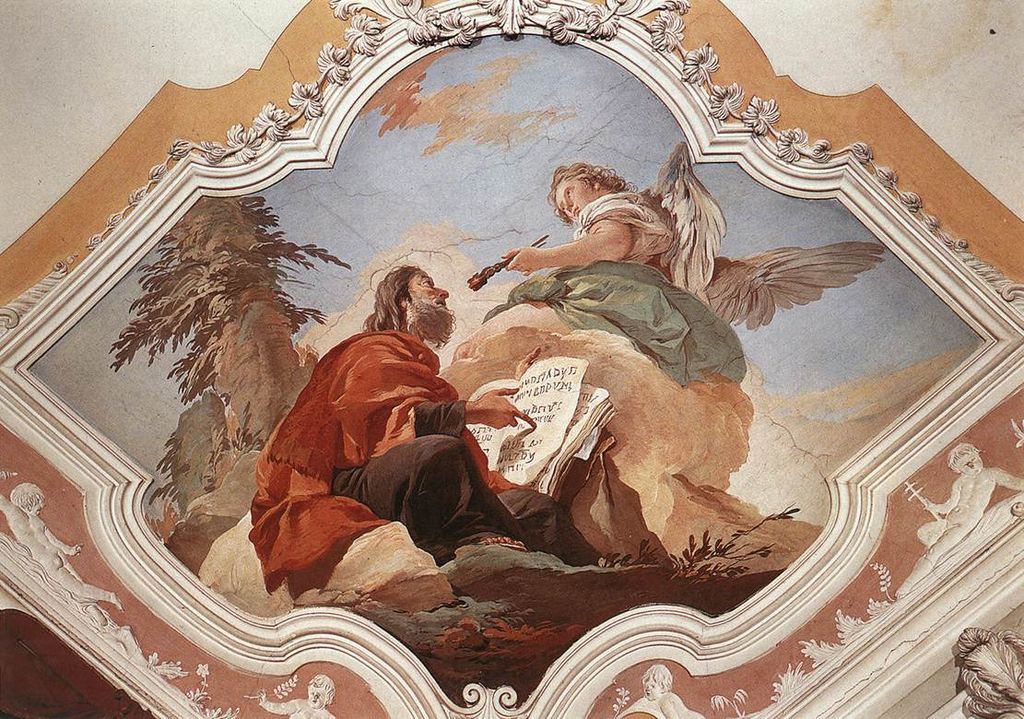
Tonight’s second reading comes from John’s Gospel, which famously starts by telling us that in the beginning was the Word, and the Word was with God, and the Word was God. The Word became a human being in the person of Jesus Christ, yet was still the divine Word who was already with the divine Creator before time began. The Father spoke that eternal and divine Word. In our power over words, we show that we are made in the image and likeness of God.
Like any other God-given gift, words can be abused. We’re told that we live in a ‘post-truth’ era, where we can all choose our own facts from a limitless supply of online news sources. There’s no question that technology, which always amplifies our power to do good and evil alike, is helping us run away from hard truths so we can pad our lives with comforting lies.
But this is a very old problem. In our first reading, Isaiah says that he is a person of unclean lips among a people of unclean lips. Isaiah wrote in the middle of an acute spiritual and political crisis for the Jewish people. They were facing new political threats, like the Assyrian Empire, which was known to treat conquered peoples brutally. They had also seriously declined from their golden age under Solomon and David. They were now a badly divided people who had drifted from the God-fearing vision that had once animated them, towards cynicism under self-serving leaders.
From this dark moment in its history, Jerusalem would have a period of spiritual renewal and cultural flowering. Isaiah, the wise counsellor to a succession of kings over more than half a century, would be a key part of that renewal.
But when he first heard God calling him to be a prophet, Isaiah didn’t rush to stick up his hand. He said “Woe is me!” Not only because of the way in which the lives of prophets often ended, but also because he saw himself as a deceitful man living among a deceitful people.
The central truth that Christians are called to proclaim is that God is Father, Son, and Holy Spirit. There are many other truths for us to proclaim and good works to be performed, but many of those tasks can be shared with others. Only Christians can proclaim Jesus Christ is the eternal Word who was in the beginning with the Father, who promised us the Spirit of truth. The Holy Spirit is love as a person, and love as God, a love that is aflame for the truth, a love fierce enough to burn away our lies. A love that drives us onwards where, in our own strength, we would fail.
We, too, need a spiritual renewal at a point when Church and state alike lack vision and are lurching from one crisis to the next. But renewal never begins with a committee or a strategy document. It begins when someone, confronted with the living God, cries “Woe is me!” and then, once their lips have been touched with fire, answers, “Here am I; send me.” Who will be that person for us?
Probably it isn’t you. But will you pray that God will raise up prophets among us – men and women with lips made clean – who will call this people of unclean lips to follow their Lord and Saviour? And if someone among us is brave enough to say, “Here I am, Lord, send me,” will you stand with them, support them, and refuse to silence them when the message becomes uncomfortable?
Because the same Spirit who moved Isaiah, the same Spirit promised by Jesus in tonight’s Gospel, is still at work. He is the Spirit of truth who will not let us do what Koko’s handlers and Clever Hans’s owner did – seeing only what we wish to see and disregarding the rest. He is the fire that burns away our lies and our self-deceptions, and He is looking for lips that are willing to be cleansed.
And now to the Holy and Undivided Trinity, to God the Father, God the Son, and God the Holy Spirit, be ascribed all might, majesty, dominion, and power, as is most justly His due, now and forevermore. Amen.
Preached at All Saints’, All Cannings (Trinity Sunday, Devizes Deanery Choral Evensong)
Readings: Isaiah 6.1–8; John 16.5–15
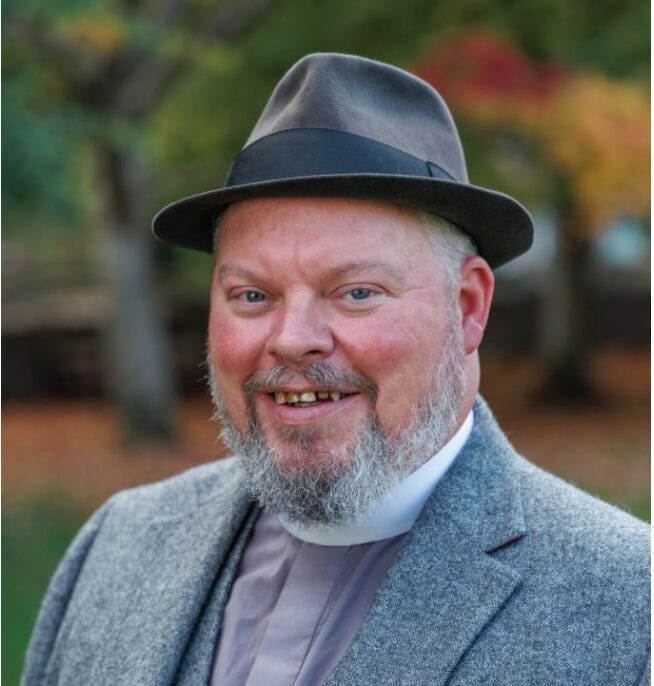
Gerry Lynch is the Rector of five rural parishes just outside Devizes, in a lovely part of Wiltshire between Salisbury Plain and the westernmost ridges of the North Wessex Downs.
He has a professional background in communications, party politics, and central government. He is a graduate of the Queen’s University of Belfast (in politics) and the University of Oxford (in theology), and trained for ordination at St Stephen’s House.
I include it as a guest post as I thought it was a beautiful expression of God’s call to us to speak prophetically to the world as we proclaim God as Trinity.
 Buy me a Coffee










Thank you Gerry
Lots of good stuff ‘a love fierce enough to burn away our lies. A love that drives us onwards where, in our own strength, we would fail’ but ‘Probably it isn’t you’ ? We are all called to first ask God His opinion ‘God has an opinion about everything’ (RT Kendall), and then do something about it, studying, speaking to another or many others in person or prose. We so desperately need this.
Or to put another way:
I am just a poor boy, though my story’s seldom told
I have squandered my resistance for a pocketful of mumbles
Such are promises
All lies and jest
Still a man hears what he wants to hear …
Ley la ley…
No estáis bajo la ley, sino bajo la gracia.
…and disregards the rest. I was wondering if Gerry was thinking about The Boxer when he wrote the fifth paragraph
Slow down, you’re going too fast …
…got to make the comments last…
Sometimes taking a sabbatical from comments can be helpful:
https://www.youtube.com/watch?v=cTjw96-Z700
“The central truth that Christians are called to proclaim is that God is Father, Son, and Holy Spirit.” ?
I do not believe this to be so. This is proclaiming a Theology, not a Saviour.
The central truth that Christians are called to proclaim is that ‘The Kingdom of God is at hand’ and that we need to take it to ourselves by inviting the King to live in us.
“Christianity had at its heart a Person and a Life long before it had a creed and a code” —T.W. Manson.
I will respond by pointing out that the Biblical phrase is “the kingdom (perhaps better ‘kingly rule’) has drawn near.” Grammatically, the Greek verb is in the perfect tense which is often said to apply to an action in the past with relevance to the present. A motion of drawing near has taken place, and that requires our response now.
If you start to unpack this phrase, considering what has drawn near – better: who has drawn near ,what is the character of this kingly rule, what is the nature of this ‘god’, you find the need to talk of the Father who loves and sends, the Son who drew near, and the Spirit who brings the response of repentance and faith, and enables us to live within this kingly rule.
You might say that you don’t want to talk about the triune God in evangelism. However, I would suggest that talking about the kingdom of God is equally opaque in our secular age. My wife has met, and is engaging with an older Japanese lady, and has given her a Japanese NT and another book to help her read this. This lady has absolutely no concept of God as she comes from, I presume, a Shinto and/or Buddhist background. So, to talk about the “Kingdom of God” would be confusing.
Many great theologians recognise that the understanding that God is Father, Son and Spirit. All else flows from this. So should not our proclamation be about, to adapt Mike Higton’s words, the God who is loves us, the God who is for us and the God who is with us. This is Good News.
Hi David.
I don’t think we’re that far apart. I applaud your wife’s conversations with the Japanese lady but I still wouldn’t necessarily start with the Trinity.
But in another context for instance, a Muslim generally knows something about Christian belief and has already formed an opinion. He (or she) hears ‘Trinity’ as ‘tritheism’ (despite the Mike Higton analysis) and immediately goes on defensive attack, and any that do become inquisitive find it very difficult concept to comprehend; any ensuing discussion then diverts to the concept rather than the Person. That’s why I would always start with my finding ‘God with us’, as contrasted to their (believed unreachable) Allah, so that any questioning then leads directly to the need to discover and acknowledge the Person and to put Him in charge of one’s life (as ‘king’ in bible language, although not actually expressed in that terminology). The theology comes later.
How can we speak prophetically?
It isn’t as some think just speaking or preaching the word, those are the evangelist and teacher gifts given to the Church.
The Prophetic is “for the perfecting of the saints”
EPH.4:13 Till we all come in the unity of the faith, and of the knowledge of the Son of God, unto a perfect man, unto the measure of the stature of the fulness of Christ:
Examine Paul’s prayers for his churches, uppermost in all his request he prays “that they may be filled” with various understanding in possession much on the line of “Jacob possessed his possessions” ie possessing all that was freely given to him already by God [in Christ as Paul]
Patrick Egan has a wonderful 5 part series on
Training the Prophetic Voice
I recommend the 5th. Part “Internalizing the Prophetic Message”
@ https://educationalrenaissance.com/2020/11/14/training-the-prophetic-voice-part-5-internalizing-the-prophetic-message/
Charles H. Spurgeon on “Possessing Possessions” @
https://answersingenesis.org/education/spurgeon-sermons/2136-possessing-possessions/
Shalom++
Proclaiming Jesus, God the Son, Savior is to proclaim the Triunity, implicitly. It is to proclaim Jesus as fully God and fully man as there is no Salvation any other way.
The Chalcedon Statement as. simply explained here, today, draws together reasons, which counter muddled thinking of alternatives .
Co-essential with the Father:
https://learn.ligonier.org/podcasts/things-unseen-with-sinclair-ferguson/co-essential-with-the-father
Should we pray:
Jesus in heaven…
Or Father in heaven , Jesus is your name?
Since Jesus gave the example before His ascension.
Is not the distinction to be made with human fathers.
Pray as our Lord taught us. He did so for a reason.
I wonder if any church – or cleric here – recited the Athanasian Creed on Trinity Sunday, as the BCP requires.
St Andrew’s Cathedral Sydney did, in a slightly modernised version – along with singing some great Trinitarian hymns like ‘Holy Holy Holy’.
In my local ‘evangelical’ Anglican church, Trinity Sunday was completely ignored. They didn’t even try to touch the hem of the mystery.
It always surprises me that the Athanasian Creed has survived given its ending:
And they that have done good shall go into life everlasting; and they that have done evil, into everlasting fire.”
Not exactly a ringing endorsement of Sola Fide…
Not at all. That is exactly what Matthew 25.31-46 teaches. As Ian has often mentioned here, and as I worked out independently for myself, the parable of the sheep is about responding faithfully to Christian preachers (‘the least of my brethren’). As James the brother of the Lord pointed out, a profession of faith that does not issue in Christian living is empty and meaningless. A person’s whose life is not changed following a profession of faith has evidently not repented from his sins.
(The Pelagian belief that Matthew 25.31-46 teaches an alternative means of salvation by works of mercy is still with us, and I have come across it in GCSE RE textbooks.)
This lay member did!
Words are important but it is conscience that separates man from the animals. The Hebrew word for it is very similar to the word for what God blew into Adam, whereas God simply created the animals.
I thought the same Hebrew word was used for breath of life for both humans and animals in the OT? On a physical level there is no difference. Rather the difference is humans are made in the image of God.
Genesis says that God created the man in his own image (1:27) “from particles of earth [adamah], and breathed [nafach] into his nostrils the breath [neshamah] of life, and man became a living being [nefesh]” (2:7). This man was called Adam, as a reminder of his origin (the Hebrew for earth). Adam was a real person according to Romans 5:12. Hebrew relates breathing and living; living animals too are nefesh (Genesis 1:24) and were also created from the earth (2:19).
In Genesis 2:7 God blew the neshamah of life into Adam. Only God and man are described as having neshamah in the Old Testament. Genesis 7:22 might be taken to apply the word to animals, but the reference is ambiguous and the other 23 references aren’t, which settles the ambiguity. The similar word ruach is applied to animals at Genesis 7:15, where it clearly means ‘breath’ rather than its other meaning: spirit. So neshamah is the key word and it is part of the image of God in us. It is also related to the Hebrew for conscience.
I don’t know any word in BH that denotes ‘conscience’. What word are you thinking of?