The testimony of John the Baptist in John 1
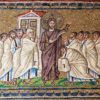
The lectionary gospel reading for Advent 3 is John 1.6–8 and 19–28, which picks out parts of John the Baptist’s testimony from the first chapter of the Fourth Gospel. Despite being highly selective from this remarkable opening chapter, it nevertheless contains key words and ideas that are carried through the whole gospel. Perhaps the most … Continue Reading

What will a Jewish reading of Genesis teach us?

Rabbi Jonathan Sacks has just completed a five-volume series on the Torah under the heading Covenant and Conversation. The blurb from the first volume, on Genesis, comments: In this first volume of a five-volume collection of parashat hashavua commentaries, Rabbi Sir Jonathan Sacks explores these intersections as they relate to universal concerns of freedom, love, responsibility, … Continue Reading
Do the resurrection accounts contradict each other?

If the resurrection of Jesus of Nazareth from the dead is the most important and foundational truth of the Christian faith, how come the New Testament accounts of the resurrection and Jesus’ appearances are so contradictory? That is a relatively widespread response in atheist/apologetic circles, and I think amongst Muslim critics of the Christian faith. … Continue Reading
The healing of the man born blind in John 9

The lectionary used by the Church of England has done something slightly unusual in the last few weeks. Although we are supposed to be reading from Matthew’s gospel, and the RCL used ecumenically has continued to do so, the lectionary in Common Worship offers us a sequence of four encounters between Jesus and individuals from … Continue Reading
The manifestation of Jesus in John 1

One of my favourite films at the moment is Arrival. It begins with a prologue which appears to be quite distinct from the rest of the narrative, but it is only once you have seen the whole film that you understand what the prologue was actually telling you. The phrases, ideas and narrative in the … Continue Reading
How should we treat Old Testament law?

Should Old Testament law be of value to Christians, and if so, in what sense? Dr Carmen Imes is Associate Professor of Old Testament at Prairie College in Alberta, Canada, and did her doctoral research on the understanding of the third Commandment ‘You shall not take the Lord’s name in vain’, published as a monograph … Continue Reading
What is Michael doing with his angels in Revelation 12?

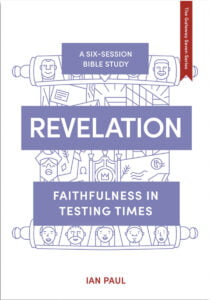
This Sunday’s lectionary reading is from Rev 12.7–12 in celebration of the feast of Michael and All Angels. Although the festival focusses on Michael, everything about this passages actually focusses away from Michael and points us to the victory of God and the lamb—even Michael’s name! This is what I wrote in my Tyndale Commentary, as … Continue Reading
Resurrection is the fulfilment of God’s promises

With the controversy about whether Jesus’ resurrection was bodily last week, it seems appropriate to continue to reflect on the meaning of the resurrection in Luke’s account of the early church in Acts. This is the second instalment of my notes written for BRF Guidelines Bible reading notes which have just come out and lead up … Continue Reading
Is it time to rethink the ‘testimony’?

At the Second Festival of Theology, Mike Starkey (who teaches at the Church Army centre in Sheffield) suggested that we need to rethink the traditional ‘testimony’: It is a truth universally acknowledged that Christians invited to talk about their faith look terrified. Most people simply don’t know where to start. And that’s before you introduce … Continue Reading