Hope and fulfilment in the gospels

Biblical eschatology is founded on three key assumptions. The first is that the God of Israel is the rightful ruler of the world (and not just of Israel alone), often described in terms of his kingship over the creation. The second is that, even though this is the situation in theory, in practice the world … Continue Reading

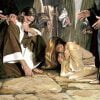
Interpreting the sheep and the goats in Matt 25

Jesus’ ‘parable’ of the sheep and the goats in Matt 25.31–46 is very well known and widely misinterpreted. It forms one part of the extended teaching about ‘the end’ distinctive to Matthew (compared with Mark and Luke). It is most commonly interpreted as an injunction to help the poor; most Christians (in the West at least) read … Continue Reading

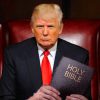
Evangelicals, Trump and theology

‘I am done with the label “evangelical”. It’s not the theological position I have a problem with, it is just the term. When 80% of white evangelicals vote for Trump…’ This was not a comment from Tony Campolo, but a conversation with someone with UK national profile. What are the theological issues at stake, and … Continue Reading

Resolving tensions in our reading of Scripture

Following my previous observations about Tony Campolo no longer calling himself evangelical, Tony himself responded on Christian Today. Every once in awhile unfair judgments are made. That was the case when Christian Today contributor Ian Paul wrote that I, along with other Red Letter Christians, emphasised the red letters in the New Testament, which in many Bibles highlight … Continue Reading
Do Anglicans believe in ‘real presence’?

Earlier this week I had a conversation with a friend who has just been recommended for ordination training. He has been meeting with someone else going through selection, and they have been working through the ordinal together. ‘It’s funny—we couldn’t find all that Catholic stuff in the ordinal—it comes over as quite, well, if not … Continue Reading
Should we aim for a pure church?

I have just been doing some writing on the anthropology of the Book of Revelation, and it is quite a challenging topic. In exploring how a book depicts human existence, you might (for example, in Paul’s letters) look at theological terminology or (for example, in the gospels) explore the narrative construction of reality. Neither of … Continue Reading
What does resurrection mean?

The idea of resurrection is central to Christian belief and theology—but it is also the key idea which separates the New Testament from the Old. The Old Testament appears to assume that, after death, people continue in some sort of shadowy existence in a place called Sheol—often translated ‘grave’ or ‘pit’ in English Bibles. There are some examples of resuscitation (see 1 Kings 17:17-24 and 2 Kings 4:18-37)—but these are acts of compassion and never shed any light on life after death.

No-Palm Sunday in Luke

I hope you didn’t feel too disappointed on missing out on Palm Sunday this year. The reason is that we are reading from Luke’s gospel, and Luke makes no mention of ‘palms’ during Jesus’ ‘triumphal entry’ in Jerusalem, riding on a donkey. Instead, we only get mention (Luke 19.37) of people spreading their cloaks, or … Continue Reading