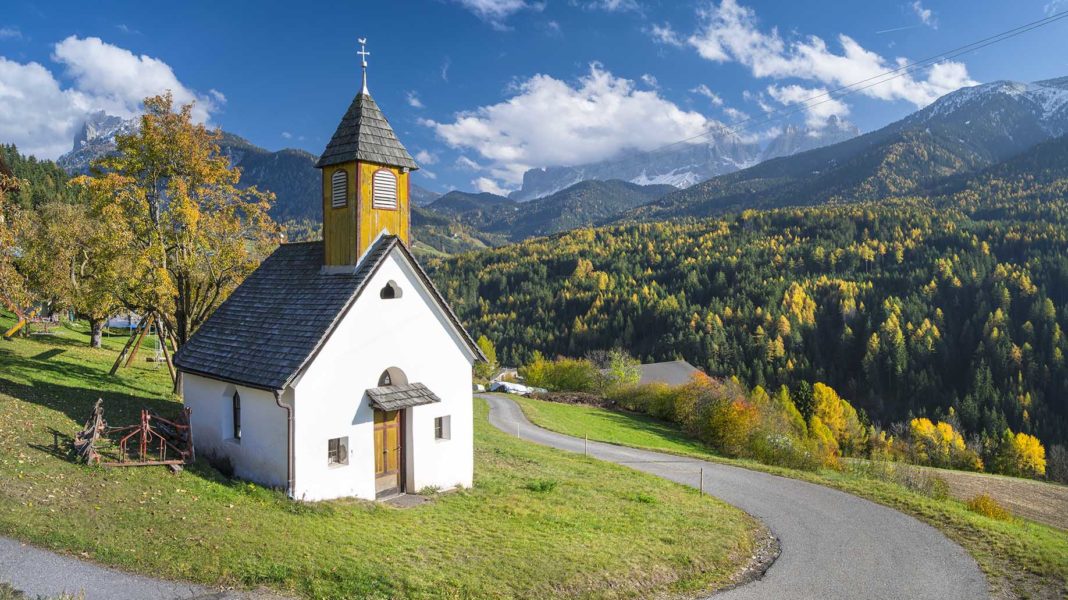
Some years ago, one of the fringe meetings at a session of the General Synod focussed on the needs of ‘mid-sized churches’, in this case defined as worshipping communities of 20 to 60. The reason for this was a question that William Nye, Secretary General of Synod and the Archbishops’ Council, had raised:
Without meaning to, a lot of the time, we, the national church institutions, just default to thinking about bigger churches, because a lot of people’s picture of the norm of the church is a vicar and about 100 people on a Sunday morning. We have overlooked this middle third. Lots of staff at Church House, lots of bishops, come up through bigger churches, worship in bigger churches; bishops have led bigger churches.
I suspect some would have questions about whether this size was really the middle, or the smaller end, but it has obvious implications for church growth, as the Church Times article points out:
Arithmetic done by staff at Church House suggests that, if each of the 5,000 mid-sized churches gained an extra five people, the Church of England’s decline would be reversed. About 200,000 people worship in these churches, which serve a population of 16 million.
In the session, I did point out that, from my experienced of being a member of a church of around 50 membership in Southampton, and then being involved in larger churches, one of the challenges for the smaller or ‘mid-sized’ churches was that of resource. There is quite a strong expectation in contemporary culture that things will be done ‘well’ on a Sunday morning, and that means that a church community needs to be comparatively well organised and well resourced, which can be a struggle for smaller churches. It was not intended to be a criticism (though seemed to be taken as one!) but indicates that partnership between congregations might be a key question.
All this does raise the question of what is the idea size for a local church and why. Online discussion covers a range of issues. Some discussions focus on practical and technical issues; and this short summary describes an average attendance of around 100 ‘small’, which reflects its North American context. Church growth guru Carey Nieuwhof says that his short exploration of what keeps ‘small’ (less than 200 attendance) churches small is his most-read article—but I thought it interesting that he focusses almost exclusively on technical, structural issues, particularly around how leadership is organised.
The shift from structural issues to issues of relationship comes when we think about leadership and resourcing in more personal terms. One blog discussion from a Reformed perspective makes this observation:
There are several things to think about simultaneously. One way to go at this problem is to ask what is the ideal ratio of pastors to congregants? I was told in seminary that the ideal is one pastor for everyone hundred people. My experience as a pastor over the last 25 years suggests that this is a good ratio. If this is true, then, so long as a congregation is well staffed, theoretically, it could grow as large as it wanted. Others, however, have argued that about 200 to 250 is the ideal number of people in the congregation and that after a congregation reaches 200 to 250 people it should begin daughtering new congregations.
This is both a relational and a resource question: how many full-time leaders/pastors do you need for a congregation—and how many can you afford? The question of financing ministry, which is therefore also a question of the sustainability of smaller congregations, is easily avoided in the C of E because of the way that financial structures share resources. That can be very good, since it enables the C of E to sustain ministry in areas and contexts that other denominations have withdrawn from. But it can also be very bad, since it can allow us to avoid hard questions about what is going on in ministry and congregational leadership in different places.
A recent article by Ed Stetzer in Christianity Today magazine touched on some key relational issues:
Another advantage for churches of over 100 is the anonymity factor. Visitors and new attendees are able to come in and sit towards the back or in a place where they are most comfortable. They don’t have to sit right next to a stranger or walk to the front of the church to find an empty row.
Of course, there may be disadvantages to this as well. People may visit your church for weeks and go completely unnoticed because of the size. This is very unhelpful for the health and growth of the church. If you sense this is an issue in your church, it is time for you to form a plan make sure people feel seen and welcomed when they visit you.
It can also be more difficult for people to visit churches with less than 100 seats. Small congregations may feel more like cliques, drawing attention to the fact that visitors are ‘outsiders’ who are new to the group. If you are a smaller church, how are you handling this? If you don’t have a plan to welcome people in without making them feel uncomfortable, it is time to make one. In such a small church size, you need to work hard to make people feel welcome and show that you love them.
I think Stetzer is right to see anonymity as both a good and a bad thing; some people just want to slip into church at the back to explore, before being confronted with the full obligations of involvement, and I think this is often missed in discussions about relationship and size.
Some discussions do take a fully relational perspective, like this comment on a discussion board:
My own personal opinion is that a church should be between 80-120 members. When a church exceeds 100 members it becomes a bit more difficult to get to know everyone and the sense of close fellowship can be lost. With 80-120 members it is still big enough to be self supporting. My own personal view is that when a church reaches the 120 mark it should set aside around 40 members to be a church plant in a different nearby location. That church in turn will grow and plant.
So we have a variety of answers, considering a range of issues. But is there somewhere to look that might give us a more objective insight into the dynamics of this kind of human community? The New Testament does not give us direct answers, since it is less interested in numbers and structures compared with issues of theology and missional dynamics. But this theological perspective offers us two pointers. First, the ‘church’ (in the New Testament ekklesia) is about the formation of human community. Part of the clue to this is found in the extensive discussions of relationship dynamics, both in Acts and in the writings of Paul and others in the New Testament, with organic metaphors of the ‘body’, relational language of ‘incorporation’ into Christ, and even the metaphor of being ‘living stones, built into a temple’ (1 Peter 2.5). But the term ekklesia is also key; rather than having the institutional or architectural implications that the word ‘church’ has today, it draws on both the Greek meaning of the gathering of citizens in a polis as well as the gathered people of Israel in the Greek translation of the Old Testament. (That is why the AV often mentions the ‘congregation of Israel’ within the OT narratives.)
But the early Jesus movement was not just any human community; NT writers understood it as involving the recreation of humanity as God had intended, and the ‘new creation’ (2 Cor 5.17) in anticipation of God’s renewal of the whole of the created order. Although we can see that this community was clearly not perfect and not without its problems, nevertheless it modelled something of the ideal of the new humanity in Jesus, for example in the sharing of possessions in Acts 2.42f.
There is therefore a good reason why we might look to the natural dynamics of human community, that is, to anthropology, for insights into the ideal size of a local church.
A recent episode of The Life Scientific, hosted by Jim Al-Khalili, comprised an interview with Professor of Evolutionary Psychology Robin Dunbar. Dunbar started his academic life exploring the social dynamics of gelada monkeys in the Ethiopian highlands, living with a group of 500 of them for most of his 20s! (It is worth listening to the whole episode.) One aspect of their social life that particularly struck him was the amount of time the monkeys spent grooming, something that it is easy to notice amongst primates when you watch any wildlife film. At the time, there were two major and competing theories: the purpose of grooming was about hygiene; and the purpose was about building social relationships. Dunbar wanted to decide which of these was most important, and had to think about how this might be tested. So he analysed the amount of time spent in grooming and compared it with two things—primate body size, and the complexity of social relationships. He found no correlation with body size, but what appeared to be a clear correlation with social complexity. In other words, if you are going to maintain a complex society, you need to invest time in building a wide range of strong relationships.
This led him on to consider a wider issue of why different primate groups have different levels of complexity in their social organisation. Complexity has advantages, for example the sharing of resources and the ability to protect one another. But it also makes higher demands, since (in essence) you need to be smarter to manage complex relationships. So Dunbar compared brain size with size of social group, found there was a clear correlation, so extrapolated up to the size of the human cortex, and arrived at Dunbar’s number: 147 (usually rounded to 150). He believed that this was, in principle, the optimal number for human social groups—and in fact found numerous historical examples of human social groups naturally settling into this size. The number has been sufficiently important that some businesses have even organised their offices into groups of this size.
Although this number is the best-known aspect of his work, Dunbar actually sees human interaction in a more nuanced and textured way. In a reflection on why social drinking is so important in many human cultures, he makes this comment:
Our studies suggest that we devote about 40 per cent of our available social time (and the same proportion of our emotional capital) to an inner core of about five shoulders-to-cry-on. And we devote another 20 per cent to the next 10 people who are socially most important to us. In other words, about two-thirds of our total social effort is devoted to just 15 people. That is a very substantial commitment, and amounts to an average of about two hours a day. It makes it all the more necessary that what we do with them is fun, otherwise they won’t keep coming back for more.
From an anthropological, psychological and social perspective, he sees human relationships clustering around the group sizes of 5, 15 and 150, and in fact in other conversation adds a mid-sized group of around 50. (I was reminded of this again in this week’s diocesan conference, where we were asked to identify each of these groups in our life and reflect on this.)
There are two intriguing things to note about this structuring of community in relation to the question of the ideal church size.
The first is that there is some evidence in the New Testament of this kind of differentiated numerical structure. It is often noted that, amongst the twelves apostles (making 13 altogether, not far from Dunbar’s second number), Jesus was particularly close to Peter, James and John, these being the ones he took with him up the mountain at his transfiguration. There are good arguments that the ‘beloved disciple’ who is the writer of the fourth gospel, was not one of the Twelve, but a disciple based in Jerusalem, and that would give us a core group of close friends of five, in Jesus, Peter, James, John and the Beloved Disciple. The 72 sent on ‘mission’ in Luke 10 are not far off Dunbar’s third number, though there are other obvious symbolic reasons for this number, being half of 144. In Acts 1.15, the number of ‘brothers’ is around 120, though it is not clear whether this includes the women who were there or not, adelphoi being used as a generic term for followers of Jesus.
It is also worth noting that in the first century you need 10 adult Jewish men to form a synagogue, and adding in wives and children that would get you to around Dunbar’s third number. This is also the kind of size of many early Christian communities meeting in large houses, according to Peter Oakes in his exploration of the practical dynamics of Christian meetings in Reading Romans in Pompeii.
(In the one discussion I did find of church size in relation to Dunbar’s main number, Howard Snyder notes the correlation of this number with his observations of congregational dynamics—but he does not mention Dunbar’s other numerical observations.)
Returning to our opening question: what is the ideal size of a church or congregation? Well, actually is it all of 5, 15, 50 and 150. If we want to encourage genuine growth, encouragement and accountability, there is nothing quite like have a small group or 4 or 5 that meets regularly; at St Nic’s where we belong, these are called ‘core groups’. But the ‘home group’ of 12 to 15 has had a good track record, as a place for more general learning and mutual support since they became popular in the charismatic renewal from the end of the 1960s. Sandy Miller told us at a church weekend away that ‘pastorates’ of around 40, not far from Dunbar’s third number, has been key in not only church growth but the nurture of leaders in the HTB network—and this corresponds to the ‘mid-sized church’ that we began with. And once you reach 150 as a congregation, it is probably time to think about church planting, a strategy which the C of E now appears to be taking to heart.
In a previous discussion about this, one contributor Richard Saunders-Hindley commented:
I am part the Inspire Movement, a growing ecumenical and international discipleship movement which draws on John Wesley’s wisdom. Wesley organized the movement into Societies (probably around 50), Classes (12-15) and Bands (3-6). The premise of Inspire is ‘mission spirituality’, i.e. growing as disciples in order to spread the gospel. The heart of Inspire is the Fellowship Band of 3 or 4, in which people can forge deeper relationships and be accountable to one another in their discipleship. Larger groups of 12 and bigger gatherings of 30+ fit naturally into this pattern. The Wesleyan focus on the Spirit-filled transformation of individuals through the deep, accountable fellowship of the church, and then the sharing of that transformation in evangelistic mission points to the importance of smaller, more intimate groups that focus on spiritual growth. I encourage anyone to consider this approach in their church strategy.
These things matter because, when it comes to the kingdom of God, relationships matter. Numbers matter because numbers represent people, and people matter.
(Published previously.)
 Buy me a Coffee












An interesting issue here is the issue of “ownership.” If I’m one of a tribe of 150 gelada monkeys, then my “immediate core group” of (say) 5 will all be in the group of 150. And churches expect the same, ie that if I’m a member of congregation X (of 150 say) then I will also be part of a core group or life group that “belongs” to congregation X.
But all this assumes that conventional Protestantism is OK. By “conventional Protestantism” I mean the notion that I select a “congregation” to “belong to” and then pretty much ignore all the other Christian brothers and sisters who live in my street but “belong” to different congregations.
And conventional Protestantism is **not** OK. It contradicts the scripture which declares that Jesus died “to bring together into *one* body all the scattered people of God” (John 11:52.)
I think you are suggesting that the church of Jesus Christ should comprise a single hierarchy. I believe there should not be a hierarchy above multiple congregations at all.
https://church14-26.org/leadership/
As soon as you have a hierarchy there will inevitably be schism into two hierarchies (as happened in 1054) and then more.
Anton,
>>As soon as you have a hierarchy there will inevitably be schism into two hierarchies (as happened in 1054) and then more.<<
You've got this bac-to-front. Schism is inevitable in this world due to the sinfulness of man and the wiles of Satan.
How else do you have a communion of people, a body of believers, if there is no communion of belief? Where's the foundation?
Jesus calls the Church “the kingdom of heaven/God” scores of times in Scripture (Matt. 9:35, 10:7, 12:28, 13:11, 19:24). A kingdom with a hierarchy endowed with His authority to speak for him (Matt. 10:40, 18:15-18). Jesus established a kingdom. not a democracy or a group where one could believe what one wanted.
There was never a primordial and pure Christianity that lacked hierarchical structures. We read in Ephesians 4 that Christ Himself gave us apostles, prophets, pastors, evangelists, and teachers, for the building up of the body of Christ, until all come to the unity of the faith.
Why? “Then we will no longer be infants, tossed back and forth by the waves, and blown here and there by every wind of teaching and by the cunning and craftiness of people in their deceitful scheming. Instead, speaking the truth in love, we will grow to become in every respect the mature body of him who is the head, that is, Christ.” (Ephesians 4: 14-15) Notice the hierarchy!
You can argue about whether the Catholic Church is right or wrong, argue the Orthodox Church is right or wrong, or that the Anglican Communion is right or wrong. What you cannot argue is that Scripture denies the need for the Church, the Body of Christ, His Kingdom, to have a hierarchy.
Watch me! It’s all argued from scripture in
https://church14-26.org/leadership/
Schism occurred because Rome excommunicated Luther (who in 1517 had no thought of schism) instead of heeding his entirely justified criticism of the corrupt practice of indulgences.
The need for reform does not mean that one should separate from the communion of the Church, setting up one’s own version. Luther opposed the papacy – not just corrupt practices. His attack on papal authority paved the way for his attack on the sacramental system and his call for a national German church separated from Rome.
Luther’s teachings were not reforms intended to return the Church to some imagined pristine state but a rebellion designed to destroy the Church and create a new entity in his image. His counterparts elsewhere in Europe did likewise. The result was a fissiparous Protestantism, the members of which were unable to agree among themselves on many doctrines and practices but could agree to oppose “the Pope of Rome.”
Once you run with the private interpretation of Scripture, like Luther and his co-reformers, you accept there is no human-connected authority to which you must give obedience of mind, and you’re free to use private interpretation at will.
How is this based in Scripture?
‘Private interpretation’ in your post merely means something that differs from Rome’s interpretation. And Rome has no better argument than “we are right because we say so.” I’ve heard that one before. Rome’s position is exposed in exegetical arguments, and thankfully it can no more silence its opponents up by other means.
It is necessary to give dates to when Luther believed what about Rome, as his thinking evolved. Getting kicked out for giving a valid criticism of corruption, which the corrupt of Rome ignored, hardened his view; what do you expect? Rome kicked him out instead of heeding his critique of indulgences, which you carefully ignored.
@ Anton
Let’s get the history right. Luther was excommunicated in 1521, 4 years after publishing his 95 Theses.
Luther’s complaints went beyond a criticism of corrupt practices. He launched a direct attack on the office of the papacy and papal authority. He stubbornly dug his heels in, escalating and broadening this attack in the face of attempts to calm him down.
His ‘Grace and Explanations of the Disputations on the Power of Indulgences’ (Ninety-five Theses in October 1517), was followed by his Sermon on Indulgences (in March 1518). These were studied in Rome in July 1518.
It wasn’t until June 1520 that Pope Leo issued the bull ‘Exsurge Domine,’ listing forty-one teachings in the works of Luther that were “either heretical, scandalous, false, offensive to pious ears or seductive of simple minds, and against Catholic truth.” In it, Leo bemoaned the fact that Luther did not respond to repeated attempts at reconciliation. He expressed regret at the situation but recognised his duty to safeguard the faithful from heresy. Leo included one more exhortation to Luther to recant, giving him sixty days to do so or else incur excommunication.
Luther responded by publishing ‘Against the Execrable Bull of Antichrist’. He called Leo the Antichrist and wrote the purpose of the papal bull was to “compel men to deny God and worship the devil.” Later in the year Luther staged a public burning of ‘Exsurge Domine’ and told his followers that whoever “does not resist the papacy with all his heart cannot obtain eternal salvation.”
Luther was excommunicated in January 1521.
How you can claim Luther “had no thought of schism” is beyond me! His views hardened before he was excommunicated – or at least he found the courage to make these public as his notoriety/celebrity grew and the German princes, for temporal reasons, supported his rebellion.
Luther seemed to have an interest in following Christ and His teachings, but had a clear problem with pride and arrogance. Reading his writings, one is confronted with a man who is very prickly about anyone disagreeing with him, and who says some very outlandish and uncharitable things about those with whom he disagrees on anything. This is a man who went on to advocate killing peasants when then revolted, then burning synagogues, destroying the Talmud, and killing all Jewish rabbis. His theological trajectory is not someone growing in holiness, but one of pride and embittered disillusionment.
So much for the “private interpretation” of Scripture and personal sanctity.
Out of interest, how do you interpret Matthew 16: 19, bearing in mind its link to Isaiah 22? This is an extraordinary degree of authority given to Peter. Then in Matthew 18:1, Jesus conferred apostolic authority on the 12 as a college.
Jack,
Do you mean Matt 10:1 rather than 18:1? That was a specific gifting of the Holy Spirit to do certain things through the twelve, prior to the giving of the Holy Spirit and his gifts to all believers. Re Matt 16, the Greek verb forms for ‘bind’ and ‘loose’ is the future perfect – “whatever you bind on earth shall have been bound in heaven, and whatever you loose on earth shall have been loosed in heaven.” So this is about *recognition* of the true state of affairs. Comparison with Matthew (18:18) and John (20:23) shows that the keys and promises were for all the disciples.
If Peter had been publicly appointed as senior, why did a dispute break out at the Last Supper over which of the disciples was greatest (Luke 22:24)?
The well-known “on this rock” verse, immediately preceding, can hardly mean that the church is built on Peter, for that would contradict statements elsewhere that it is built upon Christ the cornerstone. Peter was first to declare Jesus the Messiah, the first stone to be laid upon Christ the cornerstone. The differing Catholic and protestant views are probably best understood in sketched images rather than verbal descriptions.
I do accept a special measure of authority granted to the twelve, but it is on the basis that they had known Jesus in the flesh, and there is no suggestion that it can be handed on. Of course the founder of a congregation retains special authority over that congregation during his lifetime. All this is explained at
https://church14-26.org/leadership/
Yes, it is necessary to look at Luther’s timeline. He was an Augustinian monk. He had an acute sense of his sinfulness before God, but he found no peace in confessing for hours, intensive fasting, going on pilgrimages, addressing prayers to Mary in de facto worship, kneeling before consecrated Communion bread or venerating bones and other relics of men whom the church had declared holy. (More than one church claimed to house Christ’s circumcised foreskin.) Luther, as a monk, studied the Bible, and he had a superior, Staupitz, who guided him sensitively. Finally he found peace in Jesus Christ, having trod the path of St Paul, who reached the great liberating truth that a man needed only faith in Christ to be forgiven – not struggling harder to keep the laws of Moses (Paul) or doing more penitential practices (Luther). Both men had to unlearn what they had been taught, which is hard because we invest ourselves in what we have learnt. Still Luther believed that, however corrupt the church in Germany, Rome itself must be pure. In the papacy of Julius II, who had led military campaigns while Pope and had fathered at least one daughter (Felice) out of wedlock before that, Luther was sent to Rome on monastic business. He was shocked to find the city more worldly, more corrupt. Then a preacher named Tetzel passed near Wittenberg soliciting money for Masses and prayers to get loved ones out of Purgatory to heaven. Luther, disgusted, objected in a 1517 letter making 95 assertions (‘theses’) to his Archbishop in Mainz, who had let Tetzel preach there; some of the money raised would pay off a loan the Archbishop had taken, some go to rebuild St Peter’s – the building in Rome today. Probably he also nailed his theses to the door of the castle church in Wittenberg as a challenge to debate; that was normal practice, and church doors acted as noticeboards.
The ‘twelve conclusions’ of the Lollards had been posted on the doors of England’s Parliament and St Paul’s Cathedral 122 years earlier, but nobody of Luther’s stature stood behind them. Nor was printing with moveable metal type then known in Europe; Gutenberg devised it in Mainz decades before Luther. Printing was the internet of its time, for any literate man could read out Luther’s pungent Bible-based tracts to a crowd of peasants resentful of taxes to maintain church privilege.
The church could not ignore Luther’s critique as it did his contemporary Erasmus’s, because of the threat to church income. Luther’s case went up the church hierarchy. In 1520 came a papal decree, Exsurge Domine, that Luther must recant within 60 days or be excommunicated for heresy, and perhaps burnt. Included in Exsurge Domine was a *condemnation* of the protestants’ assertion “that heretics are to be burned is against the will of the Spirit”. The next year, at the city of Worms on the Rhine, Luther stood before the Holy Roman Emperor Charles V. Charles was, at 21, the world’s most powerful man: ruler of the German princes, and also of Spain and its growing Empire in the Americas, where the Catholic church was spreading. Luther famously refused to retract. He got away, and was protected by a sympathetic local ruler while he continued his writings. He translated the Bible from its original languages into German.
Luther’s message touched off an anarchic revolution across much of Germany. He was no social revolutionary and he supported the authorities in putting it down – showing the emptiness of Rome’s appeal to Germanic princes that his ‘protestant’ movement was a threat to their authority. The Catholic church itself created Protestantism as a rival, by excommunicating Luther and his followers.
@ Anton
Apologies, I meant Matthew 18:18 – and this clearly is Jesus given special authority to the apostles, with Matthew 16:19 given an extraordinary degree of authority to Peter.
Our Lord’s words in Luke 22:24, are referring to the model of Christian authority, that of service. One of the titles of the pope is “Servant of the servants.” Leadership doesn’t mean a person is greater than those he serves.
From your description, it appears Luther suffered from excessive scrupulosity, a disorder involving obsessive and compulsive thoughts and behaviours related to morality. Luther never felt at peace with God. He thought his every action was sinful and that he could not obtain God’s favour. He would go to confession every day. He said, “As a monk I thought salvation impossible when I felt the concupiscence of the flesh, that is, an evil movement, whether of lust or of anger or of envy against a brother, etc.” Temptation isn’t sin. It’s therefore understandable that salvation by faith alone would appeal to him, crippled as he was with guilt over his every action and thought. There’s no comparison with St Paul.
You do know Luther defended papal indulgences? The only anathema in the 95 Theses was his Thesis #71: “Let him who speaks against the truth concerning papal indulgences be anathema and accursed.”
Luther’s was right to critique the sale of indulgences. He rejected the teachings of indulgence preachers like Johann Tetzel and others who “say that as soon as the money clinks into the money chest, the soul flies out of purgatory.” Who can disagree with his counter:“it is certain that when money clinks in the money chest, greed and avarice can be increased; but when the church intercedes, the result is in the hands of God alone”? (Theses 27-28)
Indulgences don’t bring about our atonement (as Luther well knew), they are a spiritual good. And the sale of spiritual goods is anathema to Christianity, the sin of simony, named after the unhappy Simon Magus. There’s a long history in the Church both of simony popping up and of the Church condemning it, and the Council of Trent vindicated Luther on this point.
There were 41 condemnations in ‘Exsurge Domine’; it’s interesting that you only cite one. The one you’re referring to says little more than capital punishment by the State for heresy is not forbidden by Divine law. No’s 6 and 9 are interesting given they’re addressed to Luther’s distorted perceptions on sin and forgiveness.
Luther is described as “the wild boar from the forest” who seeks to destroy the vineyard, “an image of the triumphant Church” entrusted to Peter. The comparison is appropriate. Wild boars are aggressive, short-tempered, and easily provoked, and they will not hesitate to attack humans; and they are carriers of viral, bacterial, and parasitic diseases that can affect humans.
How you can say the “Catholic church itself created Protestantism as a rival, by excommunicating Luther and his followers.” with a straight face is beyond me!
Should the Church have accepted the Montanists, the Paulicians. the Adoptionists, Manichaeism, the Bogomils, the Waldensians? What did Luther usher in? Look to the Calvinist and Wesleyan ‘Great Awakening’ in the 18th century – a radical movement seeking the purity of ‘primitive Christianity’, followed by the ‘Second Great Awakening.’ These movements were not only reacting against the Catholic Church, but against all the other historic Protestant denominations. The result? Christadelphians, Christian Conventions, Seventh-day Adventists, Latter-Day Saints, and Jehovah’s Witnesses, and independent groups like the Churches of Christ, Disciples of Christ, and the Christian Church.
These movements are ignorant of what the early Church was really like. They assume that it was congregational, not hierarchical. They assume it was non-liturgical and non-sacramental. They assume it was exclusively Bible-based. They assume there was no clergy and that the congregation met in people’s homes. These assumptions are simply not true, or if they were true in some isolated places they are not the whole truth. The writings of the early Church Fathers are ignored. all the result of the Protestant dogma of sola scriptura. We have documents telling us just what the early Christians believed, how they worshipped, and how the Church was structured –
Jack,
I worship Jesus Christ, not Martin Luther. Luther started wonderfully; read his short essay of 1523, “That Jesus Christ was born a Jew” to see a very sympathetic attitude toward the Jews, which had unfortunately evaporated into vituperation by 1543 (in “On the Jews and their Lies”, from which you quoted). He seemed to follow the all-too-predictable trajectory into overblown arrogance of many men who became Pope, although he did great good earlier on. The description you give of him is that before he found peace in Christ. “You are treating with God without Jesus Christ in between”, as I think Staupitz said to him.
Justification by faith alone is the meaning of Galatians 2:14-16, “we, too, have put our faith in Christ Jesus that we may be justified by faith in Christ and not by the works of the law, because by the works of the law no one will be justified.” As for James saying that justification is by faith and works, those are the works done as a result of faith. Do you believe the dying thief on the other cross was not justified because he didn’t do any good works?
I’ve already covered binding and loosing above.
You write: “There were 41 condemnations in ‘Exsurge Domine’… The one you’re referring to says little more than capital punishment by the State for heresy is not forbidden by Divine law.” The New Testament is perfectly clear that believers in Christ should shun those they consider heretics. But nothing more. What you carefully avoid saying is that the Catholic church actually exhorted secular rulers to burn those it considered heretics, in flagrant contrast to the NT.
Should the Church have accepted the Montanists, the Paulicians. the Adoptionists, Manichaeism, the Bogomils, the Waldensians?
Well it shouldn’t have burnt them. I’ll limit my reply to those I am familiar with. Manichees and Bogomils were certainly heretics and should have been excluded. Waldensians were protestants before the Reformation, and Rome should not only have accepted them but changed its views to theirs. Are you confusing them with the (heretical) Cathars?
For the third time, I have given an exegesis that explains the scriptural structure of the church at
church14-26 dot org/leadership/
Ian’s readers might like to read it, even if you don’t.
You seem to suggest that John Wesley was a Calvinist, which is the opposite of the truth: he was Arminian. I find the discussion between the two viewpoints to be fairly fruitless. Wesley’s legacy was tremendous. For decades he travelled the roads of England, preaching the word of God and organising discipleship groups for those who affirmed their wish to be saved from their sins. Wesley often had to preach outdoors, for his own Anglican hierarchy was hostile to him because his preaching cut across the parish system (“the world is my parish”, he said), and his discipleship groups answered partly to him even as they sat in their regular congregation, although he never encouraged them to dissent. Some of Wesley’s followers later became the Methodist churches. His work also lies behind the Church of England’s influential evangelical wing in the 19th century. The impetus to abolish slavery, help for the poor in industrialising England, and many missionary movements are all indebted to John Wesley.
One of the titles of the pope is “Servant of the servants.” Leadership doesn’t mean a person is greater than those he serves.
That view of the papacy would have surprised the Renaissance Popes who bribed their way to it. Do you mean like this?
https://www.youtube.com/watch?v=ll9zoPFDyCs
@ Anton
We won’t agree this side of purgation – hopefully my friends and family pray for me when I leave this mortal world. I believe there is a Scriptural basis for belief in some form of purification after death. We disagree over this – but both the Orthodox Jews today, the Patristic Fathers and the early Church believe this too.
I don’t disagree with your criticisms of the Catholic Church and the way it became enmeshed in the political and economic systems of its times. The rulers of the medieval world understood their authority came from God and bishops and popes represented this. Therefore, heresy was not just spiritual rebellion. It was also an attack on the political and social order.
Christianity will always be a Church with saints and sinners. The ‘Kingdom of God’ and ‘The City of Man’ comingle and the human institution has and will continue to make mistakes.
Christ warned of this in the Parable of the Wheat and Tares (Matthew 13:24-30). This parable teaches us that we as individuals and as a community will always struggle with sin and sinners. We will not be rid of either in this life. We’d like a field of pure wheat, but have to continue to live with a field that has been corrupted by noxious weeds. God sowed good seed, the enemy came and sowed weeds.
Christ founded one, holy, universal, and apostolic Church, but the Church herself often finds itself divided, less holy, less Catholic, and less apostolic than it is called to be. This means the Church is a pilgrim Church still on the way and awaiting its ultimate purification during the harvest at the end of time.
I stand by my criticisms of Luther and his fundamental mistakes about the Gospel’s teachings on sin and forgiveness. He believed that salvation is a work of God’s grace alone, and that humans cannot contribute to it. The Catholic Church, however, believed that salvation is a joint effort between humans and God.
Have you read Luther’s “Commentary on Galatians”? This is a man obsessed with his own sin, desperate to find a way to be acceptable to God and still be sinful. Every other paragraph is filled with wild aspersions against “meritmongers” and “popist sophisters,” charging that they, “seek righteousness by their own works,” that in this they “think to appease the wrath of God: that is, they do not judge him to be merciful, true, and keeping promise, etc., but to be an angry judge, which must be pacified by their works.” It;s Luther who is consumed by the thought of a wrathful God! He thoroughly misunderstand Catholic theology – either intentionally misrepresenting it, or he was genuinely mentally disturbed. He goes so far as to argue, repeatedly, that “faith killeth reason, and slayeth that beast which the whole world and all creatures cannot kill”; that reason is “the most bitter enemy of God,” a “pestilent beast,” “the fountain and headspring of all mischiefs.” He argued that faith and reason are wholly opposed, that his own theology and all true faith defies all reason, and that reason is instead the sole purview of “popish sophisters and schoolmen,” who “kill not reason … but quicken it.”
Luther’s views are irrational. He argues that “God accounteth this imperfect faith for perfect righteousness” — that he even having a “weak faith,” God imputes to him the “perfect righteousness” of Christ, that he is then “covered under the shadow of Christ’s wings,” that he can then “dwell without all fear under that most ample and large heaven of the forgiveness of sins, which is spread over me, God [covering] and [pardoning] the remnant of sin in me,” and from then on God “counteth [his] sin for no sin,” indeed He “winketh at the remnants of sin yet sticking in our flesh, and so covereth them, as if they were no sin.”
Come on. Really?!
Jack,
You write: “The rulers of the medieval world understood their authority came from God and bishops and popes represented this. Therefore, heresy was not just spiritual rebellion. It was also an attack on the political and social order.” Possibly true, but who gets to decide what is heresy?
I agree that we undergo bodily death with our sanctification incomplete. How then is it to be completed? You say in ‘Purgatory’, I suggest that it occurs ‘in the twinkling of an eye’ at our resurrection, when ‘we shall be changed’.
You say salvation is a joint effort between humans and God. I think we agree that salvation is impossible without God. To go much further is to enter into a manifestation of the free will paradox, and it doesn’t interest me very much.
Luther was always going to use Galatians as a weapon against Rome. I consider that his criticism was valid. Luther also had it in for the obsession of the (late) mediaeval church with Greek philosophy. That is the context for his comments about reason and faith, and I agree with him about that too. You do not need Aristotle in order to preach the gospel in full depth to Aborigines.
I dont view the church (and certainly not the Catholic Church) as the Kingdom of God. Christians are supposed to be representatives of the kingdom, because they are representatives of the King.
@ PC1
Sure … but Christ established a visible body and appointed a “prime minister” and bishops to be stewards with His authority until His return.
@ Anton
Yes, absolutely, Scripture (and Tradition) allows us to establish the necessity of grace for anyone to be saved, and also that we may not fully exhaust the mystery that we are confronted with here about the dynamic between free will and grace. However, we can establish certain points regarding the nature of God without exhausting the mystery that He is. So, I find it astonishing that you have “little interest” in what you call “the free will paradox,” and what these theological points might be as.
In many ways, the divisions among Christians spring from disagreements over these ‘point.’ Are we born depraved or wounded because of the Fall? Is the death of Christ for all men or just the elect? Is grace irresistible? Is grace infused or imputed? Is sufficient grace offered to all men and, if so, how does it become efficacious?
Granted we’re presented with something of a ‘Gordian knot’ and the Catholic Church treads a line between Calvinist, Pelagian, semi-Pelagian, and Arminian exegesis. Indeed, she has never doctrinally settled the matter but has set some parameters.
The Catholic position is that we are involved in our own salvation and must make an effort, prompted by grace, to achieve and maintain it – but we can stubbornly and persistently resist this grace. Our free will is diminished, not totally tainted, and we retain a natural inclination towards God that is wounded but not eliminated. In brief, it is not faith “alone” or grace “alone.”
According to Scripture we must “work out our salvation with fear and trembling” – meaning we must do something—“for it is God who works in you both to will and to do according to his good pleasure” (Phil. 2:12-13) – meaning God’s grace precedes and accompanies every meritorious act on our part.
So, it’s God’s grace and man’s cooperation. I go with St Paul’s inspired notion of man as “co-labourer” with God (1 Cor. 3:9). On our own we cannot merit anything from God – i.e., we need God’s empowering grace. Yet, God respects our freedom. It is our choice whether we will resist His call, resist his grace, or cooperate with it.
Hi Jamie,
I’m not sure if you are saying that there isn’t enough cooperation between congregations or that the latter shouldn’t exist at all?
I’d agree that the first is often lacking but not always.
However is John11:52 about structure /geography? I’ve never read it that way but that it’s about the whole of redeemed people of God.
It is good to see Dunbar’s work mentioned in the church context. I agree!
https://church14-26.org/building-community/
But as to how big a church should be: if (big if!) you have a building, it should be as big as the building.
Bible Society Church growth studies 30+ years ago suggested that when the building was full it became an inhibiting factor to growth…. Not least new people finding seat that they were comfortable to be in. Not everyone wants attention as an enquirer….
When it got to (I forget the actual %) 80% then it needed to be extended or a new church planted.
I’ve known “standing room only left” and it has a pull but it doesn’t last and isn’t entirely helpful.
I believe the 80% figure is in Bob Jackson’s book on church growth. Certainly that’s the general figure used by the church where I am a member. Once a building becomes full and uncomfortable there are fewer visitors and fewer people invite their friends, neighbours etc. With no space to enlarge the building church planting/grafting is the only option. However, given the rigid parish system in the Church of England, the growth of mission areas/partnerships and the deep divisions within the church, opportunities are few, despite there being many empty or partially used buildings.
Grafting sometimes is a possibility but not without, sometimes at least, hiccups.
Planting in other premises may be a way forward if the parish isn’t a miniscule area… though maybe multiple congregations in one building could work. It’s not exactly new but we may not notice it when it’s 8.00am, 10.00am, 6.30pm… 8.00pm or whatever.
Isn’t one of the South American models essentially smaller units which come together once a month. One needn’t own the bigger building if something suitable can be rented.
These ideas may work in suburban and urban parishes, but my experience of Anglican ministry in West Somerset and North Devon, which are deeply rural and have also deeply Christian in their traditions and heritage, is that these urban/suburban models don’t work, and ministers who get parachuted in by the likes of the Simeon Trust from “dynamic”, “Spirit-filled” communities such as HTB are totally out of their depth when they need to be engaging in mission among small village congregations.
I was responsible for a benefice of 7 parishes comprising eight churches, one with a congregation of 40-60 (post-Covid) and all the rest in the region of 12. But the mathematical approach which the urban model might recommend (“shut down 3 out of 4 village churches and you’ll end up with one viable healthy church”) was a total non-starter because the village church MATTERS to the whole village, and where a small congregation can truly model the love of Christ among their neighbours , that will be noticed, appreciated, and in the end, over a long period of time (5 years minimum) result in some genuine growth – but it requires patience, commitment and compassion: “the greatest of these is (Christ’s) love (inspired by His Spirit)”.
Sadly, bishops , unless they have grown up in deeply rural communities themselves, can be leading the charge of the zealots who believe that they are being called to abandon village churches to their “fate” – and thus consign their villagers over to the traditional paganism from which the likes of St Augustine and St Hild of Whitby had delivered them.
Yes. This.
“But the mathematical approach which the urban model might recommend (“shut down 3 out of 4 village churches and you’ll end up with one viable healthy church”) was a total non-starter because the village church MATTERS to the whole village, and where a small congregation can truly model the love of Christ among their neighbours , that will be noticed, appreciated, and in the end, over a long period of time (5 years minimum) result in some genuine growth – but it requires patience, commitment and compassion:”
Genuine question: Is this a claim that the reason why village churches have such a small attendance rate is that their current ministers are lacking in patience, commitment and compassion?
If the village church matters to the whole village, then perhaps the whole village should fund it, so permitting a full time minister to be appointed and the building maintained by the whole village. The building can be used as a community space during the week, especially if it has flexible seating arrangements and for worship on Sunday.
The whole village is made up of some believers and no doubt mostly unbelievers. If they all fund the church then anything goes in the church building, such as yoga which involves the worship of Hindu gods. The building would just become a community centre.
I do yoga. And i can assure you that I’m not worshipping any Hindu gods.
Some exercises are so basic that anyone could do them of their own volition without ever having been introduced to the concept of yoga.
Others are specific to yoga. (a) If one concentrated on yoga exercises and did no others, one would be doing yoga consciously. Why not just do exercises? Why does it have to be limited to those exercises that are in the yoga system? (b) To be unaware of the roots of something is one thing, to say that those roots are not present is a quite different thing, and at present these 2 different things are being confused.
Yes, some of the positions adopted in yoga go well beyond normal healthy stretches and do so for religious reasons. That does not mean that someone who adopts these poses is worshipping Indian gods, but it does mean you should think very carefully about what you are doing and ask questions of any instructor. I wouldn’t let it into church halls. Vishal Mangalwadi, a Christian from India serious enough to have been persecuted for his opposition to the caste system, and who has degrees in both eastern and western philosophy, is excellent on this.
I also do Pilates and some of the exercises are very similar.
The difference in yoga is the breathing which is essential to the practice and the mindfulness, which can be Christian, secular, or other religions/philosophies.
Yoga is healthy and healing for mind, body and spirit.
Church, sometimes, not so much.
Pontius Pilates? Not so good…
Christopher
Yoga is more about stretching than exercising. I’ve never been but I know people who do it
Substitute the word ‘stretches’ for ‘exercises’ in what I said.
Churches in villages are often used for lunch clubs, childrens groups, concerts etc too
Not at all. The vast majority of rural parish/benefice priests are, in my experience, thoroughly committed to their congregations AND their villages’ populations and traditions. The problems tend to occur when junior clerical Diocesan staff do not sympathise with them, particularly those who are on the “ecclesiastical career ladder”, who are just using their post as a “stepping stone” to “greater things”: i.e. preferment towards Archdeacon, Dean or Suffragan appointments.
In my view nobody should become an Archdeacon, Dean or Bishop without having done at least 5 years as a Vicar in a Parish. In C of E dioceses with large rural populations that should ideally include a period as a parish priest in rural ministry
You’re near Morebath? I enjoyed Eamon Duffy’s book about the church there during the Reformation.
It’s not only in rural areas that plans to rationalise church buildings can be disastrous. The experiment in Wigan shows that in urban areas too people can be alienated by heavy-handed plans to reorgnise things. Whether rural or urban, ministry needs to be incarnational and relational, working with the patterns of loyalty and belonging that exist. The challenge is how to resource that if it requires working across multiple sites.
Couldn’t agree more.
Thanks, Martin. This is a very helpful contribution that gives real insights into parish ministry as opposed to gathered, urban church ministry which very often takes on a strongly party theological style. i.e. very evangelical or, less often these days, very catholic. Frequently this is controlled by the personal preference of the vicar who can be certain that this is what God wants and thinks they have the right to shape the church in their image. Many senior figures today have come through such larger, urban churches with strong theological traditions and they carry that internal view of what a ‘successful’ church is like. It just doesn’t work in small rural contexts where a more parish focused and open approach is needed. Most rural churches simply aren’t fussed about the nuances of theological traditions or even the debate over LLF/SSM. Actually, the rural church has a great deal to teach the urban church rather than the other way around. Let’s listen to rural churches a bit more and larger urban ones a bit less.
Exactly, in cities and big urban areas you can find churches of any denomination under the sun. In rural areas often Catholics and evangelicals all mix together in the same C of E church as it is the only church of any denomination in the area
Absolutely.
Hence the growth of Save the Parish to support and adamantly oppose any closure of rural churches which are often the lifeblood of the local community
Thank you for this interesting piece. There is, as you mention, the matter of resources. I remember an archdeacon once telling me that 120 on the planned giving roll would cover the cost of a stipendiary minister. Since you don’t get everyone in a congregation to give in a planned way, that suggests that something above 120 would be the ideal size for a sustainable congregation – perhaps 150 is about right, but that’s a daunting thought for those of us running churches with significantly less than that number.
Jamie Wood and Martin Walker make very interesting points. I would also like to point out (and I’m coming from a church that Ian knows well) that “church” and “congregation” are not the same thing. Our Anglican church has traditionally had three services on a Sunday, and a large number of members regularly attend only one. There is also a “sister” church, planted about 60 years ago, with one congregation – and a new plant operating out of that, with a different set of members. Leadership is to some extent collective, but it does mean not only a perceived lack of togetherness between the congregations, and also a huge number of volunteer hours on rotas to provide coffee, sound systems etc etc.
I’ve some background among Brethren churches where pastoral ministry is done somewhat differently, with no sharp clergy/laity distinction and with oversight of a group of ‘elders’ corresponding to the presbyteroi AND episkopoi of the NT church ( that is, ‘bishops’ are not “regional CEOs” but ‘episkopos/overseer’ siimply a synonym of ‘presbyter/elder’ – see Acts 20 where the Ephesian elders are smmoned to meet Paul at Miletus and in v20 he refers to them as ‘episkopous’). Of course the elders group will not all be equally gifted so some will preach more often and some will take a greater load than others of personal pastoral duties. There is no one person on whom everything is focussed as when there is a ‘The Pastor’. Typically a congregation of around 150 adults will have around 10 elders. There will also however be quite a few other church members who are able and will contribute in various ways and of course will be the group from whom new elders are chosen when an elder leaves/retires through age/dies. And though few may go on college/uni style residential courses, they will be studying much and may have serious qualifications even if through home study.
Nowadays the eldership will often be supplemented by a small formal diaconate with a primary job in administration and similar – though again they are likely to be quite able in spiritual matters as well, but will not be ‘junior clergy’ in CofE style.
Thanks. This resonates with the old ‘Church Growth’ thinking around ‘cell’ (12ish), ‘congregation’ (100ish), and ‘celebration’ (several hundreds or even thousands).
Just as a reflection… a home group/small group tends to be in a living room or similar. you would be pushed to fit 15 seated comfortably, but the analogy still stands I would say. Having been in a few church plants -that usually started as a home group, the refection is that if you only have a handful it allows huge relational building, and when the bible comes out, and a bit of worship and prayer, it inevitably leads to a bit of growth.
Then you plant another small group with about half of the gang. after a couple of times you need to get everyone together pretty regularly. there is your larger meeting – which may be a bit more complex or whatever.
Back where I come from, that was pretty much the church planting model – paid staff? forget it. Only once you start doing the more professional stuff, you might need to start employing people, but then you need to employ people to do the admin, payroll, pensions, then you need an office, and you then need to administer that and pay bills and rent and all sorts…. what a nightmare haha.
I think the trouble with the little village churches is they want the infrastructure, but cant really support the staff… Best go back to the start. If you have a congregation of 12 meet in a lounge and grow it.
But village churches are very often much more than groups of like-minded committed believers. Everyone is welcomed simply because they live there. They have subtle, complex and historically rooted links with a community. And the building can be a hugely significant local resource that resonates with people. Contra Mission Shaped Church locality/parish really can matter and we ignore it at our peril. We need to get away from the assumption that the urban consumer model gathered church is the norm or even the most effective. The church of England is an ecumenical project in which we rub along with others we may disagree with but with whom we learn to discover God’s presence.
God’s presence. Now there is a canonical theological, topic yet unexplored here.
Seconded.
Well, parish ministry is partly the expression of a theology of being with. It’s been expressed at great length by Sam Wells, though of course he’s currently in an archetypally gathered church at St Martin in the Fields so it works out differently there from in rural parishes. But one of the key themes is the grace of kneeling at the communion rail with those we may disagree with over absolutely fundamental issues such as the meaning of holy communion or the atoning death of Jesus without walking away because they are clearly wrong. Not easy but that’s the kind of church the Church of England is.
Large weekly congregations of over 100 or more are only likely in churches and cathedrals in big cities and churches in suburbs or big commuter belt towns.
In rural areas, villages and smaller market towns you will probably get half that even if percentage wise a higher percentage of the local population actually goes to church, which is often the case. Indeed going to church in rural areas is often a way to catch up with your friends in the local community as much as worship
From an outsiders perspective the bishops seem to have practiced trickle down economics by giving lots of extra resources to already wealthy churches in hopes that their success will spread and it hasn’t really worked.
I don’t think the key is where you put resources, but to understand (and fix!) the reasons lots of Christians have stopped attending church and/or lost faith and why people new to the faith are resistant to coming to church.
Peter – the C. of E. has lots of resources, so why don’t they pay people to go to church? That would increase congregation size.
They can certainly pay for a Vicar in every Parish, at least ensuring everyone has a C of E service locally they can go to
No Jock, not a good marketing strategy. How about, “ Only in The Sun, attend church for free with this offering voucher”
Too long i’the Sun?
Jock
They already do – they’re called priests
Peter – yeah – I did have in mind ‘the priesthood of all believers’ – if they want us to go to church they should pay us.
Also I find it sad that in my lifetime a congregation of 100 has gone from small/medium to large
How big?
N+1
Or ONE +n?
Visible or invisible?
Question begging: what is church? Or, who is church?
Stephen E. Atkerson, in NEW TESTAMENT CHURCH DYNAMICS, addresses the question of congregational size from the NT and contemporary perspectives.
Thanks—looks interesting. Can you summarise his key points?
This is from Amazon:
• First-century church meetings were not a spectator sport. Any member could contribute verbally to the proceedings. The prime directive was that everything said had to be edifying, encouraging, equipping, or motivational. The leaders were more like side-line coaches than star players in this phase of the gathering.
• Their teaching times were characterized by dynamic discussions, not monologue sermons. This teaching style caused spiritual maturity and critical thinking skills to skyrocket.
• The Lord’s Supper was celebrated every week, as an actual meal. It was a time of food, fellowship, community, one-another ministry, and building unity. This is where Hebrews 10:24-25 was lived out.
• The leaders’ main authority lay in their ability to persuade with the truth. Rather than a top-down CEO model, church leaders took the time to serve the church by building congregational consensus on major decisions. This process strengthened the church and built unity.
Jesus’ feeding of the 5000 is a model of the Church, given in all four Gospels.
It is only in the context of the Church that the Bread of Life increases (rather than becoming depleted) as it is consumed.
At the time of the miracle, Jesus separated out the people of the one ‘Church’, having them ‘sit down in groups of about fifty each’ (Luke 9.14). If this number does not include women and children, then the actual size of each local ‘church’ was very close to Dunbar’s number.