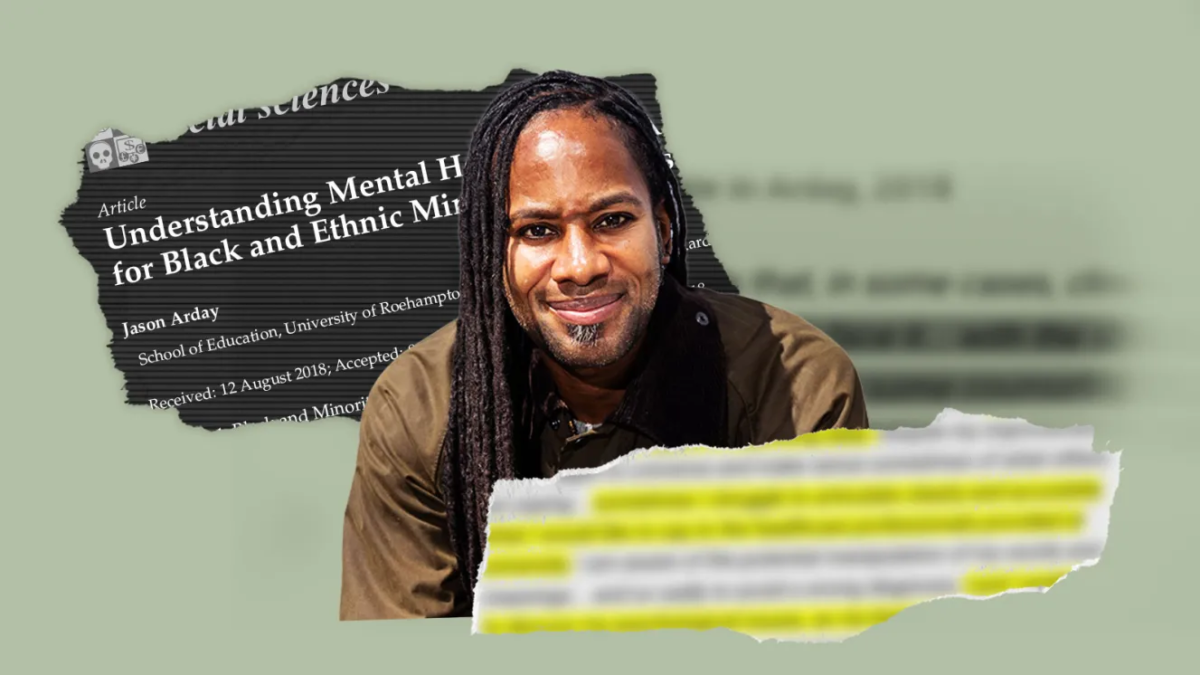
It is hard to say anything original about the tragic affair of Jason Arday, his appointment as a professor in Cambridge, the challenges made to his academic and personal claims, his resignation, and his tragic death by suicide. At the centre of all this is a human being, and someone who has now left wife, children, and friends bereft. If you are someone who prays, pause for a minute to pray for his family and those deeply grieving over his death.
But we need also to remember that compassion and understanding are not opposed, but need each other—in this case as in all others. I keep returning to the words of Dom Hélder Câmara, the liberation theologian and Catholic prelate who worked with the poor in Brazil under its dictatorship in the 1960s to 80s. “When I help the poor, they call me a saint. When I ask why the poor are poor, they call me a communist.” To understand is a key part of compassion, since it makes us attend to the issues that have caused harm and need to be addressed.
Lots of questions have been thrown out around the Arday case, and I can only address the key ones here. The first claim was “He was subjected to disproportionate scrutiny about his academic plagiarism.” As someone who has been engaged in academic work at undergraduate, graduate, and postgraduate level, I can assure you that this is not the case. Plagiarism is the number one, “unforgivable sin” in academic work, for two reasons. First, it claims that you know and understand things that you do not. And secondly, it robs others of credit for their work. Academia is a strange mix of competition and collaboration—competition because there are limited numbers of jobs (especially in my field of biblical studies) and the jobs (in theory) go to the best qualified, and collaboration because all academic work builds on the previous work of others.
For the last ten years, when I have been marking undergraduate and graduate work, all essays have first been put through plagiarism detection software. In a batch of essays, there will always be one or two where are some serious questions that need to be explored, and this involves going to the sources, comparing with the essay in question, and looking at the way the work has been presented. A ‘first offence’ needs help and training, so that students know how properly to give credit for citing the work of others. In graduate work there is less tolerance. But at postgraduate, PhD level, there must be zero tolerance, since a key criterion for a PhD is that the candidate has made an original contribution to knowledge.
Catholic academic Tina Beattie wrote a beautiful piece on the Arday case, but she leaves us in no doubt about the issue of plagiarism.
Jason Arday had vast potential, creative energy and charisma in abundance. He was clever, courageous, generous, imaginative, entrepreneurial and ambitious. He overcame significant difficulties to achieve his dreams, and he acknowledges in his thesis the people who supported him along the way—a loving family and a significant number of academics…
I’ve supervised and examined undergraduate and Masters dissertations and PhD theses by students of different ages, races, cultures, religions, genders and sexual orientations. None of these factors has had any bearing on the academic abilities of the students. There is no kindness in allowing a PhD student to continue if it becomes clear that they lack the analytic and linguistic skills needed to attain a doctorate. Nor should a supervisor or peer reviewer overlook any suspicion of plagiarism or poor referencing of sources. These are the basic tools of academic writing, and lecturers and supervisors must be vigilant at all stages of students’ progression through the academic system and insist that these fundamental rules are respected.
This is the point of the oral exam, the viva voce, in a PhD. One of the main questions of which the two examiners need to satisfy themselves is: is the work original? Does the person demonstrate understanding of the issues and that the work is their own? I do think there is a major weakness in UK PhD examination, because it relies solely on the judgement of the two individuals, who are employed by the institution itself. And I have experienced occasions when the institution has put pressure on me as an examiner to pass a PhD which I did not think was up to standard. In some European countries, the defence is done in the context of a public lecture, which anyone can attend and in which anyone can ask questions. That seems a far more secure process, and one that British academia actually needs.
Some have complained that Arday was subject to scrutiny that others are not. That is not true. Every time I write an academic article (four this year) and every time that I present an academic paper in a conference (three this year) I am open to exactly the same kind of scrutiny. And to have been found to have taken credit for someone else’s work in the form of plagiarism is the worst possible accusation. And his case is not comparable with other academics who have been found to have plagiarised work in published articles. Arday’s issue was in his foundational work—his PhD—which was the entry point for academia at the very beginning. If his PhD was not original work that made a genuine contribution to knowledge, then he should not have been in academia at all.
If you are in any doubt about the extent of plagiarism in Arday’s PhD, it has been laid out clearly by Nathan Cofnas in his substack article here. (Clear evidence of significant plagiarism in other articles can be found here.) It is quite extraordinary that Liverpool John Moores University, Arday’s awarding institution, have said that they explored the claim about plagiarism and found no case to answer—the case is as plain as the nose on your face (and in my case, that is very plain.) Arday’s defence was that, as someone who was neurodiverse, he used mimicry as an intellectual strategy to reach the standard of others. But this is no defence at all; for any kind of disability that affects learning, the standard approach is to provide additional support, in order to allow students to attain the same standard as others—not to amend the standard.
Cofnas was not the first person to raise questions about Arday’s PhD. In 2023, at the time of his appointment, Dr David Harris, professor emeritus at Plymouth Marjon University wrote to both Cambridge University and Liverpool John Moores University (LJMU), which had awarded Arday his PhD, raising concerns about apparent plagiarism in the thesis and in subsequent publications. In 2025, Jack Grove, the Times Higher Education journalist, investigated Arday’s work and assembled a dossier of approximately 63 pages of side-by-side comparisons between passages of Arday’s thesis and earlier works. He commissioned academic David Sanders, a biochemist at Purdue University and an experienced investigator of alleged plagiarism, to investigate, and he concluded that there was extensive plagiarism. Arday’s response to this was to report Grove to the police, who investigated him for four months, and to employ libel lawyers Carter Ruck to threaten to sue THS should they publish the results of their investigation—which of course they didn’t.
Cofnas is himself a controversial figure who describes himself as a ‘race realist.’ He makes two main claims in his approach to ‘race’ or ethnic diversity and academia. The first is that he believes that academic appointments should be made on the basis of merit and qualification alone, and should not be influenced by other factors, such as prioritising certain ethnic groups over others. The second is that he believes that, just as different ethnic and people groups have different abilities in sport (so, for example, long distance running internationally is dominated by East Africans, and basketball in the States is dominated by African Americans), the evidence is that different people groups also have different abilities in relation to Western academic standards. This second idea is highly controversial (and there is a good exploration of it here), but both are connected to a legal landmark case involving Harvard University.
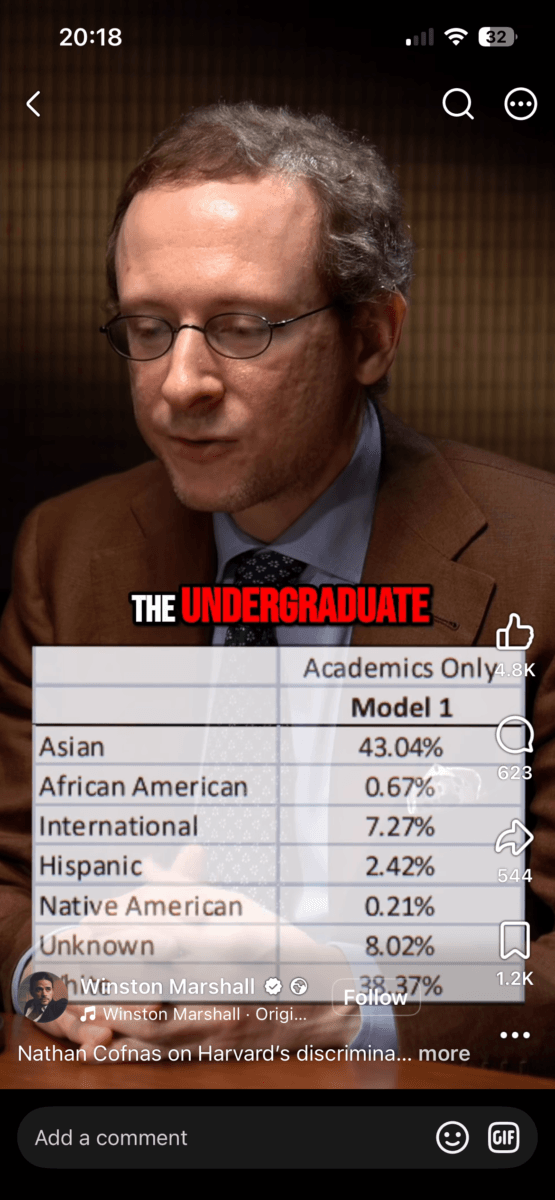 In 2014, Students for Fair Admissions (SFFA) sued Harvard University in U.S. District Court in Boston, alleging that the university’s undergraduate admission practices violated Title VI of the Civil Rights Act of 1964 by discriminating against Asian Americans. They won their case, and in the process Harvard were forced to release statistics about academic performance by different ethnic groups—which were startling. It showed that Asian Americans massively outperformed other groups academically, but that Harvard admissions did not reflect that, and that African Americans underperformed. This was disguised by the policy of Harvard to take affirmative action, appointing African Americans who were less qualified over against Asian Americans who were better qualified in order to improve the ethnic mix of their student body. It is these statistics (and not ideology) which led Cofnas to make his infamous claim that, if all posts were appointed to on merit, African Americans would almost disappear from US academia.
Whatever Cofnas’ own views and his motivations, the question about Arday’s work is: is there the claimed evidence of plagiarism? And a key question in the wider context this is: should universities vary their standards for different groups, in order to encourage those that might have had a background that disadvantaged them? But there is one clear consequence: any action that is ‘affirmative’ of one group will clearly disadvantage another. The historic ruling in the Harvard case effectively ended race-conscious affirmative action policies in higher education across the United States, concluding that race may no longer be used as a specific “plus” or “negative” factor in college admissions. (It worth noting that this was not a “black and white” issue; the case was pursued by Asian Americans, another minority ethnic group in the US.)
Tina Beattie spares no words in her condemnation of such approaches—in part because of the damage that it does to academic integrity, but also in part because of the harm it does to people who are affected by such affirmative action.
To insist upon criteria of academic ability and linguistic fluency for those aspiring to a university education in the Humanities and Social Sciences is not discrimination or prejudice, any more than it would be discrimination to exclude me from a choir on the basis of my atrocious singing, or from a sporting team because of my total lack of athletic ability. Discrimination is a factor in all walks of life and in all ethical decisions and dilemmas, and it is essential for the good of all relationships, institutions, and rules of engagement…
Stir into this a concept of DEI which does the opposite of what it claims to do. Diversity is stifled in the promotion of a homogenising rhetoric of victimhood and oppression that demands conformity to meaningless and sometimes dangerous sloganeering, especially around issues of race and gender. Equity produces gross inequalities, for it amplifies the claims of the loudest “victims” complaining about exclusion and discrimination, and excludes a multitude of legitimately dissenting or questioning voices. Inclusivity is a lie, for every institution, relationship and society must exclude some and include others in order to maintain its principles and raison d’etre, and to define its identity, functions and parameters of representation and engagement. Ask refugees or Muslims about inclusivity and racism. Ask lesbians, feminists or people with DSDs about the inclusivity of the LGBTQIA+ “community”. Ask those of us who have been censored and cancelled by both sides of the culture wars, because we put rational arguments and principled ethical positions before the compulsory rhetoric of either the conservative religious and political right, or the fluffy mantras of the postmodern academy and its vacuous adherents.
Her point about ‘homogenising conformity’ has been made by others. This short video highlights how, in the US, black academics who question the DEI approach to affirmative action have themselves been excluded and marginalised.
And, worst of all says Tina Beattie, it harms those who are ‘favoured’ by such policies.
If he had been white, he would never have risen so fast and so high through the ranks of academia. And if he had been white, he would never have been pushed so hard or fallen so far. No, he is not an Icarus. His own misguided ambition did not cause his downfall. It was the unquestioning obeisance of this country’s academic community to its own ideological captivity that allowed Jason Arday’s brilliance to be obscured by academic mediocrity, and made him prey to the vanities and cruelties of a culture in ethical and intellectual freefall.
Despite all this, it is far from clear that the questions raised are going to lead to a rethink, either by Cambridge University in its approach to admissions, or in its work in this department. (The question of the subject area Arday worked in, and whether it has intellectual coherence, is another whole issue. For a scathing critique from someone who experienced it, see this Twitter thread. For a more general critique of the rise of EDI-type approaches in the UK university sector, see the critique here. And see here for an excoriating analysis of the work of Hilary Cremin, the professor who appointed Arday and called him ‘the best in the world’.)
Rather than unite different views around ethnicity and discrimination, Arday’s case appears to have deepened divisions and made agreement on any of these questions more remote, rather than bringing them nearer.
What does all this have to do with the Church of England? Unfortunately, rather a lot. In three areas, the C of E has swallowed the same ideological approach to ethnicity that created the Cambridge/Arday tragedy—in ‘Project Spire’ and slavery reparations, in its ‘racial justice’ projects, and in its approach to appointments.
The issue of slavery reparations has been highlighted by Sarah Mullally’s recent visit to West Africa.
The Church of England can always be relied upon to walk into a room just as everybody else is leaving…There is something almost endearing about this; the C of E has long been an institution where the eccentricities of the comfortable middle-classes survive long past their sell-by date.
The centrepiece of the C of E’s stubborn persistence to a 2020 mindset is Project Spire, its controversial plan to give £100 million in ‘reparations’ for its role in the transatlantic slave trade.
Images are beamed back from West Africa of the Archbishop perched on an enormous gold throne, next to the King of the Ashanti. Given the C of E’s assiduousness in digging deep into how Georgian churchwardens could afford marble monuments in parish churches across the country, you might have thought a quizzical clerical eyebrow or two would have been raised at this, that the thought, ‘I wonder how the King of the Ashanti got to sit on a big gold throne’ might have entered some minds? Not so.
The Ashanti were among the most enthusiastic participants in chattel slavery; around 10 per cent of the entire Gold Coast slave trade went through, and earned money for, their empire. Rather than condemn this with the same vehemence or use it as a moment of reflection on the universality of the sin of slavery, Mullally instead put out a bizarre video of herself staring across the Atlantic, Caspar David Friedrich-style, accompanied by an apparent re-commitment to Spire.
In doing so, the Archbishop is setting herself up for a fall. Not only is Spire loathed in the pews, church lawyers and bureaucrats privately admit it is immoral and possibly illegal under the laws of the Charity Commission.
Nigel Biggar explains the issues with this project—and the response from the Church Commissioners to resist every question that has been raised, just as Arday and Cambridge tried to suppress the evidence of plagiarism.
Since its public launch in January 2023, the wheels have come off the rationale for Project Spire. Richard Dale, an historian of international banking, has shown that the commissioners misunderstood the data: the 18th-century church fund, the Queen Anne’s Bounty, neither directly invested in nor profited from slave-trading. I, until recently holder of the Anglican world’s premier university chair in Christian ethics, have pointed out the astonishing failure of the commissioners to publish any considered ethical justification. And Charles Wide KC has exposed their failure of due diligence in launching the project before discovering that it’s beyond their lawful powers to divert money from resourcing the Church of England’s ministry to supporting black-led businesses in the Caribbean and Africa.
How have the commissioners and the project’s officers responded? Mainly by retreating into a bunker and saying as little as possible, hoping no one will notice the fuss and the critics will tire and go away. But also by complaining that forensic questioning is a form of harassment and refusing to answer it. By indirectly threatening critics with litigation. By refusing to name them. And on one (aurally recorded) occasion, by publicly defaming them as deliberately spreading disinformation – that is, lying.
Something similar is happening around Racial Justice. For the previous triennium (2023–2025) £20 million was allocated by the Archbishops’ Council to be spent on “Racial Justice”. This figure was mostly pulled out of the air, at the insistence of Lord Boateng (who visited AC in March 2023 at a meeting that I missed because I was abroad) and as a result £9m of it went unspent by the time of the next round of triennium funding in December 2025, my final meeting at the end of ten years on AC. We had two proposals to consider, one on disability provision across the Church, and another on further spending on racial justice, since the two had been lumped together in the review of funding plans. The difference in the two applications was stark. For the disability project, there were clear goals, identification of needs, measurable plans, and evidence that the actions would deliver against the goals. For racial justice, we had none of these—and as a result decided in favour of the disability project. The very next day, without any conversation with AC, Arun Arora and other members of the Racial Justice Board went to the press to complain.
Earlier that year, in March 2025, Norwich diocese decided to set up a racial justice project, appointing a member of the clergy as part-time racial justice officer, and publishing a racial justice toolkit. I was approached by the Daily Telegraph for comment, and I said this:
The good news of Jesus is for all, whatever their ethnicity or background, and it is vital that the Church of England celebrates this diversity and ensures all are included and enabled to participate.
Sadly, this Racial Justice Toolkit won’t deliver this. It makes the same mistakes as the national programme, buying into non-Christian ideologies, and even using the racist language of ‘whiteness’. It repeats the impossible and impractical goals of ‘From Lament to Action’, and points to its statements which claim—without any evidence—that the theological basis of the Church of England is inherently racist.
I am part of a multi-ethnic city church, and we have learned to include all groups at every level of leadership without using any of this language or making these unproven claims.
It seems extraordinary that, in a diocese which is 95% white, money is being spent on this, including a full-time [this was incorrect; it was part-time] racial justice officer, when parishes are crying out for more clergy.
The one good thing about the approach is the use of Prayercast.com, which includes prayers that Muslims would come to know Jesus. The diocese will become more diverse if it actively includes teaching on how to share the good news of Jesus with members of others faiths so that they can become Christians—and I hope that will be included in their future teaching material.
When the Telegraph quoted a sentence from this, not one but three bishops wrote to make a formal complaint about me to the Council, and another bishop convened a group to investigate the complaint. At no time did anyone seek to contact me to ask for my full comment or what I meant by it.
If you have a racial justice project in your diocese, and you are a member of your diocesan synod, then you are very likely in breach of your responsibilities as a trustee. The questions to ask are: what is the evidence of the problem; what is the evidence that the processes being put in place will address that evidenced problem; and how will you know when it has been successfully achieved? I have not heard anyone ask any of those questions in a synod—since people are terrified of being accused of being racist by not supporting the project.
Lastly, on appointments, we find the same kind of thing. The report From Lament to Action claimed that ethnic minorities were under-represented in senior appointments, and that that was the result of institutional racism. It therefore proposed quotas for entry to the senior leadership training which formed preparation for such senior appointments. But the numbers proposed were absurd and unattainable, and of course suffer from all the issues with ‘affirmative action’ appointments that we have seen in academia.
My assessment of FLTA at the time included this comment about the proposal:
Are the House of Bishops and Archbishops’ Council really satisfied that positive affirmative action is really the answer to the racism problem? Racism is an affliction of heart, mind and attitude. Positive discrimination only alters numbers and balance sheets. There is a real danger that positive discrimination:
Lets us off the hook. Quotas remove the incentive to interrogate our own prejudices, which are the real problem. There is a risk that by reserving (for instance) two seats on the AC for BAME people, we allow ourselves to think that we have solved racism and not worry about how we appoint to the remaining however many seats.
Demeans the people of colour appointed. It makes an appointee, however gifted she is, into nothing more than her colour. It says to her “whatever your experience or expertise in x, y, z, we have primarily appointed you because we need a brown body on this committee. Otherwise, we might have chosen someone else.” This is something that is difficult for people who have never been thus reduced to a single characteristic to grasp.
Makes racism worse. Far from improving perceptions of diversity, preferential treatment breeds resentment. This undermines not only the appointees themselves (“they’re only here because we needed a minority”) but also all other people of colour in senior positions, who become tarnished with the perception that they owe their position to their skin colour. I have told people about how brazen e.g. General Synod members were in suggesting that I owed my position on AC only to my race. (One told me, “I’d be in your position if I had a protected characteristic”).
This was written by a non-white colleague, who was named and cited in the original piece. Sadly, though, he asked that his name be removed, since his disagreement with this DEI-type approach would undermine his application for future posts.
If we are unclear that this is having an impact, we might want to ask why it was that David Tudor was not only retained in post, but also appointed and re-appointed area dean, and made a canon of Chelmsford Cathedral, when he was a known sexual offender. And we might ask why John Perumbalath was appointed bishop of Liverpool when there were major questions about him and his ministry.
We currently have a bishop in post who believes that we need ‘new research if necessary, to shed light on the Church of England’s theological foundations of prejudice and discrimination’ (in FLTA), that the nineteenth-century missionary movement was ‘seeking to destroy diverse African traditional religious belief systems’ so we should be seeking to ‘enable all Africans, especially descendants of the enslaved, to discover the varied belief systems and spiritual practices of their forebears and their efficacy’ (para 32, Church Commissioners Oversight Group report).
All the signs are that those in positions of power and influence are doubling down on their commitment to these approaches in each of these areas. The Jason Arday tragedy has shown in broad daylight how damaging these approaches are, and how they fly in the face of the evidence.
Is there any chance that leaders in the Church of England will learn from this?
 Buy me a Coffee













In answer to your last paragraph –
No.