Summary: the Bible on women and authority

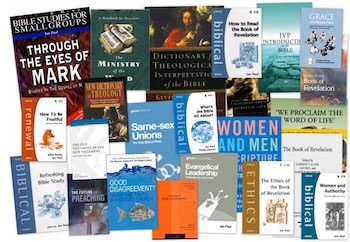
I have just finished writing a Grove Biblical booklet on ‘Women and authority: key biblical texts’ which aims to explore all the key texts in 32 pages, due out in the next week or so. I am aiming to cover Gen 1, 2 and 3, Luke 24, John 20, Acts 18, Romans 161 Cor 111 Cor  14Eph 5 and 1 Tim 2.

Having wrestled with these texts for the last two years, this is my considered summary:

1. The creation accounts offer no evidence of hierarchy in male-female relationships as part of the original created

Continue Reading

What did Paul think of women’s ministry?

I am in the process of finishing a Grove Biblical booklet with the title ‘Women and authority: key biblical texts’ which aims to explore all the key texts in 28 (or more likely, 32) pages, due out in the next week or so. I am aiming to cover Gen 1, 2 and 3, Luke 24, John 20, Acts 18, Romans 16, 1 Cor 111 Cor  14Eph 5 and 1 Tim 2.

Here are my comments on Romans 16, which is important since we see here Paul offering direct comment on and evaluation of the ministry of women he knew.

Continue Reading

Can women teach? part (iii)

I am in the process of writing a Grove Biblical booklet with the title ‘Women and authority: key biblical texts’ which aims to explore all the key texts in 28 (or more likely, 32) pages! Due out this month. I am aiming to cover Gen 1, 2 and 3, Luke 24, John 20,Acts 18, Romans 16, 1 Cor 111 Cor  14Eph 5 and 1 Tim 2.

Here are some final comments on 1 Tim 2.8–15. Earlier comments on this passage can be found here and here.

Creation order

Continue Reading

Can women teach? part (ii)

The root of this word cannot mean ‘silence’ in the sense of not saying anything, since in it used in Acts 11.18 and Acts 21.14 immediately followed by something the people then said, and so is translated ‘quietened down’ or something similar, and signifies the people ceasing their objections. … ‘I am not permitting …’ As some have noted, the construction here is unusual, in that Paul uses a first person present tense (‘I am not permitting’) rather than either an imperative (‘they must not…’) or a third person present tense (‘it is not permitted to…’) both of which come in 1 Cor 14.34.

Can women teach? part (i)

I am in the process of writing a Grove Biblical booklet with the title ‘Women and authority: key biblical texts’ which aims to explore all the key texts in 28 pages! Due out later this month. I am aiming to cover Gen 1, 2 and 3, Luke 24, John 20,Acts 18, Romans 16, 1 Cor 111 Cor  14, Eph 5 and 1 Tim 2.

This is the introduction to the section on 1 Tim 2. Although it is general, even these observations significantly affect how we read this important text. (And do you like the picture?!)

This text often sits at the centre of the debate on what the New Testament (and in particular Paul) says about how men and women relate in ministry. At times it has been treated as a litmus test for orthodoxy in some circles, but in fact almost every aspect of the passage has been disputed, and the history of interpretation has been more varied than is often acknowledged. So, despite being a short passage, it needs a section to itself.

Continue Reading

Losing our way?: Matthew

I am working with Celia Kellett at BBC Radio Nottingham on an idea to present most of the books of the Bible, one a week, during 2011 as part of the celebrations of the King James Bible. The plan is to read some verses from the book, to give a one-and-a-half minute summary, to hear a human interest story which relates, and then include a short discussion making the connections.

Here’s the key verses and summary for Matthew (‘Losing our Way?’), to be broadcast this Sunday 30th Jan from 8.20 am:

Verses: Blessed are the poor in spirit, for theirs is the kingdom of heaven. Blessed are those who mourn, for they will be comforted. Blessed are the meek, for they will inherit the earth. [Matt 5.3–5]

You have heard that it was said, ‘Eye for eye,

Continue Reading