
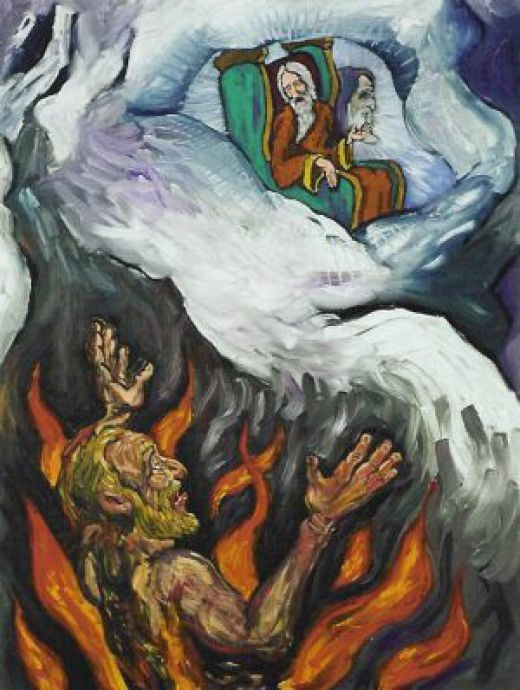
 The story of the rich man and Lazarus appears on first reading to depict a detailed ‘map’ of ‘heaven’ and ‘hell’, but is this the right way to read it?
First, it is worth noting that the words ‘heaven’ and ‘hell’ themselves do not occur in the parable. The NT talks about post-mortem life in a range of ways, not all of them easy to reconcile with one another. Perhaps the most controlling one would be the idea of ‘sleep’ as used by Paul in, for example, 1 Cor 15. ‘Heaven’ in the NT mostly appears to refer to the realm of God’s presence, reign and reality, and the central NT hope is not that we will leave the earth to go to heaven, but that God’s realm will come down to the earth (see Rev 21). (See Tom Wright’s Grove booklet for the most accessible exposition of this.)