Were Joseph and Mary ‘poor’?

One of the repeated themes of short Christmas expositions is that, in the nativity story, we see God coming to the ‘poor’, and as a result the main message of Christmas is that we should pay particular attention to the ‘poor’. I put the term in inverted commas, because in both these contexts the term … Continue Reading

Jesus wasn’t born in a stable—and that makes all the difference

Alongside putting up the Christmas decorations (usually far too early), finding a Christmas tree, preparing for carol services and planning where to buy your turkey, one of the annual routines at Christmas is my posting the argument that Jesus was not born in a stable. I will continue to pursue this annual tradition, since it … Continue Reading

The ‘coming’ of Jesus in Mark 13

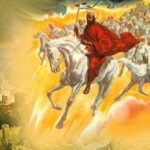
With the turn of the lectionary year, next Sunday we are in the first Sunday of Advent in Year B, and our gospel reading of Mark 13.24–37 plunges us straight into the questions around the anticipation of Jesus’ return at The End. (It is worth noting that there is no compelling (theo)logical reason why this … Continue Reading

The ‘parable’ of the sheep and the goats in Matthew 25

The gospel reading in the lectionary for the last Sunday before Advent (now known as ‘Christ the King’) is Matthew 25.31–46, the so-called ‘parable of the sheep and the goats’. But it isn’t actually a parable (since there is no suggestion that ‘the kingdom of heaven is like this’), and isn’t really about sheep and goats … Continue Reading

What will a Jewish reading of Genesis teach us?

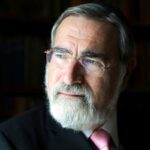
Rabbi Jonathan Sacks has just completed a five-volume series on the Torah under the heading Covenant and Conversation. The blurb from the first volume, on Genesis, comments: In this first volume of a five-volume collection of parashat hashavua commentaries, Rabbi Sir Jonathan Sacks explores these intersections as they relate to universal concerns of freedom, love, responsibility, … Continue Reading

How do inscriptions help us read the New Testament?

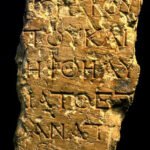
Dr Clint Burnett is Lecturer of New Testament at Johnson University in Knoxville, Tennessee USA, and has just published Studying the NT Through Inscriptions: An Introduction (Hendrickson, 2020), and I had previously heard him present some of his research at the annual Society of Biblical Literature (SBL) conference. I asked him about his research, and why inscriptions … Continue Reading
‘Did God really say…?’ (Gen 2–3)

Richard Briggs writes: The Bible does not begin with trouble. It actually begins with a gloriously peaceful creation story, stripped of concerns with competing powers, other gods, original chaos, and the politics of ancient Israel battling its way through the nations. Hence Genesis 1: six days of divine creative work, all pretty good, as we have … Continue Reading