What does it mean to ‘be like the angels’ in Luke 20? video discussion

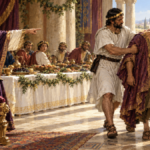
This Sunday’s lectionary reading, Third before Advent in Year C, is Luke 20.27-38. Once more, the lectionary makes an odd choice; it would be more natural to read on to verse 40 and complete the pericope. The narrative recounts an exchange between Jesus and the Sadducees, who do not believe in bodily resurrection, and so … Continue Reading
What are the practical implications following Living in Love and Faith?

Andrew Goddard writes: Whatever is decided in relation to the teaching of the Church of England and the options considered in the previous article, the bishops also need to consider a number of practical questions as they propose the direction for the Church of England going forward. Here there are at least four broad areas to consider: … Continue Reading
What are the options after Living in Love and Faith?

Andrew Goddard writes: What follows builds on the previous article’s account of where the Church of England is in its LLF process of discernment, the importance of the bishops providing a theological argument for the way forward, and the need to recognise that we begin with an existing, long-established teaching on what constitutes a chaste … Continue Reading
The Case against the Sexual Revolution

Peter Wyatt writes: According to Philip Larkin, ‘sexual intercourse began in nineteen sixty-three’. Until today, this sexual revolution, brought about by more effective forms of contraception, has been hailed as an emancipation of human beings. No longer were we subject to the restraints of traditional morality as policed by religious faith, and family mores. Instead, … Continue Reading
Is the Bible contradictory on sexuality?

A recent essay by Walter Brueggemann on the Bible and ‘homosexuality’ has received wide circulation (I put ‘homosexuality’ in inverted commas since, although it is included in the title to the essay, it is not a word I ever use in this discussion, since it is poorly defined.) Brueggemann sums up his argument in these … Continue Reading
The End of (the) Communion? (ii): So where are we now?

Andrew Goddard writes: Building on my earlier reading of the Archbishop of Canterbury’s contributions about Communion life, this article explores the ecclesiological questions that are important, and currently intertwined with, the questions relating to sexuality that tend to dominate discussion.  It argues that although all wish for unity and communion there are currently two main competing visions … Continue Reading
The End of (the) Communion? (i) What has been said?

Andrew Goddard writes: On Tuesday at the Lambeth Conference there were a number of significant developments in relation to the questions of sexuality and ecclesiology. The Global South, headed by Archbishop Justin Badi of South Sudan, issued a resolution in relation to Lambeth I.10 with a covering explanatory letter. Archbishop Justin Welby also issued a letter … Continue Reading
Lambeth ‘Calls’, Lambeth I.10, and the nature of the Anglican Communion (2): the future

Andrew Goddard writes: in my previous article, I explored the place of Lambeth I.10 in the Communion, mapped how different people and provinces had responded, and explored this as the background to the present controversy about the Lambeth Calls at this conference. I now turn to look at the Call on Human Dignity in detail, … Continue Reading