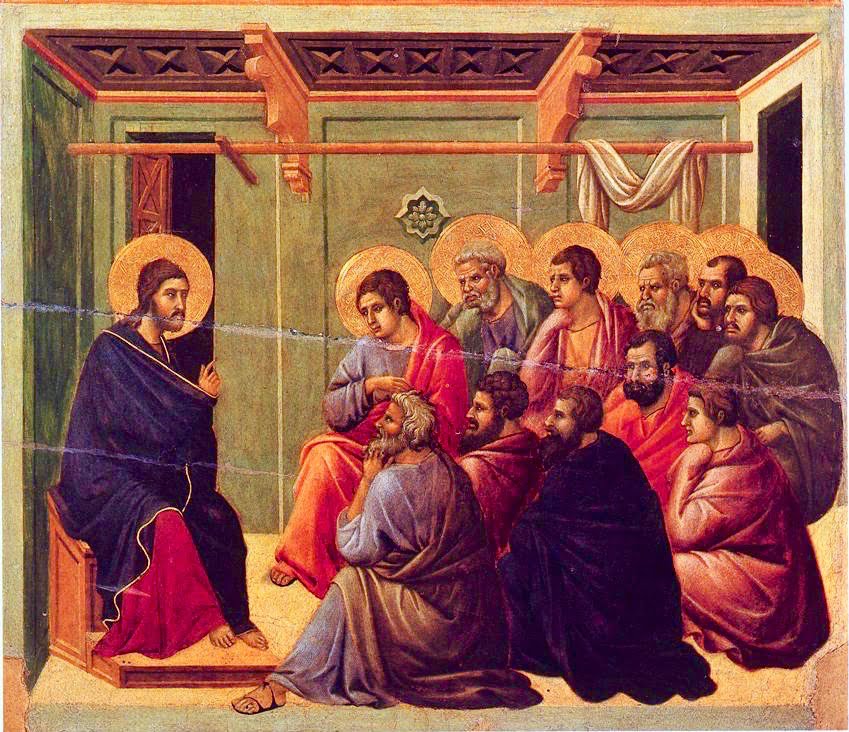
Jesus’ prayer to the Father in John 17

The lectionary reading for Easter 7, the last Sunday of the Easter Season before Pentecost, is the first part of the ‘great prayer’ of Jesus in John 17.1–11. The lectionary divides the chapter into three parts over Years A, B and C, which either assumes that preachers and people have a good memory from year …

Continue Reading

What is marriage for?

In our church we have a Spanish-speaking congregation, who join in on Sundays (where we have songs and readings in different languages and simultaneous translation) but who also have their own Spanish-language service on a Tuesday evening. We have been given funding for a Spanish speaking pastor, but also seek to integrate ministry across the …

Continue Reading

Jesus is our good shepherd in John 10

The lectionary gospel readers for the Fourth Sunday of Easter take the three parts of John 10 in turn; being in Year A, we are reading the first ten verses. You can watch the video discussion of the passage here, and it is linked below. The epistle is 1 Peter 2.19–25, a challenge passage both …

Continue Reading

Having our doubts about Thomas in John 20

The Sunday gospel lectionary reading for the Second Sunday in Easter is John 20.19–31, which includes Jesus’ encounter with so-called ‘doubting Thomas’. It is the set reading for this week in all three years of the lectionary, so we know it well—and need to reflect on it if we are going to preach effectively on …

Continue Reading

The experience of Easter

He’s gone. The, the tomb….the stone’s rolled away! Jesus….He’s not there….I’ve just run the whole way back…. I had to tell you. This is mad. Completely crazy. You’re all looking at me like I’ve lost my mind. Maybe I have. Just… give me a second. Before I say anything else, you need to know who’s …

Continue Reading

Empty tomb and risen Jesus in John 20

The discovery by two disciples of the empty tomb, and Mary Magdelene’s encounter with Jesus, in John 20.1–18, is one of the main options for the gospel reading for Easter Sunday in Year A (the alternative is Matt 28.1–10). And it is, in many ways, the most appealing choice, because of its polished literary form, …

Continue Reading