

Paul’s cascade of praise in Ephesians 1 video discussion

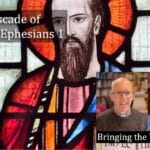
The lectionary epistle reading for Christmas 2 in Year A is Ephesians 1.3โ€“14 (though it is worth starting reading from verse 1). Although broken up in English translations, this forms one long sentence in Greekโ€”of 202 words! It is likely the longest Greek sentence in the New Testament. In what is effectively an extended cascade … Continue Reading

Tyndale NT study group 2021: the later Pauline epistles

The Tyndale New Testament Study Groupย looking at the Later Pauline Epistles will be taking place online this year, from Wednesday 23rd to Friday 25th June. We have a great line-up of international speakers offering some fascinating papers, and the sessions will be timed to allow attendance from different time zones around the world. The cost … Continue Reading

Tyndale NT study group 2021: call for papers

Theย Tyndale New Testament Study Groupย is part of theย Tyndale Fellowshipย for biblical and theological research, based at Tyndale House in Cambridge, and including evangelical scholars from all over the world. The 2021 NT Study Group will be meeting for an online conference from Wednesday 23 to Friday 25 June 2021. The timings of the sessions will be … Continue Reading

Great commentary on Ephesians

There is a very good, detailed survey of commentaries, publishedย Biblical Studies Bulletin (which is sent to subscribers to the Grove Biblical series) and available online here.ย We did a full survey of commentaries on Ephesians some time ago in 1999, and updated it in 2004. Since then Ben Witherington has contributed a volume (on his way to writing commentaries on all the books of the New Testament) and I would strongly recommend anyone adding it to their ‘must buy’ list. It combines comment on Philemon, Colossians and Ephesians as three ‘captivity’ epistles directed at an Asian audience.

Witherington is well known for his use of ‘socio-rhetorical’ criticism, and whilst not all are persuaded of its value, I think it is a very significant approach, particularly for those interested in the application of scholarship in a ministry context. Since this approach focuses on the original impact of the forms of language we have before us, it bridges the divide between ‘historical’ and ‘literary’ approaches to text, and potentially offers a disciplined way of engaging with the formational power of the text.

Men and women in Ephesians 5

I am in the process of writing a Grove Biblical booklet with the title โ€˜Women and authority: key biblical textsโ€™ which aims to explore all the key texts in 28 pages! Due out later this month. I am aiming to coverย Gen 1, Gen 2 and 3, Luke 24, John 20,ย Acts 18, Romans 16,ย 1 Cor 11,ย 1 Cor ย 14, Eph 5 and 1 Tim 2.

Here is the (short) section on Ephesians 5.18โ€“6.9.

Ephesians 5โ€“6.9 sets out the contrast that arises from our being โ€˜imitators of Godโ€™ (5.1), with the characteristics of the โ€˜works of darknessโ€™ (5.11) listed in the first half,

Continue Reading