What’s going on with 1 Cor 14?

When an rather obscure argument about a finer point of textual criticism (the study of differences in early manuscripts of the NT) makes it into the mainstream media, then you might be forgiven for thinking that something odd or rather interesting is going on. That’s what happened last week; in Thought for the Day on … Continue Reading

Is it true that ‘God is love’?

It seems to be increasingly common in a range of ethical debates in the public sphere for one protagonist or other to reach for the formula ‘God is love’ as a quick resolution to disagreement. But this is usually done in a particular way, in the form of a progressive from God to us and … Continue Reading

Will the world end on 23rd September?

The latest prediction of the end of the world, based on an ‘interpretation’ of Revelation 12, is that it will all happen at the end of the week on Saturday 23rd September. [This was first written in 2017. I now see that the linked video has been switched to ‘private’ to cover up the failure … Continue Reading
‘Head’ does not mean ‘leader’ in 1 Cor 11.3

The debate about the meaning of ‘head’ and ‘headship’ (even though the latter does not occur in the NT) continues to rumble on. The main reason for this for English speakers is that the term is deeply and widely connected with notions of authority, control and leadership—just think ‘headteacher’ or ‘headmaster’ and other compounds, and … Continue Reading
Did Paul have a pastoral strategy?

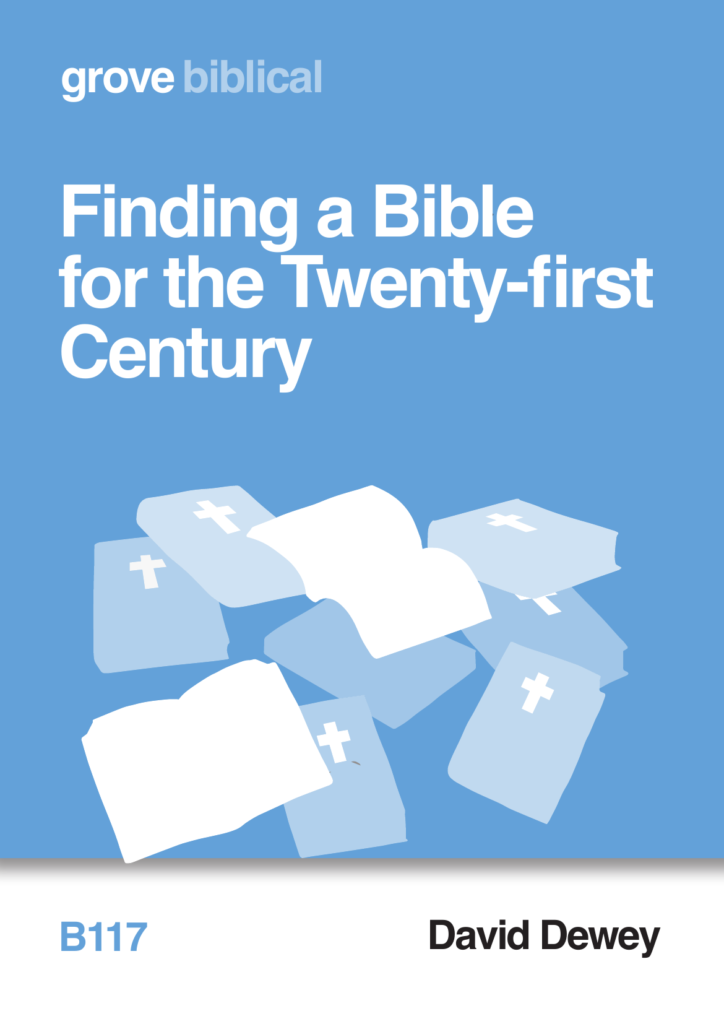
The apostle Paul is not generally viewed as a pastor. Teaching, fearless advocate for the faith, traveller, apologist, pioneering church planter, yes—but pastor? As we read Paul’s letters, in some part because of our cultural distance, it is easy not to sense that we are encountering Paul the pastor. But the latest Grove Biblical booklet … Continue Reading
How do we make sense of the Beatitudes?

The Beatitudes—the collection of sayings that introduce the ‘Sermon on the Mount’ in Matt 5, with their parallel in Luke 6—are amongst some of the most memorable of the teachings of Jesus. They are often cited as favourite texts, and are referred to as a key element of Jesus’ (challenging and puzzling) radical social ethics. … Continue Reading
Should we read the Bible literally?

Last week it was reported that Dr Hugh Houghton of the University of Birmingham had translated a long-lost fourth-century Latin commentary on the gospels by African-born Italian bishop Fortunatianus of Aquileia, which Jerome had described as ‘a gem’, but which was thought to have been lost, either having perished or having been destroyed. But it turns … Continue Reading
How does the Spirit help resolve critical questions about the Bible?

In my previous post, I highlighted the dilemma we find ourselves in when there is a dissonance between our experience of hearing God speak through Scripture and our experience of engaging in more reflective study of the same texts. I characterised these two sets of experiences as follows:   Immediacy — Delay Clarity — Ambiguity Relevance … Continue Reading
The church changed its mind on slavery. Why not on sex?

Will Jones writes: It rarely takes long in any discussion about a controversial ethical issue amongst Christians for someone to bring up slavery. Slavery is the great exemple of how Christian thinking has changed on a key ethical issue. Christians in the past permitted slavery, practised slavery, defended slavery. Scripture clearly permits slavery in certain circumstances, … Continue Reading