The gospel lectionary reading for Trinity 8 in this Year C is Luke 12.32-40. It brings together two teachings of Jesus, which appear to be paradoxical, or at least in some tension.
On the one hand, we are to be at peace, and enjoy the freedom that comes from knowing the Father’s love. Because of that, we need have no anxiety, and so can live in a kind of reckless generosity to others.
On the other hand, we need to be alert and reading for action—’gird up your loins’! We do not know when Jesus will return, so we need to live in a constant state of readiness—though there is a strong possibility that the return will be delayed, and much further away than we expect.
Come and join James and Ian as they explore what these mean for Christian living, and how we much preach on this text.
Written commentary on this text will follow in the next article posted.
 Buy me a Coffee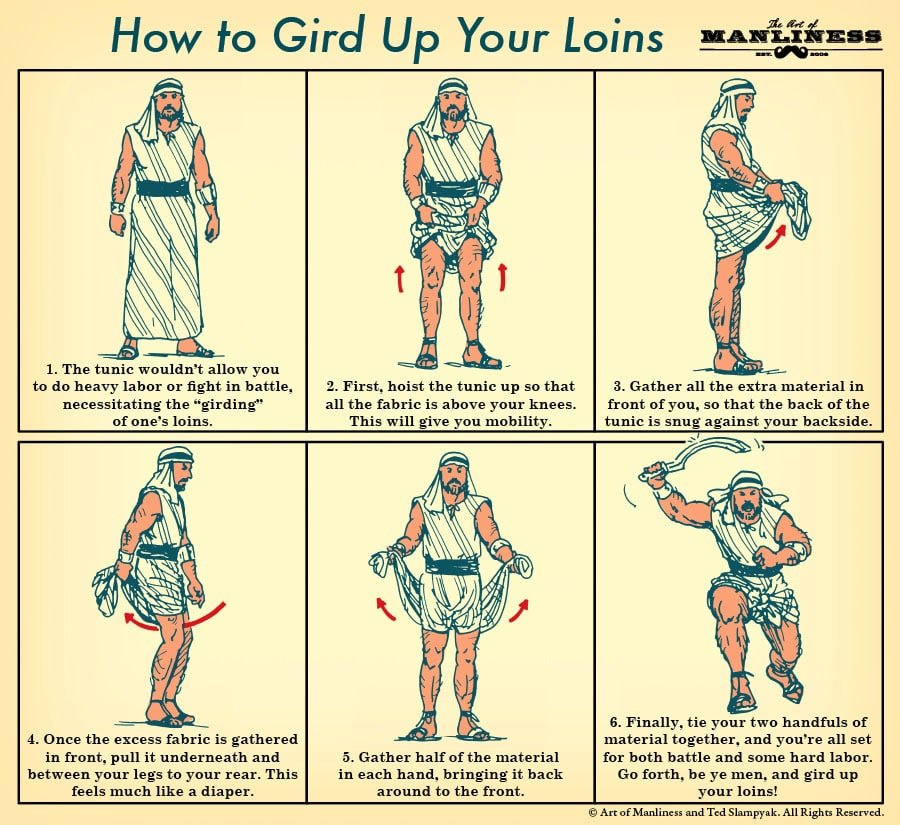
















‘Love bade me welcome…’
It is from ‘Love’, by George Herbert.
Of course it is! Thanks.
Which Simone Weil called the greatest religious poem ever written and Rowan Williams recited it at the end of his sermon in Canterbury cathedral when he became Archbishop. Herbert’s, Country Parson still has things to say to us today.
Yes “Gird up your loins” is the way to go”It is a major idiom. for those that know that entering the kingdom of God means entering into conflict as Christ brings a sword Matt. 10:34 Think not that I am come to send peace on earth: I came not to send peace, but a sword.
10:35 For I am come to set a man at variance against his father, and the daughter against her mother, and the daughter in law against her mother in law.
Trawling through various commentators I came across the following {references at end of piece.}
The Hebrew word chagar -girding your loins
chagar: to gird, gird on, gird oneself.
Part of Speech: Verb of Action that became a Hebrew idiom.
It is a major theme of the Bible. From proverbs 31, to battle cries, to gentle words of Jesus, and finally eschatological promises; these words have great significance to those in covenant. Today much of the meaning has been lost in translation.
The term is first mentioned in Exodus 12 when the instructions were given for the Passover and preparation for the Exodus.
It became an action verb like none other for Israel. It was a Hebrew idiom that bore great significance to Israel that they should be ready at any moment to follow the Lord with all they were. Like many Hebrew idioms the chant “chagar” literally become a one word sermon on being ready.
Throughout Israel’s history this would become a household family and military chant or reminder that would lead them to battle and most great things that was rooted in the idea of simply doing what was asked in the waiting before the Lord,
, and giving them to Yahweh in sacred devotion that He might not only go before you, but that he might completely bring you victory. That complete victories were only of God (or later Jesus) and not at all through you yourself. That in emptying yourself in complete humility Jesus meets your humble sacrifice and does immeasurably more than you ever prayed or imagined.
One commentator says “This is the 44. That you bring a complete (22) offering of all you have to offer and God doubles the portion. Takes the number of completeness 22 and doubles it to 44 which is actually the sign of innumerable strength… thus the 144,000 it later represents as the faithful remnant that knows no boundary.
(NOTE: Some people are aware of the theological notion that God intended to literally fight every battle for Israel just like he defeated the Egyptian army in the closing of the Red Sea. That Israel wasn’t ever supposed to actually fight. In this way, when the Israelites did physically fight it was actually a sign of not totally trusting God.)
In war time as the Israelite soldiers rallied for battle and chanted KHAW-GAR as they pounded their spears to the ground, their hope and prayer would be that God would completely fight the battle. That should be the way that we also gird up. That is why Paul makes the connection to rather gird up your mind for prayer rather than the physical. If you can mentally and spiritually give something to God, the end result is that your faithfulness results in little to nothing of yourself and all of what Jesus does. Similar to an ancient Israelite battle you might only be intended to be the cleanup crew that through God enabled or brought healing!
It is likely the same word that Jesus declared (in Hebrew) over his disciples in Luke 12 ““Be dressed ready for service and keep your lamps burning, 36 like servants waiting for their master to return from a wedding banquet”
In Hebraic culture preparation for weddings and wars meant you were ready to give of your life, the ultimate sacrifice and act of humility for another. This is the Exodus motif connected throughout all of scripture.
The NRSV translates Job 38:3a as Yahweh saying to Job [from a whirlwind], “Gird up your loins like a man
The Hebrew written is this: “’ĕ·zār-nā ḵə·ḡe·ḇer ḥă·lā·ṣe·ḵā,” which is rooted in “azar,” “geber,” and “chalats” or “gird now like a man loins.” Because Yahweh was not talking to the physical “man” that was Job, there should be nothing physical being the advice here. The soul of Job is masculine essence, simply because we know Job was an “upright” man. That says he was masculine in essence, not in physicality. Therefore, Job was not a physical “man,” his soul had no “loins,” thereby his soul could not wear clothing of any nature, This reality means one needs to see the spirituality that comes from those word in Hebrew.
The flexibility of Hebrew says many words cannot only translate to one English word. In the case of “azar,” it has the flexibility to translate as: “encompass, equip” (Strong’s), with the figurative possibility meaning, “girded with might.” (Brown-Driver-Briggs) The BibleHub Interlinear shows the usage to be “prepare,” which gives the impression to protect.
The Hebrew word “geber” has the flexibility to mean: “every one, man, mighty.” (Strong’s Exhaustive Concordance) That source says the word comes from “gabar,” which means “a valiant man or warrior,” with “warrior” being one translation found elsewhere in Scripture.
The Hebrew word “chalats” has the flexibility to mean, “the loins (as the seat of vigor). (Brown-Driver-Briggs). Still, it reflects “strength,” as a “seat of virility” in men and a “seat of pain” in women experiencing labor pains in childbirth. BibleHub Interlinear translates this word as “yourself,” presumably because a “self” is a “soul” and a “soul” is the “seat” or “loins” of a human body of flesh.
This flexibility means the same words that have been translated as “gird up your loins like a man,” equally says, “protect your soul like a warrior.” This means the Holy Spirit of God is the “warrior supporter,” when the “warrior” is an Apostle or Saint.
The reading from Job is an optional reading on the fourth Sunday after Pentecost, where the two other Old Testament readings are of David facing Goliath and David eluding the spear of Saul, after he became possessed by an evil spirit. The soul of David was protected like a warrior of Yahweh;
In the “ideal” woman depiction in Proverbs 31, we read, “She girds her loins.” If you are reading the ESV, it is translated as “she dresses herself with strength,”
the overall meaning of the word “chayil,” the Hebrew word translated as “virtuous” in Proverbs 31:10.
Cf. See also Jesus saying “virtue has gone out of me “when the sick woman touched the hem of his clothes.
. It is also used as a symbol of humility form in the father in greeting His lost son in the prodigal son parable. An esteemed elderly man would not typically run or show his legs, this was what young men did. It is a picture of Christ taking a role of ultimate humility to save us from the kazazzah or the “pot breaking ceremony”, we should have rightly received after the son disavowed his inheritance and left.
The idiom or chagar chant should bring you to freedom in Christ. To accept being recreated (kainos) as a royal priesthood that lives in freedom and is ready to bring others to this freedom in Christ as those that live in ancient intimate covenant to pledge an allegiance to the kingdom and represent the king that goes before them.
To live humbly as temples of the Holy spirit in devout consecration to your mission. That you and your family might be living sacrifices that are enumerable in your vocation to represent the king of kings as His ambassador to dark and hurting world. To function as agents that bring order to chaos and healing to brokenness.
Yet, as we wait for Christ to consummate all things, we find that our situation is not entirely different from that of the old covenant saints. We too have a race to run with endurance. We too have to gird uup our loins and cast aside sins that hinder us so that we will cross the finish line (v. 1).
We will only be able to do this if we look to Jesus who is the “founder and perfecter of our faith” (v. 2). We must keep the eyes of faith upon our Lord and look to nothing else or we will not endure.
we demonstrate that Jesus has given us faith and that He perfects it only as we exercise this faith in the midst of adversity. Jesus is our example of what it means to persevere, for He, looking to the joy that would come, endured the suffering of the cross and is therefore now seated at the right hand of God (v. 2). He was obedient to God in the midst of the worst suffering imaginable. Therefore we too must be obedient if we call Him Lord.
The glorious Gospel of the sons of God will be found that through
consecration we find that it is mainly Christ who serves us far more than our serving Him loading us with his riches of Mercy,
Grace and Glory!
expedition44.com
chagar // girding your loins
katrinapearls.com
Gird your loins like a man
https://www.fruitfullyliving.