
At this time of year, my social media feeds are full of pictures of people in robes standing outside cathedrals, they or their friends having been ordained. So this is a good time to reflect on what is happening, and to ask: ‘Is this Anglican approach to leadership actually following a biblical pattern?’
Someone might object: ‘What is the point of asking that question, since the Church isn’t about to throw away such a well-established historical precedent?’ But there are immediately a couple of important things to note. The first is that, in the Book of Common Prayer, there is a certain degree of circumspection as to whether this pattern is Scriptural:
It is evident unto all men, diligently reading holy Scripture, and ancient Authors, That from the Apostles time, there have been these Orders of Ministers in Christs Church; Bishops, Priests, and Deacons. (The BCP Ordinal).
So these orders have existed—but there is no explicit claim that they are essential (the following sentences of the ordinal focus on the need for careful examination of those called) nor that they are ‘proved’ as necessary by the Scriptures (the test set out in Article VI of the XXXIX Articles).
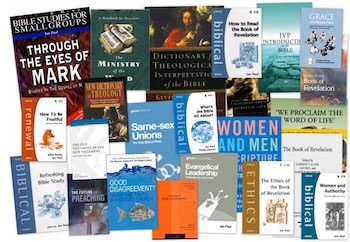
But the second thing to note is that the Church of England has itself answered the question of the relation between current patterns of leadership and New Testament patterns—in the report from the Faith and Order Commission (FAOC) of January 2015 (quite a few years ago now!), Senior Church Leadership. which I explored in the first chapter of my Grove booklet Evangelical Leadership: opportunities and challenges. I feel sorry that, despite all our debates about leadership, this report appears to have been largely forgotten.
Both the report and my booklet begin by noting how important ‘leadership’ has become as an idea in both the world and the church. Since the 1990s, executive pay has moved from being around 60 times that of the average worker to almost 180 times it by last year. There are complex reasons behind this, not least the nature of the ‘closed shop’ of executives who appoint one another, and it raises important ethical issues. But it is a strong indicator of belief in the importance and value of leadership. The success of corporations often appears tied to the presence of a particular leader as CEO; football teams respond to success and failure by either lauding or sacking their manager; even theological colleges can thrive or fail depending on the principal it seems. And the FAOC reports notes how now, with the current focus on church growth, the spotlight has been turned on the leader.
In a Church of England press release, Professor David Voas, one of the leaders of the research, said that ‘Growth is a product of good leadership (lay and ordained) working with a willing set of churchgoers in a favourable environment.’ In the same press release, ‘leadership’ tops the list of ‘common ingredients strongly associated with growth,’ a list that also includes ‘clear mission and purpose,’ ‘being intentional’ and ‘vision.’ The Programme’s report, From Anecdote to Evidence: Findings from the Church Growth Research Programme 2011–2013, makes it clear that the ‘leadership’ in question is a matter of ‘motivating people, inspiring and generating enthusiasm to action’ (p 8); that is what they have discovered is needed for growth. (FAOC report, para 16).
This makes it all the more important to ask the question: what were NT patterns and practices of leadership, and how well do our own match this? The most basic challenge is to note the problem with the core question: it is not possible to name ‘THE leader’ in the church in Rome, Ephesus, Colossae, or any of the other places to which Paul writes. Leadership in the NT appears to be plural, as is made explicit by the description of the church in Antioch in Acts 13.1.
The second challenge is to note the terms that are used for leadership in the NT, and the ones that are not. Despotes is used of masters who own slaves (1 Peter 2.18 and elsewhere), and is applied to God (Acts 4.24) which fits well with Paul’s self-designation as ‘bond slave’ in the opening of his letters—but is never used of Christian leaders. The term kathegetes is expressly forbidden by Jesus in Matt 23.10; the term means leader or teacher, but the teaching aspect is covered earlier in the passage, when Jesus also forbids the use of the term ‘rabbi’ since we have one teacher (didaskalos). Perhaps most striking is the absence of the normal term for ruler or leader, archon. It is used fairly neutrally of the rule of a synagogue (Matt 9.18), for leaders amongst the Pharisees (Luke 14.1) and for national leaders (Acts 3.17). But, in keeping with Jesus warning in Matt 10.25 (and the parallel in Mark 10.42), this term is never use for Christian leaders. There are three passages where we find the term hegoumenos (‘one who leads/guides’) used of church leaders (Hebrews 13.7, 17, 24; Acts 15.22 and Luke 22.26) but the related noun (hegemon) is used only to refer to royal or imperial governors like Pilate (Matthew 27.2).
Instead, biblical language about leadership tends to cluster around particular roles and draw on concrete metaphors. There is a ‘spiritual gift’ that is usually translated as ‘leadership’ in 1 Cor 12.28, kubernesis, which literally means the steering of a boat. We find kubernetes, stearsmen or pilots, mentioned in Acts 27.11 and Rev 18.17. But it is striking that this gift is listed as one among many, and is not given any prominence. (No-one was really interested in this gift when older Bibles translated it as ‘administration’!)
How do we account for this striking rejection and reconfiguration of the language of leadership? The FAOC report accounts for this by expanding on the idea behind Jesus’ prohibition in Matt 23. The suggest a ‘triangular’ understanding of leadership of the Christian community, noting that both the leader and the community itself depends on the call of God for their self-understanding and their identity.
At a very simple level, we can represent the triangular dynamic of these relationships in the form of an equilateral triangle enclosed in a circle. In this diagram, the two ‘sides’ of the triangle represent this double calling: God calls his people; and God calls individuals to lead his people. The base of the triangle represents the complex two-way relationship between people and leaders – a relationship created by God’s double call. (p 23)

This has profound implications for the way leadership is understood, and therefore for the way we understand the exercise of authority:
They [the terms use for leadership] are used to distance the authority of the leader from any sense of ownership or mastery, and to deflect attention back to the Lord of the church, who is the real source of the leader’s authority. They reflect what we may call a refracted authority, seen through a triangular prism that resists the construction of top-down management structures. (p 29)
This is such a helpful, insightful and striking observation about leadership in the NT that it is worth reflecting on for some time. Some years ago, I was teaching in Hereford Diocese on ‘Biblical reflections on leadership’, and intending this to be part of one of four sessions throughout the day—but it was so striking that we ended up spending most of the day discussing it!
It is helpful not least because it addresses two strong tendencies in church thinking about leadership. The first is a strong emphasis on the importance of leadership, and of the threefold offices of those ordained, which then struggles to find any role for the laity. Perhaps the worst of these was Linda Woodhead’s notion, articulated in the Church Times, that if we dispensed with all congregations and just retained the buildings and the clergy, ‘the most important functions of the Church would continue’! But it is equally present in any notion that the clergy, or one of the three orders (usually bishops) somehow ‘constitute’ the church itself.
The second tendency, present in Reformers like Luther, but also rediscovered in a slightly different way in the charismatic renewal movement from the 1960s onwards, is the idea of the ‘priesthood of all believers’ which sees all the people of God as, in some sense, having equal importance—and then struggles to see the need for particular forms of leadership.
This triangular model of ‘refracted authority’ does see (ordained) leadership as important, and arising from a particular sense of calling (vocation) from God—but sees its importance in relation to the fulfilment of the calling (vocation) of the whole people of God to become what God wants them to be. This is, of course, expressed par excellence in Paul’s comment in Ephesians 4.11–13:
So Christ himself gave the apostles, the prophets, the evangelists, the pastors and teachers, to equip his people for works of service, so that the body of Christ may be built up until we all reach unity in the faith and in the knowledge of the Son of God and become mature, attaining to the whole measure of the fullness of Christ.
It is striking that this passage on particular ministries follows on from an exposition of the unity of the faith and of believers (‘there is one body and one Spirit, just as you were called to one hope when you were called; one Lord, one faith, one baptism…’) and that both the unity of the body and the different ministries arise from the calling of God. This is the same pattern we find in 1 Cor 12, where Paul moves repeatedly between the idea of ‘to each’ and ‘for all’.
But the reason that, in our discussion in Hereford, we spent so long on this model is that is raises two very important questions. First, what does it mean for the exercise of power and authority? If the vicar is not ‘in charge’, how do we ever get anything done? And is this a recipe for chaos, where either the different members of the congregation do their own thing or, worse still, the dominant get their own way?
The answer to these questions is found in the different sides of the triangle. The calling of those in leadership is a calling to enable the people to fulfil their calling from God—they are leaders of the church, not just some random collection of people. So there is a real task of responsibility and accountability in both encouraging and enabling the people of God to grow in their maturity, discipleship and obedience to God. And this growth is something that the leaders themselves share, since they never cease to be part of the laos of God:
Do the virtues being demanded of senior leaders today sit uneasily with the virtues of discipleship? A Christian leader is, after all, a disciple first and a leader second, and that means that he or she is and remains a follower even while being a leader. Furthermore, as a disciple a leader is called to display the fruit of the Spirit…
And the FAOC report goes on to set out how the responsibility of leaders is exercised, in relation to the teaching of the word, in leading prayer and worship, in continuing the work of service, ensuring all are cared for, and in engaging in the wider world.
Nevertheless, leaders are called to exercise real authority –they have a calling that instils confidence both in the leader and in other members of the church. From earliest times, the church has sensed a need for order and focus, for a clarity of vision that looks to the needs of the whole body. This leadership is consensual. The social world of the New Testament was intensely hierarchical; authority was instantly recognized and respected (Luke 7.8). It is all the more striking that leadership in the church is accorded by mutual recognition rather than imposedby external authority: it has to be ‘recognized’ (1 Corinthians 16.15, 1 Thessalonians 5.12). Effective leadership depends on co-operation between leaders and led (Hebrews 13.17; 1 Peter 5.2). (para 114)
But the second question is: if we are to inhabit this ‘refracted leadership’ model, can we relate it to the threefold order that we have? The FAOC report also engages with this question, and notes some of the tensions that arise. Early on, the formation of monarchical, geographical episcopacy conflated the ideas of local eldership and translocal apostolic ministry, in a way which (in some senses) compromised both, and the challenge to the threefold order is that, in the NT, it is very hard to relate presbyteral and episcopal ministry in any obvious way—indeed, the terms appear to be used interchangeably at some points.
 Similar observations can be made at other critical points of history.
The Church of England’s decision to retain the historic three-fold order of bishop, priest and deacon also reflects the political realities of the Reformation in England. (para 151)
The report is really worth reading, not simply as a reflection on structure issues, but in offering a biblical challenge to the ethos of all church leadership. And my Grove booklet Evangelical Leadership goes on to look at what it means then to be leaders in mission, in being rooted in Scripture, and in engaging in the wider world.
(When I posted a previous version of this on the blog, there was a long and healthy debate between people of widely differing points of view. My sad reflection is that those days appear to have passed in the C of E. Something has caused us to become locked into our silos of division…)
 Buy me a Coffee










I must say that when I worked in clergy training I really valued the thinking that CPAS put in to leadership and really valued partnership with them. James Lawrence’s book and working with him and Graham Archer and Charles Burgess was very helpful to us.
The Servant Leadership programme in Oxford Diocese started by Keith Lamdin was also pioneering work and his work is worth exploring too.
Yes, very good resources. And I think more in line with my thinking here…?
An excellent article on leadership. I especially liked the point that leadership in the NT churches was plural not singular. We have made too much of THE leader often with disastrous consequences where moral behavior has been compromised and getting rid of leaders has been awful and expensive not to mention publicly humiliating. Thank you
Yes, I think this is vital and often missing.
A church is governed in the New Testament by a plurality of Elders, who oversee it. The word for an Elder in scripture is presbyteros, and the word for an overseer is episkopos. These are the same people: one word denotes seniority, the other denotes their function. In Acts 20:17 & 20:28, Paul calls for the presbyteroi (plural) of the church at Ephesus and then addresses them as episkopoi. Further plurals are stated in James 5:14 and Acts 14:23. Elders shall be male, and shall normally be family men, for Paul says that they must be “men of one woman”, and that how they run their families is a guide to their suitability as overseers (1 Timothy 3). They must be competent scripture teachers (1 Timothy 3:2).
Does authority lie with the Elders or the congregation? To ask this question is to think the wrong way. Authority lies with Jesus Christ, and only if this principle is grasped will a church function as it should. The Elders and Deacons meet regularly to coordinate the workings of the church, and share significant information to be passed to all groups.
In the list of ministries set out in Ephesians 4:11 (apostles, prophets, evangelists, pastors and teachers), an evangelist is someone gifted at starting conversations with strangers and bringing them to faith. Apostles – sent persons – do the preaching to crowds, when starting a congregation; then evangelists help it to grow organically. And a pastor – poimen, meaning ‘shepherd’ – is a mentor who is gifted at helping new believers to be discipled and grow in their faith. Some people are obviously suited to this, and a church should have at least one in each housegroup, just as it should have many prophets (1 Corinthians 14:5,29). The position of a lone pastor/teacher in a congregation is an unscriptural tradition. Nobody in congregational leadership in the New Testament is identified as a poimen (although many pastors have been fine men of faith). In England this tradition runs back unbroken to 1688, when the Church of England’s ecclesiastical monopoly was ended permanently after Tudor and Stuart monarchs had enforced it, even against believers who wished to worship privately together without political intent. (The Puritans correctly understood Christianity to be largely a way of life in the home.) Many ministers who quit their livings in the Church of England in the 1660s because of the reimposition of fixed liturgy became leaders of the free congregations that sprang up in 1688. These men were faithful teachers of scripture, but pastorate of this type – whether chosen by the congregation or by a hierarchy above – is continuation of one-man congregational leadership, without priestly ordination.
The New Testament does not acknowledge an ordained priesthood in Christ’s church. I appreciate that many ordained persons are committed Christians, but all believers in Jesus Christ are priests of God (1 Peter 2:9, Revelation 1:6), with Jesus Christ as their High Priest (Hebrews 4). An ordained officer class is divisive in the church. Ordained priests, who alone may minister certain sacraments to the rest, are likely either to burn out (if conscientious) or lapse into indifference (if not). Small wonder, for they are trying to do the ministry that God means an entire congregation to do. The ‘laity’ in turn expect their ordained and trained priest to do much of the work, and fail to take hold of the spiritual power they have been given as believers. The dependence of many dozens of laity on one ordained man for the sacraments also makes the ‘service’ model of gatherings unavoidable.
The word episkopos is translated as ‘bishop’ in some church systems, in which many churches are overseen by one bishop, rather than vice versa. The historical steps by which the original scriptural arrangement was inverted may be traced, but the change cannot be justified on the basis of scripture. In the New Testament a church is founded by an apostolos – meaning someone who is sent – who eventually chooses a council of episkopoi from among the believers in a place and ensures that they have learnt to oversee their congregation properly. An apostolos retains authority over a congregation he has founded, but he will normally move on to plant churches in other places. After he is off the scene, the church chooses its overseers (episkopoi) from within itself. The plurality of episkopoi ensures continuity of leadership when any episkopos dies or moves town. The authority of a founder is unique, so it cannot be handed on to any senior episkopos in an ‘apostolic succession’; that is to confuse the roles of apostolos and episkopos. No hierarchy is described above the local church in the New Testament.
To the question “but who will oversee the leaders?” (often asked in Latin rhetoric as quis custodiet ipsos custodes), I answer: “Jesus Christ. If you appoint a further tier of men, who will oversee them? We are simply following the scriptural pattern.” Oversight by a hierarchy, which ordains people and moves them from congregation to congregation, is contrary to the personal basis of relations between believers described in the New Testament. It is also more prone to cover up misconduct than deal with it – as we have seen recently.
I would agree that the terms episcopos and presbyteros are used interchangeably. There is no sense in the NT in which these are separate orders of ministry.
But I would note, too, that the Anglican ordinal also makes them much less differentiated than they are in current Anglican polity. It is worth reflecting on why this might be…
Establishment is unscriptural too. A church cannot serve two masters. I bang this gong lightly on Anglican websites (others may have less tact), but in view of the subject of this thread it is worth saying here.
If you reject established churches then you certainly should not be in the Church of England, which was after all founded by the then King to replace the Roman Catholic church as the national English church
Like the New Testament I take a congregation-by-congregation view of church and, mildly to my surprise, the best congregation reasonably near me is Church of England. Thank you for your advice.
T1/Simon
And what authority did ‘the then King’ or any of his successors have to set up a nationally established church when God in the Bible clearly states a different way to do state/Church relationships????
The authority of being a King appointed by divine right who wished to make himself head of the national church not the Pope
T1/Simon
As I’ve already pointed out a few times, that ‘appointment by divine right’ thing applies to all kings and rulers, not just the Christian but the likes of Nero, Hitler and Stalin, whose authority over the Church must be limited. And even where the king or other ruler does profess to be a Christian, he CANNOT have authority to contradict the Word of God or to contradict Jesus and the Apostles as ‘establishment’ does.
No it doesn’t, Hitler and Stalin certainly never claimed to be anointed by God and Nero was not a Christian. English and British Kings however are explicitly anointed by divine right at their coronation in a ceremony conducted by the Archbishop of Canterbury, that is a cornerstone of C of E belief.
Of course the churches that perform full same sex marriages ie the Church of Scotland, the Methodists, the US Episcopalians, the SEP, the Quakers etc are largely not established with the exception of the Lutheran Church of Denmark
T1/Simon
Your ability to miss the point sometimes approaches genius level. References like Romans 13 to ‘divinely cionstituted’ authorities are very precisely references to pagan rulers like Nero. The ruler is put in place by God, but not in the ‘divine right’ sense used by the likes of Charles I. The Church must often disobey such. There is no reference to ‘Christian’ monarchs by divine right because such a thing is not envisaged – a king who was a Christian would have no special place in or authority over the Church because of his secular office, nor do other secular rulers.
Kings have been making the ‘divine right’ claim for some time; generally depending on the idea that somehow they are a new David in a new Israel – this of course is nonsense, the risen Jesus fulfils that role and a secular ruler making such a claim is dangerously close to being an ‘antiChrist’, one annointed as a rival to Jesus. But no, the ‘Israel of God’ as Paul phrases it in Galatians is the Church itself, Jesus its only king.
Sure English kings since Henry have made the claim to be anointed by divine right at their coronation – but that is an expression of their worldly greed usurping Jesus’ authority. They may want the role but it isn’t actually available in the first place.
Many of the churches doing SSM either have been established or have been “would-be” establishments; their desire to have the worldly power and privilege has tended in the modern world to ‘let the world squeeze them into its mould’ rather than stand separate as the light they are meant to be.
As a confirmed Baptist your views on the Church of England’s established status are of course irrelevant. Even if you allowed to freely worship rather than being flung in jail as you would have been a few centuries ago for your fervent nonconformism and rejection of the divinely appointed status of the King.
Last time I checked the Roman Gods were not the God of Abraham who anointed the English Kings. Jesus is the saviour of all humanity and is God as the Trinity affirms, he is not the King of England so no rivalry ensues.
Last time I checked neither the Methodists nor the Quakers had ever been established churches, both perform same sex marriages now still unlike the C of E. PLF is not same sex marriage
Even if you allowed to freely worship rather than being flung in jail as you would have been a few centuries ago for your fervent nonconformism and rejection of the divinely appointed status of the King.
It is normal for a monarch to claim that they have been anointed by their god. This carried over from paganism into institutional Christianity and is about as plausible. The argument is no more than that might is right.
Are you regretting the era of James I and Charles I, T1, when the Church of England had a monopoly in law on Christianity and ued it to persecute other believers who wanted nothing more than to meet privately for prayer, bible study and Communion in their own words? Kindly include a clear Yes or No in any answer.
The Church of England has always upheld that the monarch holds their post by divine right. I wouldn’t fine nonconformists for non attendance at C of E churches or bar them from public office as was the case until the early 19th century but that doesn’t mean they are entitled to interfere in C of E doctrine and affairs either
T1/Simon
” the God of Abraham who anointed the English Kings.”
More accurately,
“The God of Abraham who the English Kings have arrogantly claimed anointed them despite the rather clear fact that Jesus and He alone is the Church’s anointed King”.
And further despite the fact that the Bible doesn’t teach the idea of Christian states which could have anointed kings in that way in the first place.
ALL kings and other rulers are appointed by God and Christians are to be subject to them (Romans 13). But in some cases ‘subjection’ will be expressed not by obedience, but by disobeying without violent rebellion and accepting martyrdom at the rulers’ hands. This is NOT the kind of divine right of kings that you are proclaiming and gives no possible authority to a ruler to disobey God; because God in the NT has taught a very different form of Church/State relationship, ‘establishment’ is disobeying God and is beyond the authority of any earthly ruler.
On your other point Methodism started as a movement within the CofE and was reluctantly thrown out; they still even now share much of the broad ‘Christian country’ idea; Quakers – well I never said ‘all’ the SSM churches were established or’would-be’ established, only that that applies to many. Presbyterians from Clvin’s Geneva onwards have generally been a ‘would-be’ establishment, for example. But the issue on SSM is not about which churches support it, but whether any church should support a clearly unbiblical teaching.
The Church of England was set up to be established church with the King at its head, that is one of the key points of it. The fact you as a nonconformist Baptist reject that is one of the key reasons you should not be anywhere near the C of E. You have quoted nowhere a Bible passage specifically rejecting established churches, putting Christ first is not the same at all.
Neither Methodists or Quakers have ever been established churches, the Methodists left the C of E precisely as they did not want to be in an established church. The Church of Scotland is a national not established church.
The fact you reject any recognition of same sex couples is also further reason you are in the Baptists, doesn’t mean any other denomination including the C of E has to listen to or accept that view
T1, try “a man canot serve two masters”.
Happily we don’t have to listen to you either.
I constantly meditate on Anglican leadership, and the current massive failure of it. I have come to realise that I don’t really accept priesthood as it is understood today. By creating priests, we create an elite: ‘you can’t have Communion unless it is through this person with this special responsibility’. All very well if you have a priest up the road, but this view of priesthood leads to sacramental deprivation of countless numbers of Christians who don’t see a priest from one end of a year to another. Jesus never said ‘do this in remembrance of me – but only if you’re a priest’. And I don’t see that it’s right to have an elite in the kingdom of heaven. I write as someone coming from a long line of priests and married to one.
And … Ian … you don’t mention the diakonoi!! Shocking.
Thanks. Yes, I think our whole understanding of ordination seems to have shifted a lot in recent years, and not driven by theology but by sociolog, by psychology, or even romance.
I don’t mention deacons as an *order* of ministry as I am not convinced that Acts 6 leads us to think of them in this way…!
don’t think there were any orders at that point! Simply a setting-aside by the apostles and the whole church to deal with an ethno problem; however, deacons are undeniably included in leadership lists in the epistles.
But with what status…?
When I was an Anglican Lay Reader I often used to preside over communion ! (shock horror). This was because I had many friends who were Baptist ministers who would ask me to take services in their absence. I ran it past my Bishop who was fine with this, since it was not under his jurisdiction, then it was OK. He also did not mind lay Anglicans “breaking bread” (as he liked to term it) in their own homes during home group meetings. This was c1990 and he was not in the least Evangelical or Charismatic. His explanation that so long as they did not think they were “in communion with their Bishop” has baffled every lay Anglican I have mentioned it to since.
Yes, and quite a few C of E clergy don’t have a problem with people breaking bread and remembering Jesus in their own homes. How could anyone object to this…?!
Your bishop’s position does show how daft this all is. Surely we are in communion with…the communion of saints…?!
But I understand from people in Canterbury that the Bishop of Dover has decreed that no services of Holy Communion may take place except jnside parish churches.
I think she has done this to prevent lay celebration in Canterbury diocese.
But does shd have thd legal power to restrict Holy Communion services to parish churches?
But ‘breaking bread together and remembering that Jesus died for us’ is not a ‘service of Holy Communion’…
Like the Prayers of Love and Faith aren’t marriage services you mean?
I suggest she’s talking nonsense and without logic or legal authority.
No nursing homes, no hospitals, no home communion for the sick, no Diocesan Retreat houses… (and not all churches are Parish Churches).
If the report is correct it’s a desperate last throw of the clericalism dice.
She’s acting entirely ultra vires; a bishop has no jurisdiction in my own home, let alone someone else’s. Ask yourself: does she have the authority to forbid a Baptist church from celebrating the Lord’s Supper? Can she stop me from attending such a service and receiving the bread and wine there? Clearly not. Then she has no authority to prevent believers gathering in a house and doing the same, of any denomination.
Her liturgical authority only extends to Church of England services in spaces authorised for that purpose. Once you’re outside that framework, her jurisdiction evaporates.
Frankly, I’d encourage my parishioners to gather in homes to read Scripture, pray, break bread and drink wine together. It’s a thoroughly biblical model of Christian fellowship—and one we’d do well to recover. I’d even argue it’s got full sacramental validity – otherwise we deny URC, methodists, baptists are churches, which would be an odd thing to do (The visible Church of Christ is a congregation of faithful men… in which the pure Word of God is preached, and the Sacraments be duly ministered according to Christ’s ordinance).
So what’s all the huffing and puffing about folk not being in communion with their Bishop all about then?
Would it be fair to say that the type and kind of leadership a church has, is a function of its size?
I imagine that a small church would have a different leadership structure to a large one.
To my mind, l think you can really only say that a church will have a leadership structure of some description and if it is of God then it will work.
Then there is the question of accountability…
This goes to my question about the theology of the PCC, which in a parish church is more important than the role of Bishop. I asked a Church Warden who were the Elders in our church and he said not that lot! I said that Paul spent a lot of time appointing them so it must be important. We think of ‘deacons’ as those carrying out non-teaching roles but that does not mean they don’t need equal Spiritual maturity and gifting (viz Stephen in Acts 6).
The Spiritual role of the ‘laity’ is becoming more important – not just because more leadership is being required of them, but because I think The Holy Spirit is encouraging this awareness, so we’re not just ‘helpers’. The 1956 Act says ‘It shall be the duty of the minister and the parochial church council to consult together on matters of general concern and importance to the parish.’ so even then there was a joint responsibility.
This really deserves a lot more thought – so the PCC members (and ER voters) recognise the spiritual responsibility and can ask God for help, and, eg, after the APCM each year stand in the front of the church to be prayed for. There is also the issue of ‘staffism’ in larger churches where the vicar considers the staff team to be the leadership and Wardens & PCC decorative.
The PCC may get more respect from the Charities Act which dignifies them as Trustees.
“And we must dismantle the toxic distinction between priesthood and laity. Oh and we are also going to have to apologise. A lot.” Pete Greig 2020 FB post
The unsolved leadership problem of the C of E is the status of the PCC…!!
As I grew “wiser” (winks) I made all PCC members sit at the front for the Annual Meeting and the Lay Chair played a major part in running it. I rarely chaired District Council meetings in the Team Ministry.
As a side benefit it stops the absurdity of a PCC member asking a question of the PCC at the meeting.
Anglican leadership is based on Bishops of apostolic succession traced back to St Peter as first Pope and ordained clergy as respects its Catholic heritage. Yes Anglicans are part of a Reform church too and less hierarchical than the Pope and Vatican led Roman Catholic church but being an Anglican still involves having Bishops and ordained leaders.
If you are so low church as to reject the role of Bishops and want to dilute the role of ordained priests leading services and giving Holy Communion then really you aren’t really an Anglican at all but a Baptist, Presbyterian, Calvinist or Pentecostal or independent evangelical
That is not what the formularies of the C of E say.
‘Apostolic succession’ means nothing unless it is a handing on faithfully of the apostolic faith.
The theology of ministry in The BCP Ordinal is the theology of a biblical presbyter, and not a sacerdotal either OT or Catholic ‘priest’.
No it isn’t, for starters only ordained Bishops and priests can give Holy Communion in the Church of England, they are not just there for governance and oversight
Perhaps it’s your careless use of language or slippery theology…
But this “for starters only ordained Bishops and priests can give Holy Communion in the Church of England” is nonsense.
“Give “?
Only they can consecrate the bread and wine to be given to the congregation receiving then
What effect does consecrating the bread and wine have?
Ian what do you think Titus’s function was and what would it look like today in terms of structure? His role was to oversee the appointing of local eldership teams in every town on the island of Crete so the gospel would stay central and the island be evangelised. A very important role! He doesn’t appear to be have been a settled elder himself (not for long term anyway) What would this very Biblical leadership role / function look like in todays church? It seems to be needed to places that need lots of church planting rather than a settled Christendom model? Blessings.
That is a good question! He looks like a regional leader to me, and note that this is in a church planting, pioneering context.
But it is hard to relate this to all the things we have added on to ‘bishops in the C of E…
I think he was an acting apostolos. Remember the meaning of the Grek word, and the fact that Paul had moved on.
I’ve pretty much always held to this view of Anglican orders, and associated views on ‘leadership’ since I joined the ranks back in 1977 – when I also declined to swear allegiance to the Queen and Diocesan, but was allowed instead to affirm. It’s true back then and ever since I’ve been surrounded by colleagues who view it differently – but we look for mutual flourishing in the gospel work.
The problem of course with the leadership triangle is that in practice someone still has to discern what the will of god is in respect of any situation, and much like Kier Starmer and the current crop of Labour MPs, if everyone has their own valid take on that, then progressing together in any direction can become pretty tricky. If it devolves to our mutual powers of persuasion that “my view is the correct one”, then we’re already off on a different path!
There is much more that could be said on this topic (e.g.: Anton’s: “No hierarchy is described above the local church in the New Testament”, doesn’t, to me, seem to fit with Titus 1.5, where it is Titus, not an Apostle, who will appoint elders in several churches.)
However, also to start with Anton, “all believers in Jesus Christ are priests of God” is, of course, undeniable – it is scriptural; the ‘elephant in the room’ is the meaning of “all believers”.
The elephant is also ignored in discussion of the ‘double call’ Triangle. What constitutes the ‘people’/’believers’ (as distinct from ‘leaders’ – regardless of leadership’s definition)?
Most (‘church tax’) continental churches (inc. RCs) know exactly who their (paying) membership is. Some UK churches know who their members are. Though the question remains: are all these ‘members’ believers?
But, what about the CofE? Are all parish residents members (they can, after all, vote for the Churchwardens)? Is everyone on the electoral roll a member? Or is it only episcopally confirmed communicants? And, as above, are they all believers?
Furthermore, what part do these ‘members’ play in selecting/choosing who their elders are (regardless of rank if any)? If a unrepresentative panel(s) [- members of which ecclesia = Congregation/Assembly/ ‘church’?] does the choosing, etc., how does that fit into the ‘double call Triangle’?
Interestingly, the Common Worship ordinal emphasises up front that the whole people of God are priestly.
Yes…and the ASB had (also called Presbyters) in the opening title of “The Ordination of Priests”
I’m sorry but I find it hypocritical that the CoE simultaneously demands ordination to lead Communion and also speaks of all believers as priestly.
Everyone on the electoral roll is a member and certainly all baptised and communicant members of the Church of England are members too. Indeed all parish residents have membership in the sense that they can get baptised, married and have a funeral service in their local Church of England Parish church even if they never go to church otherwise throughout the year. As established church the Church of England is available to every Christian and indeed agnostic in England to use its churches for life events if they wish
I’ve been doing a fair bit of musing on this too. The Church of England’s Ordinal makes it clear that ministers are not ontologically different from lay people—the difference lies solely in what we’re set aside to do:
“Receive the Holy Ghost for the Office and Work of a Priest in the Church of God.”
The emphasis is explicitly placed on the office and the work—that is, preaching and ministering the sacraments. The Roman Catholic notion of ontological change at ordination is entirely foreign to our Anglican Ordinal and indeed to Cranmer himself. As Cranmer plainly puts it:
“Christ made no such difference between the priest and the layman, that the priest should make oblation and sacrifice of Christ for the layman…but the difference is that the priest should teach, preach, minister the sacraments, and guide the flock.”
The idea of a special character of priestly or episcopal being, as distinct from priestly ministry, is simply absent. Moreover, this ontological understanding can lead directly to clericalism, obscuring the gifts and responsibilities of the whole Church, and shifting attention away from the true source and purpose of ministry: faithful service to Christ and his people.
Yes, I agree. Which does raise the question: why is this seen as lifelong?
Good discussion. Could we add to the notions of ‘office and work’ (and I am uncomfortable with ‘office’, to be honest) the notion of ‘example’ (e.g., 1 Peter 5.3)? (This point was also raised by David in the comments.) While some of the qualifications for overseers and deacons in the Pastoral Epistles have to do with fitness for service, some also seem to be moral standards. (I believe the author (I would say Paul) had Leviticus 21 in mind, too: the holiness of the priests.) In Hebrews we have: ‘Remember your leaders, those who spoke to you the word of God. Consider the outcome of their way of life, and imitate their faith’ (13.7). These ‘leaders’ (I would jettison the term itself as too ambiguous and misleading today) have a moral function, ‘keeping watch over your souls’ and responsibility ‘as those who will have to give an account’ (13.17). I raise this line of thought in response to the understandable nervousness about clericalism that sometimes results in an application of ‘priesthood of all believers’ to everything–well beyond its Biblical meaning. I know that moral qualifications are of concern in ordination, but it seems to me that office and function often get more attention.
The only people who have ever asked or been interested if I’m ordained – or had a Bishop ‘over me’ in the 17 years since I stopped leading as an Anglican are CofE clergy (and a cathedral, once, so I could speak there).
Those who I’ve raised up & helped plant churches subsequently have never been asked to my knowledge.
I said to our church recently my 3 word job description from Ephesians 4 is ‘equip the saints.’ Theres is ‘do the ministry.’
We could ask – which biblical model ? – Is the NT a helpful indicator as to what was happening in the 1st C church elsewhere? – Did Paul’s model vary from place to place?
What seemed to be happening in Paul’s churches looks very different to what we know of the Jerusalem church; which it is not often realised was led by members of the Levitical Priesthood for the whole of 1st C – (OK I know that will need a bit of explaining !!). At any rate Jerusalem was a one-man ministry model with closely defined criteria – blood relatives of the human Jesus who had also met the Risen Messiah. Galilee was probably mainly Jesus believing synagogues. We don’t know what was happening in Alexandria, Carthage or Parthia, but something either closely synagogue related or based on synagogue practice might be a good guess. Outside Paul’s orbit many believers remained in synagogues much longer into the 1st C than is often appreciated. Synagogues were led by lay leaders who were not rabbis or preachers (a bit like church wardens) who arranged services and booked preachers; synagogue leaders could be a one man band or a team, like a PCC. How far Paul had this in mind in setting up his spin-offs from local synagogues is anyone’s guess, but since his ministry guides always stressed diversity in unity, there is no reason to think he followed one standard practice. It seems that episcopal type models developed quite early on, based perhaps mainly on practical expediency, although again maybe the Jerusalem precedent had far more influence than Paul in this direction?
So again – which biblical model are we talking about, and how far is the NT a comprehensive historical guide to what was happening throughout the Early Church in NT times !!
apologies – for “one man ministry” read “sole leadership”; obviously it was not one man ministry – slip of the keyboard / pen
You maske a lot of historical assertions for which some evidence would be helpful. I find your question mischievous. The difference betwseen the Jerusalem and other patterns of church are well covered in ch.1 of Frank Viola’s book “Finding Organic Church” which can be read here:
https://frankviola.org/OCP.pdf
Sorry Anton, don’t think there is much space for detailed evidence. I believe my views to be broadly correct based on my reading & studies of historical sources. I can only offer them in good faith, and you must accept or reject as you wish. I would not say mischievous, maybe deliberately provocative, but my views are sincerely held, and very seldom conventional.
I do think the Pauline / Lucan bias of much of the NT gives only one perspective / slice of what is happening in the early Church.
Thank you for the Frank Viola reference which I will check out in due course. I am always interested in Early Church history from any angle. I think it is a fact that Jesus’ family headed up the Jerusalem church until AD107, and have my own ideas why, but maybe I will learn a lot from Viola and revise my thinking! I have certainly changed my views a lot recently, so am prepared to change again !
Anton
Further to your query, it may help if I reference some of my main sources – namely F F Bruce (New Testament History), James Dunn (Christianity in the Making), and Richard Bauckham (various), among others. I think you will find they are all reputable scholars. My recent reading of Philip Jenkins “The Lost History of Christianity” was an eye opener, giving new insights into the spread of the early church to the East, and has probably reset the perceptions of many in academia in this regard.
My own views on the involvement of Jesus’ family members in the leadership of the Jerusalem church can be found in my Olive Press Research Paper No 51 pp 14-16 published by CMJ (2022); (available through [email protected] ).
Hope this helps
Jenkins’ book is indeed a cracker.
Having had a very quick look at Viola, he has some interesting and well researched ideas, but it is more about models of church planting than sustainable leadership models. He identifies four different church planting models in the NT, which I think supports my suggestion that we are entitled to find a plurality and diversity of governance ideas in the early church, rather just one style. On Jerusalem he does not comment beyond the very early church plant stage, so this does not impact on my observation that the Jerusalem church, for whatever reason, chose a close family member of Jesus to lead the church until c AD 107, when Simeon Bar Cleopas died.
It is well attested in church history books that (according to Epiphanius and Eusebius) during his tenure James the brother of Jesus wore a linen priestly garment, and being of Levitical descent (as was Jesus) interceded for the people as a priest in the inner temple sanctuary. There is no new knowledge here, (I well remember reading it at theological college over 50 years ago), but the nearest reference I have to hand is Richard Bauckham “Testimony of the Beloved Disciple” pp43-44.
The implications for an Anglican “priesthood” are vaguely interesting (though clearly only very marginal). Obviously we would argue that with the demise of the Temple any Levitical associations are no longer meaningful in any sense, (cf Hebrews / Melchizedek etc); it is nonetheless worth pondering why the Jerusalem church found it so significant, and at the very least points again to a diversity of ideas on leadership models within the NT.
Thanks for Viola.
If you wish to reply to me about church leadership structure, please feel free to do so following my first coment on this overall thread.
What a world away from the persecuted church. Last evening our prayer meeting was led by someone from Open Doors. Pastors converted from local working communities, first generation believers, baptism in a bath in a dwelling, where to meet is a first order matter of life and death, in the ‘top five’ areas of the world where there are Himalayan heights of hate and hostility to Christians.
And we in relative prosperous ease focus on what?
Anglican leadership was copied/derived/continued from what had developed in the post-Constantinian Roman imperial church – and so doesn’t reflect the biblical teaching but the needs of a ‘national(-ised) religion. The biblical picture is perhaps more varied than we think, but basically reflected the needs of an independent body with a somewhat precarious existence – but also deep faith rather than the nominal superficiality that develops in a state church.
Structurally the big differences are the development of ‘bishops’ from simply another word for ‘presbyter/elder’ into a kind of regional CEO figure, and deacons becoming junior clergy rather than a group with a separate administrative purpose. Though the word ‘priest’ is actually derived from ‘presbyter’ it tended to get conflated with both Jewish and pagan priesthoods which were rather different things.
“Apostle” as I read it developed two somewhat distinct meanings – from its secular meaning of an ambassador or representative it meant people ‘sent out’ on mission or as delegates to gatherings like the ‘Council of Jerusalem’, but it also came to mean more narrowly Jesus’ special delegates the original disciples and Paul.
The move from a plural bishops/presbyters to a single bishop (typically in a town) with presbyters being his deputies (‘mono-episcopy’) developed during the second century. In some placesit was quite early. Irenaeus was The Bishop of what is now Lyons in the middle of that century, although other places did not adopt it until later. By the time Constantine called the Council of Nicea, it was well established. All the bishops were called to that, not all the presbyters. Those bishops included three from Britannia.
However, Saint Peter was not The Bishop of Rome.
What is Priesthood?
Long before the Aaronic priesthood there was a
Royal Priesthood – Melchizedek a priest and king
And this is the priesthood that God makes his redeemed people, a kingdom of priests.
As this is so, it is incumbent for any priest ordained or laity to know and understand what that priesthood represents, i.e. The glory of God.
Austin-Sparks has a very enlightening exposition, mini book “By My Spirit” the final chapter of which details the order of Melchizedek.
Trigger warning, it is strong meat, but well worth slow chewing.
https://www.austin-sparks.net/english/books/by_my_spirit.html
For the young see
https://versebyverseministry.org/bible-answers/what-is-the-order-of-melchizedek
Shalom.