
Do Christians really not believe in the Resurrection?

Peter Ould writes: The recent BBC commissioned poll on belief in the Resurrection of Jesus has attracted a lot of media attention. Gavin Ashenden, the former Queen’s Chaplain, pointed out in a letter to the Times (and subsequent news piece) that belief in the resurrection is a core Christian doctrine. If you don’t believe in the resurrection, … Continue Reading

Can feelings lead us to truth?

David Ison, Dean of St Paul’s, wrote a curious piece last week on the power of feelings. The piece begins with a straightforward observation about the power of feelings in the debates about Britain’s role in Europe. The Leave/Remain divide operates at different levels. During the campaign there were many arguments and claims made on both … Continue Reading

Sex and morality in Church and society

Following the debate in General Synod on the House of Bishop’s report on the Shared Conversations, various bishops have been making statements to their dioceses outlining their reflections on the debate and where we have got to as a Church. Perhaps the most striking was that made by Stephen Cottrell, the Bishop of Chelmsford, in … Continue Reading

Truth and falsehood in Synod debates

Simon Butler has today made a response to my claim that he made false claims about me to Synod and, though I don’t think that public exchanges of statements are the best way to resolve things, his statement requires that I clarify further than I have already done. (My first explanation and his statement can be found … Continue Reading

What should ecumenical unity look like?

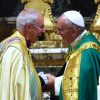
Last the Archbishop of Canterbury, Justin Welby, meets Pope Francis in Rome, their third meeting since taking office. There was a time when such meeting at all, let alone with this frequency, would have been considered unthinkable, and this meeting will celebrate the first meeting of an Archbishop of Canterbury with the Pope since the Reformation—that … Continue Reading

Is John 17 about unity?

If I was given sixpence every time I heard someone quoted John 17.21 ‘…that they might be one…’ then I’d have a lot of change that I wouldn’t know what to do with. It is commonly suggested that, in this, Jesus’ ‘high priestly prayer’, we see his last desire expressed to his heavenly Father, and … Continue Reading

Was Jesus married?

In 2012, a papyrus fragment with Coptic text on it hit the headlines, primarily because it appeared to include the phrase ‘Jesus said to them: “My wife…”‘. It attracted more attention than it might otherwise have done because it was endorsed by Karen King, Hollis Professor of Divinity at Harvard Divinity School. But in something like the biblical studies … Continue Reading

(How) can we live with disagreement?

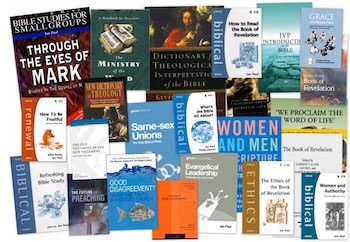
Earlier this year, I took part in a consultation on the current conflicts in the Church of England, particularly on sexuality, and whether it is possible to disagree well. Out of that discussion has come the book Good Disagreement? edited by Andrews Atherstone and Goddard and published very promptly by Lion Hudson. The back cover blurb runs … Continue Reading

Why does God allow people to do evil?

This article was printed in the Winter edition of New Wine magazine, and is reproduced here by permission.

We are confronted almost daily with the reality of evil people at large in our world. Robert Mugabe is the latest in the long line of villainous leaders to dominate headlines. President of Zimbabwe since 1980, he has inflicted untold misery on his people—so why has he been allowed to continue? It is striking that Western policy in recent years has often appeared to be shaped by response to individuals, evil leaders who need to be toppled. So the second Gulf War in Iraq was directed specifically against the regime of Saddam Hussein. And it was seen to be a triumph of Western action that Gaddafi was deposed as leader of Libya. However evil certain systems or cultures appear to be, it is evil people that we feel the need to focus on.

Questions in Scripture

Scripture appears similarly to be concerned with evil individuals, and the challenge they offer to our understanding of God’s love and power. What will God’s response be to evil and obstinate Pharoah, oppressing and enslaving God’s people? asks the writer of Exodus. What will God do about a succession of kings of Israel and Judah who ‘do evil in the sight of the Lord’? asks the writer of 1 and 2 Kings. How can God not only allow the foreign leader Cyrus to flourish, but actually make use of him in liberating his people? asks Isaiah. What sense can we make of the tyrannical kings Nebuchadnezzar, Belshazzar and Darius as we face tyranny in our own day? asks Daniel. The questions continue to haunt us.

Continue Reading