Leadership and the Anglican Communion

This was my immediate reflection on the Primates’ statement last Thursday, published on the Premier Christianity blog. Prior to the gathering this week of the Anglican Primates (heads of the 38 autonomous Anglican provinces) almost everyone predicted it would end in disaster. There was suspicion from the moment that the Archbishop of Canterbury, Justin Welby, … Continue Reading
What does the Primates’ Statement mean?

So, it happened. A bit like the last General Election, the outcome of the gathering of the Primates of the Anglican Communion ended as no-one thought it would—together, with a statement, an affirmation of ‘traditional’ understandings of marriage, and a rebuke of sorts for the Episcopal Church of the USA (TEC). I am not sure … Continue Reading
What is the Primates’ Meeting all about?

In case you missed it, I repost here my article from last September about the Anglican Communion and the Primates’ Meeting. What has happened? The Archbishop of Canterbury, Justin Welby, has made a significant announcement about the future of the Anglican Communion. He has issued an invitation to 37 Primates of the Anglican Communion (archbishops … Continue Reading
Martyn Percy’s non-sense poetry on sexuality

In anticipation of the Primate’s meeting in January, Martyn Percy, previously Principal of Ripon College, Cuddesdon, now Dean of Christchurch, Oxford, and Vice President of Modern Church, has set out his proposals for what should be discussed and agreed. He sums up his approach as a plea for a poetic resolution, something that transcends the … Continue Reading
Just war, theology and bombing Syria

Discussion about Just War theory and bombing Syria last week mostly focussed on whether or not we should initiate war—though that was a moot point since we have been bombing ISIS in Iraq for more than a year. But it was assumed that we were considering the dimension of jus ad bellum, whether there was a just … Continue Reading
Is the Lord’s Prayer offensive?

While I have been in the States for the weekend, I gather that back in the UK you’ve been experiencing a little local difficulty in relation to prayer, free speech, and the cinema. Digital Cinema Media (DCM), owned by Cineworld and Odeon and controlling about 80% of cinema advertising, decided not to screen a 60-second … Continue Reading
(How) can we live with disagreement?

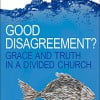
Earlier this year, I took part in a consultation on the current conflicts in the Church of England, particularly on sexuality, and whether it is possible to disagree well. Out of that discussion has come the book Good Disagreement? edited by Andrews Atherstone and Goddard and published very promptly by Lion Hudson. The back cover blurb runs … Continue Reading
A Bluffer’s Guide to the Anglican Communion

This is the full text of my article published on the Christianity magazine blog on Friday: What has happened? The Archbishop of Canterbury, Justin Welby, has made a significant announcement about the future of the Anglican Communion. He has issued an invitation to 37 Primates of the Anglican Communion (archbishops who lead the different provinces) … Continue Reading
What is going on in the Anglican Communion?

There has been a small torrent of comment in the religious press following Justin Welby’s announcement about a meeting to consider the future of the Anglican Communion. As usual, there is a full listing of the different points of view on the Thinking Anglicans website, and some pointed discussion of what is ‘really’ going on … Continue Reading
Reconciliation

When Justin Welby took office in March 2013, he announced his three priorities for his ministry as Archbishop. Alongside the renewal of prayer and a commitment to evangelism and witness, reconciliation took centre stage. Inasmuch as prayer is about relationship ‘upward’ to God, and evangelism and witness are about relationship ‘outward’ to other people, reconciliation … Continue Reading
Is ‘discipleship’ Anglican?

A few weeks ago, Linda Woodhead suggested in the Church Times that discipleship was a ‘theologically peripheral concept’, and the following week Angela Tilby dismissed the ‘d-word’ as ‘sectarian vocabulary that…shows the influence of American-derived Evangelicalism on the Church’s current leadership.’ The short discussions in each place actually raise not one but three, inter-related, questions: … Continue Reading