
Guy Hordern writes: For more than eighty years, the Church of England has had a formal place in determining what is taught in Religious Education in England. That may shortly change. The Government is proposing that Religious Education should become part of the National Curriculum. I am not writing to argue for or against that proposal.
I am writing because I participated in one of the Reference Groups established as part of the process of developing the proposed new arrangements, and my experience has left me with some questions about how the new curriculum has been produced, who has participated in producing it, and what is meant when we are told that a “consensus” has been achieved.
These questions matter particularly to the Church of England.
An eighty-year settlement
Religious Education has occupied an unusual position in English education since the Education Act 1944. Unlike most subjects, its curriculum has not simply been prescribed nationally. Locally Agreed Syllabuses are produced through an Agreed Syllabus Conference. The structure is deliberately representative. There are 4 committees representing
- The Church of England
- Other faiths including non-religious views and Christian denominations other than the Church of England
- Teachers
- The local authority
Each Committee has one vote. The syllabus must command the unanimous agreement required across these constituent groups before it can be adopted by the Local Authority. The system may sometimes appear cumbersome. Consensus usually is. But it has a considerable virtue: we know who is in the room, whom they represent, where authority lies and how agreement has been reached.
I have some experience of this process. I have been a member of Birmingham SACRE since 1977 and chaired the Birmingham Agreed Syllabus Conferences in 2002 and 2022. I have also served as a member of the General Synod. I have seen people with very different understandings of Religious Education reach agreement. Agreement does not mean that differences disappear. It means that those differences have been exposed, discussed and negotiated, and that those responsible for the eventual decision can be identified.
That is an important distinction, because the existing arrangements do not merely give religious communities and others an opportunity to be consulted. They give them a defined place in the decision-making process.
The architecture recognises that determining what children should be taught about religion is sufficiently important, and potentially sufficiently contested, that no single interest should determine the answer. If RE becomes a National Curriculum subject, that settlement will fundamentally change. The Church of England will lose a statutory role in determining the RE curriculum which it has held for more than eighty years.
That does not in itself mean that the change is wrong. National arrangements might bring greater consistency and could strengthen the entitlement of pupils to serious, high-quality Religious Education. But there is an obvious question.
If we are replacing a system in which representation, responsibility and the means of reaching agreement are explicitly defined, what is the corresponding system at national level?
Who is in the room? Who chose them? Whom do they represent? Who actually writes the curriculum? And how do we know when agreement has genuinely been reached? Those questions seem particularly important because the word now being used about the national proposals is “consensus”.
What the Francis Review proposed
The Curriculum and Assessment Review chaired by Professor Becky Francis recognised the unusual position of RE and recommended a staged approach to bringing it within the National Curriculum. Its recommendations are well worth reading carefully.
The Review proposed that representatives of faith groups, secular groups and the wider teaching and education sector should form a task and finish group. That group was to engage with faith and non-faith schools, RE organisations and faith communities in order to “co-create a draft RE curriculum”. The process was expressly intended to be sector-led, with the Department for Education supporting efforts to reach consensus. Unlike an Agreed Syllabus Conference, however, “the sector” was never defined, and significant constituencies were not represented in creating the curriculum.
Only then came Stage 2:
If consensus on a draft RE curriculum can be reached, the DfE should conduct a formal consultation on the detailed content.
There is an important sequence here: Co-creation; Consensus; Consultation. My concern is whether that is what actually happened. I was part of the process; I was invited to participate in one of the Reference Groups and accepted the invitation anticipating that it would provide the broad and serious deliberation envisaged by the Francis Review and would follow the pattern of a Locally Agreed Syllabus. My experience was different.
Those participating in the Reference Groups were not given a clear account of how membership had been determined, whom participants were intended to represent, or to whom they were accountable. More surprisingly, we were not initially told who was actually writing the Programmes of Study on which we were being asked to comment.
That distinction is important. The Reference Groups did not themselves draft the Programmes of Study. We were presented with material which had already been substantially developed and given tightly limited opportunities in which to respond to it. In one instance, the time available for consideration and discussion of the final draft of the programmes of study was approximately 45 minutes. We were not able to take copies away for careful examination although we were told that the committee of the Religious Education Council studied the programmes of study at a recent meeting.
Having spent many years participating in the locally agreed syllabus system, I found the contrast striking. In an Agreed Syllabus Conference, I know the status in which I am participating. I know the status of the other participants. We know who is responsible for the document before us. We know where disagreement exists. Most importantly, we know what constitutes agreement.
In the national process, I found those things much less clear. That is consultation of a kind. I find it impossible to describe it as co-creation.
Other participants have expressed similar concerns. The Independent Schools Religious Studies Association, whose representative also participated directly in the process, formally dissented and reluctantly I dissented as well.
What does “consensus” mean?
There appears to be substantial support across the RE community for the principle that pupils in every school should receive high-quality Religious Education, and there is significant support for bringing RE within the National Curriculum. But agreement with that principle is not the same thing as agreement with a particular curriculum.
One can believe that RE should become a National Curriculum subject while disagreeing profoundly about what that curriculum should contain, how it should conceptualise religion, how much attention should be given to particular traditions, or what disciplinary approach should underpin the subject. These are not minor details. They concern the nature and purpose of Religious Education itself.
Yet “consensus” is increasingly being used in discussion of the reforms. We therefore need to ask: consensus about what? Consensus that every child deserves good RE? Consensus that RE should enter the National Curriculum? Or consensus about the particular Programmes of Study that have been produced? Those are three very different propositions.
The Francis Review itself recognised that compromises would be required if genuine consensus were to be achieved. That makes it all the more important that disagreement is visible rather than absorbed into a general claim of sector support. There is also an instructive contrast with the system we are proposing to replace. Under the locally agreed syllabus arrangements, unanimous consensus is not simply asserted. There is a mechanism through which agreement must be demonstrated.
If the word “consensus” is to carry comparable weight in a national system, we ought to know who has consented to what.
Where was the Church of England?
For Christians and particularly for members of the Church of England, there is another question. Where, precisely, was the Church in the creation of the curriculum which may replace the system under which it currently has a statutory voice?
The Francis Review explicitly envisaged faith communities participating in the co-creation of the draft curriculum. Of course, individual Anglicans and Church bodies have been involved in discussions around the reforms. But that is not quite the same question.
If the Church of England is to surrender a formal statutory role which it has exercised for more than eighty years, surely it is reasonable to ask what corresponding and identifiable role the Church had in creating the national arrangements which will replace it. Was this an agenda item at the General Synod of the Church of England? Consultation on something already written is not the same as participation in writing it. That distinction seems to me important.
Why process matters
Some may wonder whether this is simply procedural. If the eventual curriculum is good, does it matter who sat on which committee? I think it does. Curriculum making is never neutral. Decisions have to be made about what knowledge matters, what is omitted, how a subject is organised and what intellectual traditions pupils encounter. Those choices become particularly sensitive in Religious Education because questions of religion, belief, non-belief, truth and human identity are involved.
A process capable of commanding confidence therefore needs more than expertise. It needs transparency. We should be able to know who drafted the proposals, how they were appointed, what range of perspectives was represented, how disagreement was recorded and what evidence supports a claim that unanimous consensus has been achieved.
That is not obstructionism. It is the ordinary accountability we should expect when public policy is being made.
The consultation must genuinely be a consultation
The forthcoming national consultation provides an opportunity to put this right. But only if it is genuinely open. The danger is that two questions become quietly collapsed into one: whether RE should enter the National Curriculum and whether the particular proposals now produced are the right ones. The first may command considerable support without the second having been settled at all. That is why the language of consensus matters.
If we are already told that consensus has been achieved on what children should learn, what exactly is the forthcoming consultation being asked to decide? A consultation must permit the possibility that substantial elements of the proposals could change. Otherwise, it risks becoming not consultation but ratification.
Some questions worth asking
I am not asking Christians, members of General Synod or others concerned about Religious Education automatically to oppose bringing RE into the National Curriculum. I am asking something much more modest. Before we dismantle a statutory settlement, which has existed since 1944, can we establish clearly:
Who actually drafted the proposed Programmes of Study?
Who appointed them, and according to what criteria?
What role did the Reference Groups have in creating the proposals, rather than commenting upon them?
What meaningful role did the Church of England have in their creation?
What disagreements were recorded during the process?
And, perhaps most importantly:
On what evidence is a sector-wide consensus being claimed.
After nearly fifty years involved with Religious Education through Birmingham SACRE, I want RE to flourish. I want children and young people to encounter religion seriously and intelligently, and the subject to command the respect it deserves. A National Curriculum may help achieve that. But such a significant change should command confidence not merely because we are assured that a consensus exists, but because the process by which that consensus was reached can itself withstand scrutiny. For more than eighty years, our system has recognised that deciding what children should learn about religion requires different voices to sit around the table and reach agreement.
If we are going to replace that system, we are entitled to know who is sitting around the new table, and who decided that they should be there.
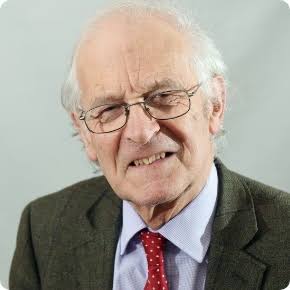 Guy Hordern MBE is a member of Birmingham Standing Advisory Council on Religious Education since 1977, and a member of the General Synod of the Church of England 2021-26.
He was Faith Advisor to Cllr (now Lord) Whitby the Leader of Birmingham City Council between 2004 and 2012 and was a Faith Advisor to Andy Street, former Mayor of the West Midlands Combined Authority.
 Buy me a Coffee






My state school religious education in England, up to and including O level, was only ever Christian.
By consensus, presumably?
Wasn’t the push for ‘ consensus management’ in the Public Sector in England at the turn of this century abandoned as a failed concept?
This is probably provoked by the growth of Islam in England.
Maybe it is now a misnomer for equality management.
James …. or perhaps some C. of E. people who have basic difficulties of the biblical concepts of ‘male’ and ‘female’ that one finds in the opening chapters of Genesis.
There’s a nice description of Religious Education in Chapter 7 of George MacDonald’s novel ‘Malcolm’.
” ‘Was Jacob a good man?’ he asked, as soon as the reading, each taking a verse, was over.
An apparently universal expression of assent followed; halting in its wake, however, came the voice of a boy near the bottom of the class:
“Wasna he some dooble, sir?”
“You are right, Sheltie,” said the master; “he was a double. I must, I find, put the question in another shape:- Was Jacob a bad man?”
Again there came such a burst of yesses that it might have been taken for a general hiss. But limping in the rear came again the half dissentient voice of Sheltie:
“Pairtly, sir”
“You think, then, Sheltie, that a man may be both bad and good?”
“I dinna ken, sir. ….”
The chapter goes on – it seems to me a great model for how an R.E. class should be conducted.
Speaking of matters inter-religious ……
On 11 September, the 25th anniversary of the most massive terrorist attacks in our lifetime, the Archbishop of Canterbury has bestowed an award on Ashrafi, the Pakistani imam who:
– bestowed a title of honour on Osama bin Laden in 2007 in response to the knighthood for Salman Rushie
– has spoken out in favour of Pakistan’s blasphemy laws which are used to harm Christians
– has spoken in favour of suicide attacks on American troops in Afghanistan
Here is Gavin Ashenden’s trenchant commentary, complete with a picture of the imam and his concealed wife:
https://www.youtube.com/watch?v=IleWH0-9YbU
Canterbury just withdrew the award:
https://www.archbishopofcanterbury.org/news/statement-lambeth-palace
Too bad they didn’t do the work beforehand in their rush to delude themselves.
Yes, saw that. Two minutes on Google would have spared them this egg on their face.
This picture with the obedient woman in a burqa matches the absurd gold thrine picture from Ghana.
What an appalling lack of judgment,
Just how much longer will genuine Christians in the Church of England remain supine in the face of this avalanche of twaddle and heresy from the (Arch)bishops? There is plenty that can be done, primarily involving loud and continuing exposure of their hypocrisy so as to cause embarrassment.
They are both out of their depth in anything theological, and Mullally’s blunders are exactly what you would expect from a product of the NHS.
But Welby was no better, he just had the superior public school manner about him. From prostrating himself at Amritsar to mouthing the latest platitudes from The Guardian, Welby never missed a chance to show how ‘right on’ he was. And step by step the evangelical voice he once had was lost.
Let the dead bury their dead. But Mullally is still doing harm.
I would be interested to see what this work he supposedly did standing up for Christian minorities was?
In at least one state school near me, RE teaches Christianity as a religion of works and Islam as a religion of peace.
The deeper problem with RE teaching is not factual inaccuracy, but what facts get chosen from each faith and in what light these facts are portrayed. Invariably the choices of secular humanism are made,, and secular humanism is itself a faith system – meaning that it is committed to the truth of certain propositions (mostly about human nature and society) that it canot prove from anything more fundamental. It is of course a nonsupernatural nontheistic system. But its underpinning of the teaching choices mean that it is secular humanism which the lessons really promote, albeit subtly.
We should not be surprised that Christianity is misrepresented to its disadvantage. An enemy of Christ is at work in this world in this era. Wiser not to have RE lessons.
As long as Christians have an input in what is taught, we need RE lessons especially as for those who never normally attend a place of worship it is their main insight into what the main faiths represent
The article doesn’t mention Roman Catholic schools. RC schools teach their own RE syllabus which is dull and stuck in Vatican 2 and social justice memes, but at least it is Catholic.
Catholic schools also avoid RE lessons on abortion, marriage and homosexuality, which is probably a good thing since most pupils may not be practising Catholics. I may be wrong on this, but that was the impression I gained from a stint working in a Catholic secondary school – which nevertheless had very good pastoral care.
James – well, I’m living in Poland, so I know a little about Catholic religious education. We decided that our son should not attend RE classes, for different reasons. My own: the Easter before he started school (when the decision had to be made), on reading through the four accounts of the crucifixion, I decided that he wasn’t ready for anything so violent – either RE would be ‘proper’ RE (in which case he wasn’t ready for it) or else it would be a joke. My wife: she had actually been through RE at school and she took the view that it was rubbish. On hearing from other parents, it turns out that it was actually a joke. It was taught by some harmless spinster, who fed the stray cats close to her home – and she gave the kids good grades if they brought in tins of cat food. After three years, I’m not at all sure that they had actually discussed the crucifixion, the crown of thorns, etc …. in any detail at all. And it was much more an indoctrination rather than giving information.
On the other hand, other aspects of the syllabus have been good for us. One of the set books for 10 year olds (in the Polish class) is ‘The Lion, The Witch and the Wardrobe’. From a literary point of view I do not like the book (I’m an avid reader of C.S. Lewis – but not at all keen on his fantasy), but it was an excellent opportunity to introduce the story of Jesus and what Christianity is all about.
So I’m wondering if this is the way to go – I’m somewhat negative about RE as a subject per se, but I see opportunities for Christians to try and get Christian literature into the set texts for other subjects.
I know someone in Ireland (in her 70s) who received a Catholic education and, when her form teacher had to pop put of the classroom unexpectedly, said to the classs “Just meditate on death for a few minutes.”
Have RE as part of the National Curriculum but just ensure the C of E as well as other faiths remain represented in deciding what is taught as party of it
Nice thought. But Islam brooks no rivals. It will accept consensus until it no longer has to.
Unless Islam gets to 51% of the population from its current 6% then that won’t be an issue, but by then the UK might be under Sharia law anyway
The balkanisation of England will happen long before then, as Burmingham, Tower Hamlets and other places become effective Islamic statelets.
Islam does not need 51% to supersede the CofE. Islam punches far above its weight compared to modern Christianity, which is always keen to give ground, never to reclaim it.
No but once you add Roman Catholics, Baptists, Methodists, Pentecostals etc Christianity still reaches 46% in England and Wales on the last census compared to 6% for Islam. Evangelical Christianity is of course a religion of conversion as much as Islam is, unlike, say Judaism
Simon:
I don’t think you have any idea what it is like to try and teach in Tower Hamlets or indeed in much of London, or in Birmingham or Bradford. The Michaela School was almost wrecked by Muslim activism (a girl egged on by her father wanted to have Muslim prayers in the schoolyard), and it took a court ruling to protect the school’s secular character.
The balkanisation of England is well underway, and the forthcoming by-election in Holborn (with Labour fielding a Somali candidate) shows how far immigration has transformed England’s cities.
Still, less than 6% of the UK population is Muslim, well below the global average of 26%. Of course immigrants are not all Muslims, many from Eastern Europe or southern Africa for example have proved to be more Christian than the native British population. Of course if you ban Muslim prayers in secular state schools then Christian prayers are also banned and left only to C of E or RC state schools
Who said immigrants were ‘all’ Muslims?
How can you treat ‘is it 100% or not?’ as the issue as opposed to ‘is it disproportionate or not, and if so, disproportionate to what exact degree’? You know that the issue is the latter not the former.
Simon Baker still doesn’t get it.
He obviously has no knowledge of how things are in Tower Hamlets or much of London, as well as Birmingham and Bradford.
He has no idea of how Islam functions in towns where it predominates – towns which indigenous English, whether Christian or not, are leaving.
That is why London has become minority white in the past generation, for the first time ever in its history.
Living in his village, Simon has no idea how life functions in England’s cities. Quoting national statistics is meaningless, but Simon doesn’t understand this. To quote T.S. Eliot, ‘Choruses from “The Rock”:
It is hard for those who have never known persecution,
And who have never known a Christian,
To believe these tales of Christian persecution.
It is hard for those who live near a Bank
To doubt the security of their money.
It is hard for those who live near a Police Station
To believe in the triumph of violence.
94% of the UK population is not Muslim, unless you want a Trump style ban on immigration from Muslim majority nations?
Apart from a tiny fraction of places like Tower Hamlets, Bradford and Newham Muslims are not a plurality anywhere in the UK let alone a majority. Simon Baker still doesn’t get it. Plenty of non white London black British people are Christian anyway while plenty of white Londoners will be atheists. I hybrid work in London, East London and Central London anyway when in the office even if we live in a rural area so it is not as if I am unaware of what it is like.
I was Head of RS for over 30 years in two state comprehensive schools. I’ve no longer got a professional interest in this as I have (kind of) retired and no longer live in England.
However the move to include RE as part of the NC is long overdue and in my eyes is to be welcomed. Theoretically at least it should boost the status of the subject and means some head teachers/governing bodies will have to take their statutory duties more seriously than at present.
However, I do think there are some very valid concerns raised in the article. One of my particular concerns was the way Humanism was muscling in onto the RS curriculum. I don’t have any principled objection to that except curriculum time was very limited and I felt it unnecessary to spend time on a belief that most of my pupils took for granted.
Also I’d like to make a plea to churches to support and pray for their local RE teachers, particularly those who are Christians, as increasingly this is the only exposure many youngsters have to the faith.
Humanism is the default setting in most PSHE lessons, including those relating to sex and sexuality.
As a (non RE) teacher in a church of England school where RE is given significant priority, I have found it illustrative of the phenomenal ability of young people to sit through 5 years of lessons in a subject, pass exams and learn absolutely nothing. When they come to me for A-level, they have no idea about any religion other than their own. I think it’s more important what the individual teacher wants to do with a subject than the curriculum. The curriculum is “let’s play the pass-the-exam game”; the quality happens in the gaps.
Paul Dean – I agree completely. It’s scandalous that they don’t learn that Rastapharians use hashish in their sacrament – and how to get hold of it safely without getting caught by the police.
On balance I would not be in favour of the State teaching it’s
version of religion.
I do so because of my own experience in the late 1950’s
We had an RE Teacher who was a member of the Salvation Army,
In one lesson on Moses she declared, that the burning bush was a result of ignited methane gas and the Nile turned to blood was red mud
churned up by it’s forceful flood.
At that age of 12 I was livid !
On becoming a Christian in her late 30’s decided to teach we boys
the Scriptures using Scripture Union notes each morning with a prayer before we left for school.
I don’t know if she knew of God’s injunction to Ex 18:20 –
Take responsibility for teaching their children themselves Deut 4:9
Not delegate it to some unknown entity teaching religion with a possible bias.
The State lays down their unavoidable rules but it is incumbent on Christians to bring their children up in the fear and admonition of
the Lord. I am eternally grateful for a godly, insisting and persistent Mother whom we at that age often found irritating.
Correction – should read ” my Mother taught we boys…”
It’s worth remembering that RE is not, and never has been, a catechism in disguise. Nor is it theology or (generally) philosophy. That necessarily leaves it as an education in the practices and traditions of different religions, and their ethical approaches. The question then is how do you do that well.
It’s also worth bearing in mind how national curriculums work. They don’t enforce identical teaching and subjects, especially when you get into potentially very expansive subjects like history (which might be a close comparator to RE). There’s a structure, but lots of choice within that. For example in Key Stage 3 children are required as part of their history lessons to cover “a significant society or issue in world history and its interconnections with other world developments”, but exactly what that is is wide open: it could be the US in 20th century, Mughal India, the Abbasid caliphate etc. etc..
Your first sentence is not correct. RE is English schools was indeed intended as instruction in Christianity and in Catholic schools it was and still is, in theory, integral to Christian formation. Most primary schools in England were church foundations, so it was only natural that RE should be instruction in Christianity. It was only as England became more irreligious that RE reinvented itself in secondary schools as a non-committed study of ‘religion’, primarily Christianity, but then other religions got shoehorned in.
I have taught in both CofE and Catholic secondary schools and examined for Edexcel and OCR (Catholic syllabus).
Adam – this is blatantly false. Religious education has always been a method of getting children catechised within the school system – that is why they put it into the school curriculum in the first place. Clearly, in the UK, this may no longer be the case – and RE has become a form of sociology – whereby the aim is to try and give the children some idea of the forces that seem to be shaping society.
Here in Poland, religious education is *entirely* denominational; Catholic and Orthodox have separate classes. The aim of the first three years of Catholic R.E. here is to prepare for ‘first communion’ which comes at the end of class 3 (children start primary school at age 7; before the age of 7 they go to pre-school; the final two years of pre-school look similar to the English primary 1 and 2). After that (class 4 onwards) the aim is to prepare them for confirmation.
If you look at the UK in earlier times (certainly 1875 when George MacDonald wrote his novel ‘Malcolm’) the aim of religious education is schools was entirely to catechise the children. Anything different from this (which, in my view, turns it into a branch of sociology) is a much later development.
Jock,
Thank you for corroborating my response to Adam. What he said about the history of RE in English education was indeed blatantly false. It was certainly about instructing children in Christianity, including the practice of prayer, but morphed into something thinner as England became more secular. Catholic RE still has the purpose of catechising children and is keyed into school worship.
If you’re going to teach generic religious education, you really ought to at least mention the core of each religion. The divinity of Christ is rather important to one religion. It’s outright heresy to another. Seems kind of important. I wonder what the “consensus” is on how to discuss John 3:18 in relation to Surah 5:72? Probably an idle question and more to the point, one the answer to which is likely to be far different in thirty years time, when, based on current demographic trends, RE curriculum likely will be far more wonderfully focused and far less impeded by the nuisance of debate.
The trouble with teaching Islam in SACRE terms is that, at KS3 level, it stopsat the blandest propaganda and never deals with the issues that really play into Islam in the modern world, namely:
– Muhammad’s marriages, especially to Aisha
– his life as a warlord
– his war against Jewish tribes in the Hejaz.
Alert pupils will know about these things and teachers who want to keep their jobs and their lives will do their best to keep this under wraps.
Not necessarily. I only taught in two schools, one in Essex, one in Hertfordshire. In KS3 students were given an overview of six major world religions. Some of that was of my own doing as I felt we had good reason to cover some faiths again, and/or in greater depth, given how patchy RS teaching was in local primary schools.
Add in a few lessons on Humanism and an introduction to philosophy and ethics, and the time constraints in KS3 were considerable. My first school was quite good in that respect as we had equal time with Geography and History and that allowed you to touch on some more controversial topics but my second school cut the allocation and we only had a lesson a week so could do little more than the basics.
You’ve pointed out some negatives about Islam (which I share) but RS teachers need to teach religions even handedly. It would be wrong to emphasise all the bad bits of Christianity and neglect the positive, same goes for Islam.
But where do you get your criteria for what is even-handed? Whatever system generates those criteria is what you are REALLY teaching.
Simon:
What are the ‘bad bits’ about Christianity? Not the old chestnut about the Crusades, I hope. Or were you expecting the Spanish Inquisition?
By ‘Christianity’ I mean the actual doctrine and practice of the Apostolic Church. I find nothing to fault in its teaching. Do you?
‘Islam’ is a little harder to define in a strictly historical sense, but the phenomenon of what Islam became and proclaimed in its juridical nature is fairly clear.
Islam in this sense denies the Trinity, the Incarnation, and the Cross and Resurrection, extolls jihad, enforces Quranic-based punishments, treats non-believers as social and political inferiors, and subjugates women in marriage.
These are all fairly uncontroversial statements. Which of these do you think ‘the good parts of Islam’?
Simon:
I should mention that none of the KS3 textbooks on Islam I have seen ever mention Muhammad’s marriages, Aisha, or Muhammad’s wars and execution of Jews or the others he had put to death.
Jihad is always presented as nothing other than a spiritual struggle to be a religiously devout person.
The whole thing is sanitised and Muhammad is presented as essentially a peaceful teacher of monotheism and prayer.
Of course, you cannot keep the truth from kids with phones, and that is why, I suspect, few mainline schools include Islam as the second topic to be studied (besides Christianity) for GCSE RE. It would be far too inflammatory to talk about contemporary Islam in the classroom of a state school, especially with a growing number of Muslim students.
I think that is why state schools prefer to study a rather abstract kind of Buddhism at KS4. Catholic schools seem to take Judaism as the subsidiary religion.
We all know what happened to the RE teacher in Batley when he asked his class to draw Muhammad.
Many Evangelicals subjugate women in marriage.
Some years ago I was in a group of adults, with a general discussion going on. One woman dared to interrupt her husband, sitting next to her. He slapped her hand for her insolence and she retreated into cowed silence.
I should have spoken up but did not.
It is a very bad piece of behaviour, & to avoid stereotypes I do not know that it is more likely to happen male to female than vice versa.
You’re very dismissive of the Crusades, the Inquisition etc. Rightly or wrongly though they are used as criticisms of Christianity. Christian teaching has also been used to support racism, sexism, witch burning, sexism, fascism, slavery etc.
Personally I don’t think any of those things are compatible with Jesus teaching but those who were/are in favour identified as Christians and saw their beliefs and actions as being Christian.
There are a few issues but two to consider seriously
1) Content – just what is taught at what age and that needs help and agreement by some experts who may or may not be religious experts, but also to include teachers otherwise we get inappropriate stuff ( content language ideas )at primary and at secondary etc or maybe it’s dull and uninteresting – get help from those great teachers.
2 Time commitment – just how much time is allocated per week for this part of the curriculum? Is it voluntary ? In England we have a packed curriculum and so the time is critical for delivery. In primary and secondary pressures vary but just for example what will ks4 students be expected to study? Or is it an optional choice ( we chose GCSE RE, we don’t) or is there still a need maybe via pastoral time.
And what about post 16 ? And finally who is teaching this ? Are we using RE staff or is it like so much – forced in via a pastoral route – your chemistry teacher uncomfortably now teaching a bit of RE a bit of financial literacy a bit of British values a bit of sex education.
Look and think this through carefully
I wonder who writes the maths, English, science, history, geography, PE, arts, creative curricula?
“It would be wrong to emphasise all the bad bits of Christianity and neglect the positive, same goes for Islam.” Well, what “bad bits” of the religion, Christianity, do you have in mind? Not the “bad bits” perpetrated by certain Christians, but the “bad bits” of the religion itself?
If you asked me the same about Islam, the religion, I could write an essay. The aphorism is truer now than ever: the problem with Christianity is Christians. The problem with Islam is Islam.
I am always sorry to meet a nominal Christian, and glad to meet a nominal Muslim.
The problem with Islam is also Muslims because they are shaped by that religion and its core values. Can anybody look at Sadiq Khan and wonder why he acts and thinks the way he does – and why he so evidently despises Christianity?
What on earth was going on in the head of Sarah Mullally when she presented that gong to the admirer of Osama bin Laden? The Established Church is led by ignorant incompetents trying to flatter the people they fear.
Presumably she didn’t know about his Bin Laden comments which was why it has been withdrawn. Though his comments should have been better vetted and his full burka clothed wife standing by Mullally should have raised some alarm bells
Of course she didn’t know – that’s the very point. Two minutes on Google would have answered that. She is out of her depth, and was appointed for political reasons and not because she was a great theologian or evangelist. She was appointed because she was a senior administrator in the NHS and ticked a box.
The problem is also that the depth she is out of is fairly shallow. Most of the pew members in the Church of England would not have made that mistake. We are lions led by donkeys, as was said about British troops in World War I who obeyed commands to walk across fields swept by machine gun fire between the sets of trenches. The sooner we realise our identity and cleanse the Cof E of its worse-than-useless leadership the better.
Whatever the curriculum, national or otherwise, says, it seems to me that the teacher delivering the lesson is what really counts. I have worked with teenagers for the last decade and they have all had very poor Religious Education, ranging from teachers who appear totally ignorant about the basic truths of Christianity through to outright hostility. The comment above about Christianity being taught as a religion of works rings especially true.
Jesus said a student will be like his teacher. I’m sure good RE teachers exist, but I have no confidence that they are the norm.
For context, this issue is the primary reason why we homeschool our children.
Even in a Church of England school where I once worked, much of the RE work was farmed out to teachers who knew nothing about Christianity and cared less. It must have been worse in ‘mainline’ schools.
Absolutely. You can have a fantastic syllabus but if its delivered by teachers who don’t care about the subject or use it just to display their own prejudices or indoctrinate children then it will fail.
James:
I agree no KS3 textbook on Islam that I have seen ever mention Muhammad’s marriages, Aisha, or execution of Jews or the others he had put to death but I have seen them mention his wars, albeit not necessarily in great detail. It would be naïve not to think there may be reasons behind these omissions but some of it is also due to time constraints and to the age of pupils.
I disagree that Jihad is always presented as nothing other than a spiritual struggle. At GCSE level pupils are taught about Lesser and Greater Jihad, e.g. there was a question on that on the AQA exam this summer.
I was surprised about your suspicion that few mainline schools include Islam as the second topic to be studied (besides Christianity) for GCSE as you felt it would be far too inflammatory to talk about contemporary Islam in the classroom and they’d be more likely to teach about Buddhism. I have to say that didn’t fit with my perception about what was being taught.
There may be more up to date figures somewhere but these are the most recent I could find and contrary to your suspicion they show that 3 times as many pupils study Islam compared to Buddhism in full course GCSE, and 5 times as many study Islam compared to Buddhism in the short course: https://www.retoday.org.uk/uploads/NATRE%20EBacc%20Survey%202021%20final.pdf