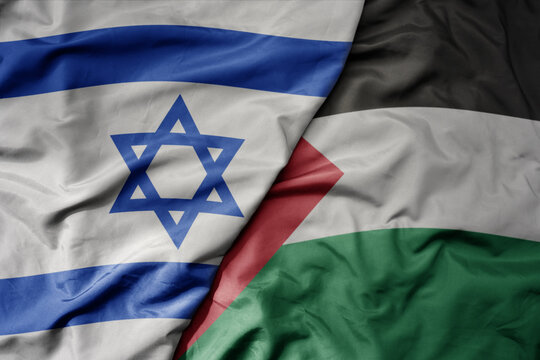
Why are our conversations (!) about Israel-Palestine so problematic? Why is there an apparently unbridgeable chasm between the two sets of views on this issue? Is there a way to actually listen well to each other?
The Grove Ethics group has offered the beginnings of an answer. Two people, Colin Chapman and James Patrick, have set their views out on the key stages of the history of the conflict. In the booklet this pair of views is presented side by side; I cannot do that, so do not put any interpretation on the order here.
In this extract, I include their introductions, their accounts of the key moment of the foundation of Israel in 1947–8, and their conclusions. But the other sections are equally important.
I have found reading these two accounts side by side enormously enlightening. It illustrates how very different perspectives can develop and points to what we need to do to find a way to a better conversation.
You can buy the booklet, post free in the UK, from the Grove website here. It really is essential reading at the present moment.
Introduction: Colin Chapman
Hamas’ attack on Israel on 7 October 2023 and Israel’s attacks on Hamas in Gaza have made people around the world more aware of the ongoing Israeli-Palestinian conflict, and raised huge ethical questions. Many see it as ‘the great moral litmus test of our times.’
Christians are deeply divided in their responses. This is firstly because we have different understandings of the history of the conflict, and secondly because we differ over questions of biblical interpretation.
This booklet attempts to address basic questions about the history: what are the roots of the conflict between Israel and the Palestinians? And how does each side interpret the main events since the 1880s?
On the left-hand page, I present the narrative which is more sympathetic to the experience and understanding of most Palestinians and Israeli Arabs. On the right-hand page, James presents the narrative that is more sympathetic to the experience and understanding of most Israeli Jews and Jewish people outside of Israel.
I first began to study the history of the Israeli-Palestinian conflict while living through the civil war in Lebanon which began in 1975. At the same time, I was wrestling with a basic question of biblical interpretation: does fulfilment of biblical promises and prophecies about Israel in the Bible involve any present and future role for the Jewish people in the land?
My answer was a clear ‘No!’ because I concluded that the coming of the kingdom of God in Jesus transformed Old Testament ideas about the nation of Israel and the land. I have always therefore tried to draw a clear line between my understanding of the history of the conflict and my interpretation of Scripture. In what follows, however, it will be clear that James answers the same question with an emphatic ‘Yes!’ His understanding of all recent history in the Middle East is therefore deeply influenced by his biblical interpretation.
Since in this booklet we are discussing histories rather than theologies, these are the kind of questions that I hope readers will be asking about each stage of the conflict: how much common ground is there between these two histories? Can they both be true? Is one a fairer account of what happened than the other? On what basis should we attempt to make moral judgments about the actions of all the different parties that have played a role in this intractable conflict?
Introduction: James Patrick
The attack of 7 October 2023 and subsequent war has brought terrible suffering and loss to both Israelis and Palestinians, and stirred up strong emotions around the world. Both sides justify the current conflict using history, seeing their national identity under existential threat.
For Christians, called to be peacemakers, an ethical response requires us to try first to hear and understand both views before we can strive for justice. As British observers, the authors each sincerely lament Britain’s historic guilt in exacerbating the conflict, but in different ways. We aim to reflect each narrative as faithfully as we can, aware that even many on our own side will see things differently. I encourage Christian readers to listen directly to fellow believers in the land—both Christian Arabs and Messianic Jews—who identify with their people’s pain but seek reconciliation for Jesus’ sake. History is personal, so we must not delegitimize, despise or ignore either side.
On the historical facts, we do not totally disagree. We share much common ground about the main time periods and events since the 1880s (and before), who lived in the land, where and when. Thus, the left- and right-hand narratives can serve as two eyes, not just one, enabling depth of perception and error correction, utilizing differences of interpretation and style. Colin and I are equally committed to truthful investigation of history, to justice and international law, and neither would deny wrongdoing by those we represent, even according to their own ethical standards, though it is not our place to stand as their accusers.
Establishing accurate history must come first. Only then can it be evaluated ethically. Christians have inherited our universal ethical values from the Jewish Scriptures: every human in God’s image, rule of law not ‘might is right,’ self-defence, truthful witness and so on. The whole Bible also speaks to the particularity of the core dispute in this conflict—whether Jews also have a claim to the land. I believe fulfilment of God’s promises is always both spiritual and physical for Israel, and thus also for all nations. Messiah Yeshua (Jesus) fulfils God’s promises for both Israel and the nations, through one another (Rom 11.11–32), culminating in his coming reign upon the earth. This important theological dialogue deserves its own separate study.
Our highly concentrated parallel histories, revised in light of each other’s critique, finally intersect with a robust but respectful challenge to each other. We offer this conversation as an ethical provocation to more informed and compassionate listening for the sake of peace.
The next sections cover the background context, the rise of nationalist movements in the nineteenth century, the events around the First World War, and the British Mandate period.
1947–1949: UN Partition Plan & Founding of Israel: Colin Chapman
After Britain had asked the UN to take responsibility for Palestine, a special commission recommended the creation of two separate states. A Jewish state would cover 56% of the land. Jews at the time were only one-third of the population, and 42% of the Jewish state would be Arabs. An Arab state would include the remaining 44% of the land, with 749,101 Arabs and 9,520 Jews. Jerusalem and the surrounding area would be under international rule.
Under strong pressure from the USA, the UN General Assembly approved the Partition Plan on 29 November 1947 by a vote of 33 to 13, with 10 abstentions (including Britain).
The Jews accepted the resolution, and the State of Israel was declared on 14 May 1948. The Arabs rejected the Partition Plan because they believed that it was being imposed on them without proper consultation, and because they felt the division of the land was unfair. The Palestinians were too weakened to rise up for themselves because the British had crushed them so severely during the Revolt of 1936–1939.
Arab forces immediately invaded from Syria, Iraq, Transjordan and Egypt, but were quickly defeated. Their invasion has been described as ‘chaotic in conception and execution,’ and they all had different motives. Jordan was against the creation of a Palestinian state, and had reached an informal agreement with the Jews which allowed Jordan to take over the West Bank.
Jews describe the events of the period between 1947 and 1949 as their War of Independence, while Arabs describe them as al-Nakba, The Catastrophe. Arab historians and even some Israeli Jewish historians have documented what they call ethnic cleansing, in which around 750,000 Arabs (two-thirds of the Arab population) were either expelled from their homes by Jewish militias, or fled out of fear, or killed. There is evidence that the violence used (including rape) was similar to the violence of Hamas’s 7 October attack.
Around 500 villages were destroyed. By the time a ceasefire was declared in July 1949, Israel had taken over 23% of the land which would have been part of the Palestinian state. ‘The Nakba,’ says Nur Masalha, ‘remains at the heart of Palestinian collective memory, national identity and the struggle for collective national rights.’
Most Arabs would agree with the evaluation of Britain’s handling of the Mandate by the Israeli-British Jewish historian, Avi Shlaim: ‘The manner in which the Mandate ended was the worst blot on Britain’s entire record as the mandatory power. Britain left Palestine without an orderly transfer of power to a legitimate government. In this respect, the end of the Palestine Mandate has the dubious distinction of being unique in the annals of the British Empire.’
1947–1949: UN Partition Plan & Founding of Israel: James Patrick
Churchill’s original 1921 two-state solution for all Palestine had designated ‘Transjordan’ (78%) as Arab-only, yet the 1937 Peel Commission recommended further partition of the 22% (western, Jewish-led) Palestine, giving Jews 17% of it. Palestinian Arabs flatly rejected any Jewish sovereignty, and aggravated their Arab Revolt until Britain crushed it in 1939.
Facing implacable opposition to their ‘sacred trust of civilization’ towards the Jews (League Covenant, Art 22), Britain surrendered its Mandate back to the United Nations, which had just inherited all League of Nations responsibilities after WWII. Moved by the plight of Holocaust survivors being denied entry to the sole Jewish homeland, the UN Special Commission recommended a third partition plan, Resolution 181, more generous to Jews. The General Assembly approved it, though its decisions are never legally binding unless both sides agree. The Arabs again rejected any Jewish sovereignty, immediately launching civil war against them, thus rendering Resolution 181 legally moot.
The Jews, by contrast, celebrated international approval of their moral claim to a state, however small, and duly announced Israel’s ‘birth’ on the day the British authorities sailed away, evoking Isa 66.8. Referencing the ‘onslaught’ against them, their Declaration of Independence yet made ‘appeal’ to Arab residents of the land to ‘participate in the upbuilding of the State on the basis of full and equal citizenship and due representation,’ promising ‘complete equality of social and political rights to all.’ Borders were left unspecified, but on the universal legal principle of uti possideti juris, existing colonial territorial boundaries automatically become state borders on independence, unless otherwise agreed by treaty. As such, post-colonial Israel inherited earlier Mandate boundaries ‘from the River to the Sea’ by international law. Arabs had refused a partition treaty, and subsequent invasions were aggressive and thus illegal.
The next day, Israel was attacked by seven Arab armies. Egypt captured Gaza, and Transjordan took what it called its ‘West Bank,’ renaming itself ‘Jordan.’ All nations except Britain and Pakistan deemed this annexation illegal, including the Arab League. Israel fought desperately for Jerusalem’s Old City, but Transjordan’s Arab Legion (led by a British officer) took it, demolishing the Jewish Quarter’s ancient synagogues. All Jews were expelled from their holiest site and from villages in the West Bank, complete ethnic cleansing until 1967.
Israeli authorities repeatedly appealed to Arabs to remain, especially before Arab state invasions. Yet around 600,000 fled, most fearing advancing Jewish forces or heeding official Arab instructions to leave temporarily. Khaled al-Azm, Syrian Prime Minister (1948–1949), recalled, ‘But we ourselves are the ones who induced them to leave…by calling on them and insisting that they abandon their land, their homes, their work and their occupations.’
The next sections cover the aftermath of this war, the changes after the Six-Day War in 1967, the beginnings of peace negotiations, and the situation now after October 7th.
Conclusion: Colin Chapman
Dear James
I am really grateful to you for the way you have engaged in this dialogue. You have certainly helped me to understand more fully the Israeli narrative, and to feel what it means to those for whom it is the only narrative.
I suspect you believe that Britain has generally played a highly honourable role throughout the conflict. You do not accept that Britain made contradictory promises to the Arabs and the Jews, and do not find any problems in the Balfour Declaration. You seem to think that Britain’s commitment to support the creation of a Jewish national home trumped any responsibility not to harm the interests of the Arabs. You imply that, although the Arabs were the majority, they should simply have given up their desire for independence and self-determination and meekly accepted that they would become a minority in a Jewish state, grateful for all the economic benefits that the settlers would bring.
You seem to me to maximize what you see as the violence of the Arabs, but minimize what many see as the violence of Jews. You do not believe that the Nakba was anything like as serious as Arabs make out, and are unwilling to accept that the Jews engaged in ‘ethnic cleansing.’ You make a great deal of the violence of the Hamas attacks on 7 October, but do not express any opinions about how Israel has been waging war on Hamas and Gaza.
I am surprised that you do not seem to make any moral judgments about what the Zionists did. You seem to see Zionism as a great success story and believe that the Arabs are largely to blame for their suffering. You do not have any criticism of Israel for its control of the West Bank, East Jerusalem and Gaza since 1967 and are unwilling to see this as an ‘occupation.’
One of my greatest problems with your approach is that your interpretation of the history seems to be so deeply influenced—if not controlled—by your interpretation of the Bible. For you, God’s promise of the land to Abraham and his descendants as ‘an everlasting inheritance’ has given the Jewish people a divine right to the land for all time, and this overrides the rights of the Arab majority who had been living in the land for centuries. Since the return of Jews to the land was a fulfilment of predictions in the Old Testament, we do not need to ask too many ethical questions about the process by which they took over the land.
I hope very much that this is the beginning—and not the end—of our dialogue.
With sincere thanks and best wishes in Christ, Colin
Conclusion: James Patrick
Thank you Colin for initiating this dialogue, for modelling how to seek conversation with those of contrasting views. Your persistent advocacy for Palestinian Arabs over many years is honourable, and pro-Jewish Christians need to listen with more compassion to the Arab people, not least Arab Christians.
One of the challenges of compassion is knowing when to confront in love. ‘The wounds of a friend can be trusted.’ This applies to us supporters of Israel’s existence though not always its policies, and Israeli society is robustly self-critical as your sources demonstrate. But surely it should also apply to friends of those Palestinians and Arab states whose choice of violent rhetoric and actions have repeatedly initiated wars with Israel, in which their own people then suffer most. Thankfully it seems the Arab world is now turning towards peace and normalization instead, and I long for this for the Palestinians.
I too believe every ethnic group deserves self-determination; after all, that is what Zionism means—Jewish self-determination. But self-determination need not be statehood. The Jewish people accepted smaller and smaller portions of their ancestral homeland, simply wanting autonomous self-rule. Conversely, you found various excuses for the Arabs rejecting every offer of a Palestinian state (1937, 1947, 2000, 2008, 2014, 2020). Did self-determination matter less than denying it to others? Does not classical Islamic teaching give Muslims a divine right to the land for all time, with Jews and Christians allowed only as dhimmis? Jewish teaching grants minorities equal rights (Lev 19.33–34).
You suggest that Zionists secretly desired and attempted ethnic cleansing, contrary to every official statement and policy of the Yishuv and the State of Israel to the present. We agree that would be wrong, so why not also the idea of a Jew-‘free Palestine’ in the ‘West Bank’ (or else ‘from the River to the Sea’) as it was pre-1967? Total separation only leads to worse conflict, as in Gaza, so surely integration deserves a chance instead? After effective de-radicalization, mutual familiarity and respect should lead to collaboration, as it does within Israel.
Perhaps what surprises me most about your perspective on this history, as a Christian, is how little God’s unfailing love for the Jews (Rom 11.28–29) overflows from your heart also, fully reconcilable with love for the Palestinians and all other nations. Given your respect for the Bible, you agree, do you not, that the land to which the Jewish people are returning is the one land from which they all originally came, unlike any settler-colonial movement in the world? Their homecoming proves God’s covenant faithfulness, but even secular experts verify their indigenous claim, international legality and ethical example.
I look forward to more communication on these matters, with genuine appreciation, James
 Colin Chapman was ordained in the Episcopal Church in Scotland. He has taught in seminaries in Cairo, Bethlehem and Beirut, and in the UK at Trinity College, Bristol and the Selly Oak Colleges in Birmingham. He is the author of ‘Whose Promised Land?’ (Lion, 1983, and SPCK, 2024).
James E Patrick studied theology at Cambridge and completed a DPhil at Oxford. He has served as an officer of the Society for Old Testament Study and lectured in Old Testament for Spurgeon’s College, London. He is currently Chairman of Love Never Fails, an alliance of 25 British Christian pro-Jewish organizations.
The booklet can be bought, post-free in the UK, from the Grove website here.
 Buy me a Coffee

























Theologically, I agree with James Patrick: I take the Abrahamic covenant promising the land to mean not less than Abraham would have taken it to mean. It may mean more – Christians are ingrafted spiritually (Romans 11) – but it cannot mean less (Jewish nonbelievers in Jesus thrown out spiritually) or else God could be accused of sophistry, which heaven forbid! This is a covenant not conditional on faith, morevoer; its only condition is circumcision, which even secular Jews have continued to practice. The church should therefore recognise that Jewish occupation of Canaan is the rule, and exile – warned of in Leviticus 26:33 – is the exception. This pattern has nothing to do with the length of any exile. Even the 18 centuries between the 20th century and the Romans laying waste to Judea, as they put down the bar-Kochba rebellion (132-5AD), are an exception to the rule. There is also the prophecy, in a positive tone, of Isaiah (11:11-12) that “God’s hand will a second time recover a remnant of his people… he will… gather together the dispersed of Judah from the four corners of the earth.” The return in the last 150 years could not be described better in one sentence even after it has happened.
As for what has happened in those 150 years, in the spirit of this book I recommend this 50min YouTube video in which a man – fluent in Hebrew and Arabic – has interviewed dozens of Arabs and Jews in all parts of what was Mandatory Palestine, and finds dominant narratives in both Arab and Jewish communities:
https://www.youtube.com/watch?v=Nw1KIW46yJs
I dispute Colin Chapman’s claim that London made contradictory promises to Jew and Arab. London was careful not to include the area corresponding to Mandatory Palestine in promises to Arabs during/after World War 1. Claims to the contrary are revisionism. The Arabs of this region had better civil rights under British interwar rule than they had under Ottoman rule.
Colin also jumps from the UN vote at the end of November 1947 to the invasion of the nascent Israeli state in May 1948, stating only that the Arabs of Palestine did not accept the vote. They showed their non-acceptance by starting a civil war in the intervening months, as they boasted to the UN Security Council on April 16th 1948. Colin also writes:
Most Arabs would agree with the evaluation of Britain’s handling of the Mandate by the Israeli-British Jewish historian, Avi Shlaim: ‘The manner in which the Mandate ended was the worst blot on Britain’s entire record as the mandatory power. Britain left Palestine without an orderly transfer of power to a legitimate government. In this respect, the end of the Palestine Mandate has the dubious distinction of being unique in the annals of the British Empire.’
No Sir! We left India in 1947 – which is mainly why we left Palestine – and quickly there was a civil war there between Hindu and Muslim, on a much larger scale too. I have heard an ethnic Indian blame us for departing so quickly, her ancestors undoubtedly having grumbled that we were present and were then departing too slowly! In both Mandatory Palestine and Greater India the British we were leaving places where two sets of people badly mistrusted each other and at least one side was willing to resort pro-actively to violence. As a Brit I refuse condemnation for what happened next.
Colin, the claim of ethnic cleansing is a grey area. You can’t leave villages in your rear during a military advance without checking whether Arab irregulars were embedded there.
James, the area known as Transjordan was never known historically as ‘Palestine’ and was therefore never promised to the Jews by the Balfour Declaration, San Remo or the League of Nations Mandate. Bratain had a mandate over it too but that is not the same thing. Don’t fall for Jabotinsky’s propaganda!
Yes, God’s covenant with Abraham (Gen 17) whereby he pledged himself to give him and his offspring the land of Canaan was a unilateral covenant, depending only on circumcision. And yes, God did give the 12 tribes of Israel, as related in the book of Joshua. Nonetheless, despite the covenant, God also expelled Israel from the land, because of their disobedience and unfaithfulness, not under the Abrahamic covenant but the Mosaic covenant. The latter sets out the penalties of disobedience in Deut 28, including being driven out of the land and scattered across the face of the earth.
Ten of Israel’s tribes – the majority – never came back. Two tribes (plus some Levites and a small number of northerners) did, in 537 BC, but only to go through the whole cycle all over again. Consequently they were driven out again in AD 70 and following the Bar Kochba Revolt in AD 132-136. They rejected the true Messiah (who is himself the new covenant) and looked for another one who brought only national destruction. ‘Israel’ was re-established as a Jewish state and homeland for the descendants of Judah, Benjamin and Levi in 1948, but within borders much smaller than those promised to Abraham, and without having repented of its disobedience and unfaithfulness. The vast majority of the Jews in Israel are agnostic/atheistic. They have not fulfilled the conditions for returning to the land.
So most of Israel was in the land for no more than 686 years (1407–721 BC). The Jewish part sovereign nationhood in the land for a little longer, 800 years (1407–607 BC). The Jews lived under the rule of pagan empires for a further 606 years (537 BC–AD 70), when they were tenants rather than owners of the land. The period from AD 70 to 1948, 1878 years, is not much more than half the total period from 1407 BC up to 1948. Even today most Jews live outside the state of Israel.
There’s no way Isaiah 11:11-12 refers to the events of 1917 et seq, and “God’s hand will a second time recover a remnant of his people… he will… gather together the dispersed of Judah from the four corners of the earth” is not a true rendering of the passage, which refers to ‘his people’, not Judah, and to specific countries from Assyria to the coastlands of the Mediterranean, not ‘the four corners of the earth’. In succeeding verses it is clear that all Israel is involved, not just Judah. The passage refers to the return of Jesus at the end of the age, when he himself will lead all Israel back into the land from their graves in Egypt and Assyria, having dried up the Euphrates.
The repeated ‘in that day’ (Isa 11:10, 11) refers to the time described in Isa 11:3-9, which also remains in the future.
Only then will God’s eternal covenant with Abraham be finally and permanently be fulfilled.
[Reposted, as first attempt apparently failed.]
Thank you for this and I heartily agree.
The very name of ‘Israel’ was an afterthought in 1948. It only narrowly beat ‘Judah’ as the name for the new entity and only won out because the People’s Administration felt there might be a confusion as the actual Judean region which (then!) sat largely outside the new state’s borders.
I often wonder how the conflict would have been perceived, both theologically and historically, amongst Christians had it all been over land-rights in the terriory of the sub-tribe of Judah.
After all we Christians are to believe, as the Second Collect for Good Friday reminds us, that we are the ‘true Israelites’.
And of course Paul describes us as Israel, and all NT writers call the followers of Jesus the ‘ekklesia’ which was the LXX term for Israel. ‘A true Jew is one who is a Jew inwardly, by circumcision of heart’.
However Paul continues to describe his mission as being ‘to the Jew first and also to the Greek’ (e.g. Romans 1). Any theology that ends up denying this distinction is continuing has gone wrong.
Steven,
I gave the translation of Isaiah (11:11-12) as “God’s hand will a second time recover a remnant of his people… he will… gather together the dispersed of Judah from the four corners of the earth.” You dispute that the passage mentions the Jews (Judah) and say it refers only to ‘his people’. That is verse 11. The ‘dispersed of Judah’ are mentioned using exactly that term in verse 12. Please verify it for yourself.
Moreover the bit I have edited matches the Middle Eastern lands from which Jews were forced to flee to Israel in the decade after 1948.
The matching of these verses to the zionist era is so perfect that words fail me when people refuse to see it in favour of a spiritual interpretation. Perhaps I shall have to wait for world headlines to match ancient prophecy even more closely. At some point I am confident they will have to give up this ethereal spiritualising. That phrase is my rejoinder to Ian calling my view ‘wooden literalism’ on a previous thread!
Ian has called my understanding of
“The matching of these verses to the zionist era is so perfect that words fail me when people refuse to see it in favour of a spiritual interpretation.”
I suggest you will need to take that up with the Holy Ghost Himself, brother, who offers and promotes precisely this ‘spiritual interpretation’ through the writings of the Apostle Paul.
Indeed, for my part I might (with all love) say that ‘words fail me’ when I see a Bible reading Christian trying to force the living waters of the knowledge of God – which bid fair even now to cover the whole earth – to flow backwards up into the Judean Hills.
Simply put, the progress, from Genesis to Revelation, in all particulars great and small is from type to anti-type, from sign to substance, from shadow to reality.
To say that in this one specific facet only of God’s Plan for His creation – the ethnic integrity of the physical nation of Judah – the universal Biblical direction of spiritual travel was uniquely and permanently abrogated is to go against the witness of the whole Bible.
The Temple goes from a stone building in Judaea to the body of believers in the world. The priesthood equally, passes from one family to all all belivers in-and-through Christ. Israel becomes the tribe and inheritance of all who own Jesus as Lord. Jerusalem itself passes from a man-made urban conurbation to a “city which hath foundations, whose builder and maker is God.” Through Christ, Paul teaches us, we are become inheritors of the anti-typical Kosmos of which Canaan was the type.
In every instance – indeed in instances of far greater covenental significance that the fate of the remnant of the 10 Tribes – the Old Testament type is gloriously fulfilled in a New Testament anti-type. This is the Christian message. The Good News.
Of course you may not agree but even so, we can do so well. No doubt something of the spirit of this recurrent ‘misagreement’ formed the basis of the Incident at Antioch. If Peter and Paul could disagree well then we ought to consider ourslves similarly bound over.
Having said that words fail me I can hardly give you a long reply! I hope you will give the benefit of your views to some of our brethren who are Jewish believers in Jesus resident in the Holy Land, and listen to their response.
Steven,
Abraham was promised ‘land between the river of Egypt and the Euphrates’. The Hebrew does not necessarily imply ALL of the land between the rivers, just some of it. A few chapters later Abraham is promised land between the rivers on which sit some named tribes, and already this is a lot less than all of the land between the rivers. Then God finally specifies exact boundaries, in Numbers 34.
Notice that the Book of Exodus portrays the Israelites as not yet in the promised land even though they are between the rivers.
Steven,
The Jews were never driven out of their land by the Romans in the Jewish wars of AD65-70 and the barKochba revolt next century. They were driven out of Jerusalem and many were put to death, after which many of the survivors drifted away looking to live in more stable polities.
Your opinion that the Jews will not be let back in while they remain in their present spiritual state is not shared by Ezekiel, who speaks of a return FOLLOWED by a revival.
Anthony, the only problem with your approaching is that every single writer in the New Testament understands that ‘gathering’ to have been done by Jesus.
There is not a single NT text expecting a ‘third’ ‘gathering’. Jesus came to gather his people to himself, and he has done so from ‘every tribe, language, people, and nation’.
Although is it not rather odd, Ian, that the land is referenced so much in the OT including in prophetic utterances, yet you argue it has all been fulfilled in the Messiah? It seems a rather confusing message.
I think the opposite message is more confusing. One can understand the broadening from one nation to international. That makes sense as a big-picture plan. The alternative does not look like the sort of plan someone would have, being too undefined and mixed-message.
Another way to use Scripture to bring something to the discussion. Ask AI to rewrite Proverbs 23:20-35 as Palestine, Israel satire and you get a surprising result.
Given that LLMs are non-deterministic, it would probably be best for you to post the output you received.
Can someone explain to me as to why Arabs and Jews appear to live in constructive harmony in one area and yet in destructive cacophony in others. is it resentment of imposed “solutions?” Or is it a lack of recognition of a common third party?
It is because Israel is a democracy, and the ‘West Bank’ and Gaza are autocratic (terrorist) dictatorships. Are there any Arab states which are functioning democracies?
Morocco and Tunisia are the closest and usually defined as ‘hybrid regimes’ by the people who create democracy indices and suchlike.
One of the sillier arguments about the Israel / Palestinian situation starts with the observation: ‘if you let very young Jewish and Arab children play together, they play nicely. So why shouldn’t the adults?’
The reality of course if children are playing together they need someone to break up any fights that start. In Israel that is provided by the Israeli state, and everyone knows the rules and they thereby prosper. Look north to Lebanon and you see what happens when the rules fail; a previously stable and prosperous state has been reduced to a ruin by the attempt by other forces to dethrone the Christian dominated state. The fear of any thinking Israeli is thus totally opposed to giving the Arabs a chance to gain enough leverage to undermine the Israeli state.
An interesting project but perhaps an unfortunate publication.
At first glance the debate seems to suggest a binary choice
of histories, politics, moralities and ethics, inviting a choice of “interpretations”.
Where to begin? [and this is only my preliminary beginnings]
The answer to the debate, I think, cannot be found in Political wills, modern Histories or current moral or ethical mores.
The debate I think must begin at the insistence of God
To “cleanse the Land upon entry.” Many existing cultures if not the people must be completely eradicated entirely, it is to be a purified and Holy Land .
St.Paul states in 1 Corinthians 10:6 and 10:11 that the experiences of ancient Israel serve as examples, types, or warnings for believers in the new covenant and to we on whom “the end-times are come”.
The end -time prophets at the end of the Old Testament
Dispensation look forward to the end of the New Testament
Dispensation with a prequel “Revelation” all of its own.
The book of Zechariah to the holy remnant of Israel
Building the Temple and City against enormous counter cultures and internal limitations, low morale and moral and ethical praxes’.
Chapter 13 of that book has very pivotal casts; views of God’s Pre-existing thoughts about our current situation and the outworkings of His pre-existent purposes for His Glory to be manifested.
Israel failed to be the manifestation of God’s Glory just as the fractured church will fail to be a manifestation of His Glory.
However God has a faithful remnant, a holy seed, an Overcoming cohort who will contend for His Glory and will share and enjoy all the excellences of that Glory.
Just as Zerubbabel laid the foundation stones of the alter [the Cross] He lay the completing cap-stone of Grace, Grace !or as John terms it Grace upon grace.
As He said to Zerubbabel The building of Temple [church] city [kingdom] can only be “Not by power or might but by My Spirit says the Lord.
Regardless of current interpretations, morals or ethics
Glorious things are spoken of thee O Zion City of our God.
Except the Lord build the house they labour in vain
And as Jesus said “I Will build My House”, His will is His Pleasure
Shalom.
PS I forgot to include
The Motif of “ Cleansing the Land “can be explored @
https://biblehub.com/topical/t/the_cleansing_of_the_land.htm
For an excellent in-depth study of Zechariah Ch.13 I heartily recommend @
.onlinegiving.org/bible-study/zechariah-13
It goes a long way to answer the set question and giving wisdom to the simple. [ the motif of “the simple” is well worth exploring]
Shalom.
“There is evidence that the [Israeli] violence used (including rape) was similar to the violence of Hamas’s 7 October attack.”
Evidence? Similar? Well we have plenty of sickening video taken by Hamas itself of its own sheer depravity, descriptions of which deface the mind that encounters them and which I will not retail here. The hellish evil unleashed on 7 Oct is better documented than any other atrocity committed by man, and documented by the perpetrators themselves. So I ask, what “evidence” of “similar” Israeli conduct in 1948 does Colin allude to? He certainly does not hazard to back up this fabulous claim, which any person interested in an objective understanding would and should demand. His is more than an offhand comment thoughtlessly made – it is defamatory of Israel itself, without any stated foundation other than undisclosed “evidence”. It is precisely of the kind of casual moral illiteracy rooted in unreality that explains the intractability of the problem.
It was alleged at Deir Yassin, where Jewish forces were engaged in a desperate/ruthless (depending on your viewpoint) attempt to clear a village overlooking the main highway to Jerusalem, in which tens of thousands of Jews were besieged at the time. Accounts from both sides differ but the main discrepancies were over killings, and rape was certainly not a prominent allegation. I too hope Colin Chapman will ber
specific.
I’m firmly of the conviction that the only solution that could possibly bring a just and lasting peace is a single united “Republic of the Holy Land” with some form of power sharing administration, analogous to that in Northern Ireland. Unfortunately I am also of the conviction that neither side will ever agree to such a thing…
The problem with the much vaunted Two-State solution, if it ever happened, is that the Palestinian state thus created would be little better than a Bantustan, entirely physically and economically dependent on Israel, and thus only independent in name, not reality.
Most Palestinians are ethnically close to Jordanians, a 2 state solution could work if Palestine built economic links with Jordan and Israel’s nationhood was respected
Though God did make Ian Paisley do a 180 degree turn so stranger things…
I’m not sure the experience of Northern Ireland is a helpful guide here. People tend to see the Northern Ireland troubles as solely a Catholic vs Protestant dynamic of two sharply divided communities. But they miss a basic truth: the Northern Ireland question is a debate between two sets of Irish people, who are both adamant that they are Irish, but who take different implications from that: Nationalists believe that being Irish means that they are, by definition, not British and ought to be in a different country; Unionists believe that being Irish means that they are, by definition, British just like the English, Scottish and Welsh and ought to be in the UK.
‘Why are our conversations (!) about Israel-Palestine so problematic?’
Could it be that the spirit of the bloody curse (Matthew 27:25) which those who murdered the Son of God invoked on themselves and their children still affects their descendants to this day?
Lest anyone suggest this is come kind of ‘antisemitic’ comment, I emphasise that it’s a question. In Matthew 4.7 Jesus himself quotes from Deuteronomy ‘You shall not put the Lord your God to the test.’ Yet this is precisely what those who were arguing their right to kill his Son did.
Not everyone who as been destined to live in Israel-Palestine today is wicked; some will be the very best of people in every sense. Yet there does seem to be a curse about the place from which no escape looks imminent, possible, or even desired in some cases. Whether or not it was well meant, the political action in1948, which so many people celebrated, has had a disastrous effect on the lives of huge numbers of people, both bad and good – some of whom live far beyond the current boundary of the State of Israel.
Whatever the history, the narratives, and the genuine facts (if we can be certain of them), perhaps our conversations may simply reflect a toxicity which has the most profound of roots. If that were to be the case, the only antidote to the poison is to leave the Old Covenant behind and embrace the saving grace of the New one.
I’m all for as many people as possible embracing the New Covenant in Jesus Christ! But your contrast with it of the ‘Old Covenant’ is problematic. WHICH old covenant? If you lump them together and declare them obsolete then you are junking the covenant with Noah in which God promises never again to flood the whole eretz. Better worry when it starts raining!
All Christians should agree on the basis of the Letter to the Hebrews that the Mosaic covenant is obsolete. The question is whether the Abrahamic covenant is like that with Noah, still running, or like that with Moses, obsolete. I’ve argued elsewhere on this thread for the former.
Anthony, I well recognise that a great many Christians share your view on the Abrahamic covenant, base on the seemingly unarguable word ‘everlasting’. I don’t pretend to be a Hebrew scholar, and so I’m in no position to make a linguistic case around this issue. However, meanings and intentions, particularly where God is concerned are often clarified over time and discerned through actions as well as words.
Certainly in the time and circumstances when Abraham lived, possession or non possession of land would have been perhaps the most indisputable measurement of wealth or poverty. Land was where all the resources pertaining to a good life could be discovered and harvested. It’s much the same today. It goes a long way to explaining what’s been happening in Ukraine (as a proxy for the West to breaking up the Russian federation), Venezuela, Iran, and of course Israel/Palestine. Whether the resource is oil, timber, minerals, rare earths or farming land, wealth still depends ultimately on land.
So God’s covenant about land with Abraham, and which would apply to his offspring, offered a very acceptable vision of physical prosperity as the measure of how God intended to bless him. But looking at it from today’s perspective as a Christian (and thus knowing of the immense gift of salvation through the death and resurrection of Jesus which God already had in mind) we can now understand that ‘everlasting’ would one day come up against radical events of a kind which would inevitably redefine what God had always intended to offer in terms of prosperity to the people he loved. And that offering would one day be adoption as children of God himself. There could be no greater prosperity than that. In fact to be an heir of the God who owns everything there is to own makes ownership of a piece of land on planet earth somewhat irrelevant. Of course we gentiles are immensely blessed also to be invited in to share in that eternal prosperity. A great difference of this New Covenant is that it is taken up or rejected individually rather than on the basis of biological inheritance.
The problem with continuing to look for Israel’s repossession of the land they long since lost through their faithlessness is that it maintains a divide between what God intends for Jews and Gentiles which the New Testament unambiguously rejects. Every Jew is offered exactly the same chance to receive the immeasurable benefits of adoption to be a child of God as is the case for us Gentiles. Many do – and God be praised for that! This everlasting land notion is a running racial sore which still today brings needless misery and acts as a seed bed for endless geopolitical instability which involves enormous human suffering. It needs to be put behind us once and for all, and not least among us Christians.
The thing is, your view (and Ian’s, and Steven Robinson’s) was forged in an era in which the Jews were wandering stateless round the world and nobody assumed this would ever end. That view has been in crisis since 1948. You have to believe that it is a grotesque accident of history, a mere coincidence, that the Jews are running the Promised Land again having maintained their identity in 18 centuries of exile – something no other people has remotely managed – and despite abundant promises to them of the rights to the land forever.
I can’t speak for Don, but my view, already stated, is clear enough, and not what you say it is. To quote, ‘God did give the 12 tribes of Israel [the land of Canaan], as related in the book of Joshua. Nonetheless, despite the covenant, God also expelled Israel from the land, because of their disobedience and unfaithfulness, not under the Abrahamic covenant but the Mosaic covenant. The latter sets out the penalties of disobedience in Deut 28, including being driven out of the land and scattered across the face of the earth.’ I went on to say that the God’s unilateral covenant with Abraham (which did not require that Israel be faithful and obedient) would be fulfilled at the end of the present age. You have still not grasped the simple point that Israel was expelled from the land because it was under another covenant, which spelled out that continuance in the land did require faithfulness and obedience. Not having grasped that, you have not understood why the Assyrians deported the northern Israelites, never to return, nor why the Babylonians deported the southern Israelites, following which a few returned (and mostly younger men who had never previously lived in the land). A large part of the prophetic messages of Isaiah, Jeremiah and Ezekiel turns on this point.
In a comment on 15/07/26 I said that while the Jews do not have a right to live in the land of Israel currently, Rev 12:14 does indicate that God has allowed them to seek refuge there. I have nowhere suggested that the Jews’ running the Promised Land again is a ‘grotesque accident of history, a mere coincidence’. As I say in When the Towers Fall, which goes into the whole question in much more detail,
The vast majority of the Jews in Israel are agnostic/atheistic. Under the Mosaic covenant they have no God-given ‘rights’ to the land, and under the Abrahamic covenant they also have no such rights, because it is entirely God’s prerogative to determine when he fulfils his covenant. And when he does, it will be a matter of grace (Ps 14:7). All the major prophets indicate that it will not happen until the end of the age, when the Lord returns to Zion.
Isa 11:11 has not been fulfilled. Even today most Jews live outside the state of Israel. Isa 11:12 has also not been fulfilled because, even more explicitly than the previous verse, it speaks (before either had been deported) of the exiles of both Israel and Judah – of both the northern and the southern kingdoms – being gathered. As the northerners, certainly, are dead and their descendants indistinguishable – they did not maintain their identity – there is no way Isa 11:12-16 and other such prophecies can be fulfilled unless God should first raise them from the dead. Jesus himself (v. 15) will lead Israel back into the land, having destroyed the tongue of the sea of Egypt (presumably the Gulf of Suez) and having dried up the Euphrates. As Matt 24:31 has him say, “he will send out his angels with a loud trumpet call, and they will gather his elect from the four winds, from one end of heaven to the other.”
Only the word ‘not’ meant to be in italics.
Of course it is not remotely a coincidence. The Jewish feasts were set in stone, their culture intricate. Why is it surprising that it did not die?
As to the return to the land, if you plan something then it will happen. They were only planning the most logical and most desired thing.
Steven,
I am aware why the Jews were expelled to Babylon for a full lifetime; the OT prophets were explicit enough about that. Various large-scale violations of the writen Laws of Moses were involved, but the worst in God’s eyes was idolatry.
They lost even the hegemony of being a client state after the rebellions of AD65-70 and AD132-35, the reason being that they ‘did not recognise the time that they were visited’ (Luke 19:44) – visited, that is, by their divine Messiah Jesus of Nazareth, who spoke these prophetic words.
In another post above you wrote, “The vast majority of the Jews in Israel are agnostic/atheistic. They have not fulfilled the conditions for returning to the land.” But the Jews HAVE returned to the land; nearly half of world Jewry live in a sovereign nation there today. Something must therefore be wrong with your understanding. Perhaps you need to distinguish more carefully between the criteria for expulsion (about which I agree with you) and the criteria for return (regarding which 20th century history shows you wrong). You can, and do, cite specific verses from Deuteronomy giving the criteria for expulsion. Can you quote specific verses giving the criteria for return? I have pointed out above that Ezekiel speaks of a return in unbelief followed by a spiritual revival. How many fellowships of Jewish believers in Jesus are there in the land today compared to 2000, 1967 and 1948?
Since those eho killed the Son of God were Romans …
The Jewish leaders who called for Jesus to be crucified clearly accepted their own moral responsibility for something that need not and would not have happened if they had not demanded that it should.
It might well have done. I consider it futile to apportion blame between Jew and gentile (not that it stopped St Augustine) as both were clearly implicated.
Apportioning blame between Jew and Gentile was not my point. But I agree we’re all implicated.
at the behest of the Jewish leaders. If you believe the Gospels, the crowd, presumably mainly of Jews, were quite happy to have Jesus’ blood on their heads. Sadly the vast majority today still dont care about His death.
Sorry Don, but trying to excuse this gross and risible nonsense with the “just asking questions” excuse doesn’t wash and brings you no credit. It is astounding to me that an adult today is seriously pondering whether Jews are being punished for killing Christ. It sounds like someone else has already pointed out the antisemitism in that sentiment, so I won’t labour it, but just note that you have seriously misunderstood that passage: if we want to talk about who has Jesus’s blood on them, what do you think it means to be washed in the blood of the lamb?
As for whether the creation of the state of Israel has been disastrous, I suppose it depends on your perspective. It seem to me that we have moved from people carrying out pogroms and the genocide of millions, to only attempting those things without much success. Out of a small corner of the old Ottoman Empire, a modern technologically advanced nation has emerged from waves of refugees. I don’t think that’s a disaster.
Adam, I think you’ve rather neatly exemplified why conversations on this thorny subject are so problematic! If you read more carefully what I wrote, you will discover that I never mentioned ‘punishment’. I referred only to ‘the spirit’ of the Jewish leaders’ curse; and that spirit was clearly hatred which was born of their anger at Jesus’ public exposure of their hypocrisy and robbery of the ordinary people, notably in the corrupt Temple economy.
Given that biblical history, and the undeniable verbal aggression and violence of today’s Israel/Palestine situation, it’s perfectly reasonable to ponder Ian’s question (which I quoted) in the light of relevant biblical narrative. In that regard you might also ponder Matthew 21:33-46; the conclusion is pretty stark. There’s no racism involved at all in any of this: it’s an issue of love, peace, justice, and truth – for which there is little hope until anger and hatred are first dealt with.
The post is not that helpful and misses the most relevant point. What attitude should we as Christians have towards the present conflict in the middle East.? On one side is a democracy, Israel that was attacked on October 7th by Hamas. On the other side are terrorists who hate all Jews and are supported by Iran.
The Christian position is clear. Support the democracy which is Jewish and where the Christian church started
In my first comment above I meant the theological discussion to take second place to the discussion of the history of the zionist era. That man I linked who had gained the trust of and interviewed many Jews and Arabs in Israel and the West Bank found that the dominant narrative among Jews was the belief “we want peace but the Arabs don’t” and the narrative among the Arabs was that Israel was and still is a European colonialist project. Yet most of the Jews there today have their roots in other middle eastern lands from which they were forced to flee in reprisal for the Nakba, or had their roots in Russia.
I don’t think that “YOU started it – we merely responded” is a helpful narrative so far down the line today, but one thing does differ between the two sides. The Jews have consistently been wiling to accept a compromise over land in return for a lasting peace whereas the Arabs haven’t. I’d add also that in Gaza the Arab party put its military assets next to schools and hospitals and targeted civilians on October 7th whereas the IDF civilians long enough ahead to run that it is going to target such assets.
Supports of each side in the West have a luxury. Pro-Arabists can say that in what was Mandatory Palestine the Jews dominate the Arabs, whereas supporters of the Jews can look at the entire Middle East and say that Islamic nations dominate Israel.
Missing word “warned”
Theologically the Jews are a “chosen people, as are the saints.
The Holy Land is God’s chosen resting place, ultimately
In and through Christ it will be His Resting Place.
The Jews are His “sons” Often he chastens them Isa 26:16
Heb 12:5 ; as does He the saints Heb.12 vs 5 – 11.
Ultimately God will be Glorified through them and the saints.
His mercy and grace will be glorified.
The Controversy is not with his “sons” but with the Nations
Isa 51:17 Awake, awake, stand up, O Jerusalem, which hast drunk at the hand of the LORD the cup of his fury; thou hast drunken the dregs of the cup of trembling, and wrung them out.
Isa 51:22 Thus saith thy Lord the LORD, and thy God that pleadeth the cause of his people, Behold, I have taken out of thine hand the cup of trembling, even the dregs of the cup of my fury; thou shalt no more drink it again:
Jer 25:15 For thus saith the LORD God of Israel unto me; Take the wine cup of this fury at my hand, and cause all the nations, to whom I send thee, to drink it.
Jeremiah 25:17
Then took I the cup at the LORD’S hand, and made all the nations to drink, unto whom the LORD had sent me:
Zechariah 12:2 Behold, I will make Jerusalem a cup of trembling unto all the people round about …
Jesus drank the cup that His Father gave Him, it is a Mixed Cup
He drank the bitter that we may taste the sweetness
The dregs the Nations shall drink.
Psalms 75:8
For in the hand of the LORD there is a cup, and the wine is red; it is full of mixture; and he poureth out of the same: but the dregs thereof, all the wicked of the earth shall wring them out, and drink them.
Jeremiah 51:7
Babylon hath been a golden cup in the LORD’S hand, that made all the earth drunken: the nations have drunken of her wine; therefore the nations are mad.
14:11 {Jerusalem}And men shall dwell in it, and there shall be no more utter destruction; but Jerusalem shall be safely nabited.
14:12 And this shall be the plague wherewith the LORD will smite all the people that have fought against Jerusalem; Their flesh shall consume away while they stand upon their feet, and their eyes shall consume away in their holes, and their tongue shall consume away in their mouth.
14:13 And it shall come to pass in that day, that a great tumult from the LORD shall be among them; and they shall lay hold every one on the hand of his neighbour, and his hand shall rise up against the hand of his neighbour.
14:14 And Judah also shall fight at Jerusalem; and the wealth of all the heathen round about shall be gathered together, gold, and silver, and apparel, in great abundance.
Zechariah Chs.12 to 14 are well worth digesting ,
For an in depth study see @ starting point
onlinegiving.org/bible-study/zechariah-12 . Shalom.
The great neglect of both Jews and Church is neglect
of the prophets and the prophetic spirit utterances
“Don’t be prophetic, say smooth things to us”
We don’t like “hard sayings”
Jesus upbraided His disciples
LUKE.24:25 Then he said unto them,” O fools, and slow of heart to believe all that the prophets have spoken:
24:26 Ought not Christ to have suffered these things, and to enter into his glory?
24:27 And beginning at Moses and all the prophets, he expounded unto them in all the scriptures the things concerning himself.
ROM. 11:3 Lord, they have killed thy prophets, and digged down thine altars[Cross]; and I am left alone, and they seek my life.
4 But what saith the answer of God unto him? I have reserved to myself seven thousand men, who have not bowed the knee to the image of Baal.
11:5 Even so then at this present time also there is a remnant according to the election of grace.
The Ecclesia is built upon the foundation of
the Prophets and Apostles- Jesus Christ being the corner stone
( and the cap stone, Zechariah) Shalom.
If I may:
https://www.youtube.com/watch?v=vUZRqDjtUmI&list=RDvUZRqDjtUmI&start_radio=1
Thank-you Peter for the link – a Holy moment for me and the perfect end to this day. Alan Shalom.
Am I naive to find that, over the whole history of Israeli-Palestinian conflict, the phrase “six of one and half a dozen of the other” comes to mind, whatever the root causes?
Such a helpful book from two different perspectives. I hope the authors – as well as all the contributors above – continue to listen to one another – and most importantly to God for, whatever His ultimate plan for Jew and Arab, for Israeli and Palestinian, it will be to prosper them if they trust Him.
I agree that “YOU did that and WE merely responded” is not a helpful narrative so far down the line today, but one thing does differ between the two sides. The Jews have repeatedly been willing to accept a compromise over land in return for a lasting peace, whereas the Arabs haven’t.
Is it even possible to leave out the question of land? Would there still conflict? Why or why not? And to what scale? To what end? A common purpose?
Any agreed commonalities? Any unbridgeable differences?
A pious pipe-dream? There is only One unstoppable return that will settle it, forever. But at what price? The price of everlasting Peace through the Prince of Peace. Maranatha.
What is the Divine Objective in our tale ?
To build and edify the House and City of God.?
The book of Haggai ,probably no bigger than a Grove Booklet, but packed with pure words, 7 times refined.
Lots of folks garner their opinions from Media hacks and
Social Media influencers, who by the way have millions of “Followers”, today.
Zechariah with Haggai were supreme Encouragers of a Divine Objective – to Build The House;
Haggai 1:8 – Go up to the mountain, and bring wood, and build the house; and I will take pleasure in it, and I will be glorified, saith the LORD.
Why? Because, The Lord of hosts Himself was moved by a tremendous jealousy concerning their task Zechariah 1:14
1:13 And the LORD answered the angel that talked with me with good words and comfortable words.
1:14 So the angel that communed with me said unto me, Cry thou, saying, Thus saith the LORD of hosts; I am jealous for Jerusalem and for Zion with a great jealousy.
1:15 And I am very sore displeased with the heathen that are at ease: for I was but a little displeased, and they helped forward the affliction.
1:16 Therefore, thus saith the LORD; I am returned to Jerusalem with mercies: my house shall be built in it, saith the LORD of hosts, and a line shall be stretched forth upon Jerusalem.
1:17 Cry yet, saying, “Thus saith the LORD of hosts; My cities through prosperity shall yet be spread abroad; and the LORD shall yet comfort Zion, and shall yet choose Jerusalem.
These are Songs in the Night for the saints and answer so many of our questions.
For a thorough exegesis see@ onlinegiving.org/Haggai.
Or an in-depth exposition see Harry Foster’s “Divine Objective “@
austinsparks.net.
All these folks are a clarion call to the Ecclesia today
to blow the trumpet, sound out- the Glory of God, not telling them that we have Issues. Shalom.
Those prophets termed “Minor” call out for our repentance,
To be divested of our “filthy garment” and be re- clothed with a Holy Purpose, with a Holy Promise and a Holy Spirit ever present.
Death of Jesus. The question of blame has been raised.
The death of Jesus was foreordained of God, in the Trinity: sometimes known as the Covenant of Redemption .
That does not absolve human responsibility. We all killed Jesus! Did we not?
I confess that I am unclear as to the point you make Geoff
We might well progress the covenant Zeal of God and the zeal of His Saints.
Zeal for God’s [His Fathers]House consumed Jesus, it was in His DNA.
Psalm 69 evinces the Psalmist’s similar DNA whence the term arose.
What zeal David had when he said, “My zeal hath consumed me,” Psalm 119: 139., godly men and women in the Scriptures are to be our example, but only so far as they follow Christ.
What I want to show from this part of the Word of God is the holy zeal and fervour which Christ, the Head of the church, has for purity of worship in His church, and how we should seek to emulate Him. Christ Jesus is spoken of in the Scriptures as “leaving us an example”, 1 Peter 2: 21, and there is no higher example to follow.
Let us, , be imitators of Christ’s example. His zeal was not misguided zeal. It was truly for those matters which pertained to His Father’s house and glory.
The Jews did have a certain Z eal for God but not according to knowledge, says Paul .
Paul writing to the Galatian believers says, “… it is good to be zealously affected always in a good thing,” Galatians 4: 18.
When we fall away from being zealously affected in the cause of truth, we are called to repent and to return to that earnest interest in, and pursuit of, the things of God. “Be zealous therefore and repent,” Rev 3: 19. says Christ to several of the Churches.
From the post exilic prophets it can only be by the covenant mercies of David’. God pouring out a spirit of mourning and prayer and all accomplished by His abiding presence and “By my spirit says the Lord”.
The zeal of the Lord is truly a wonder to behold in both
sinner and saint. Shalom.
We certainly can, as individuals, aspire to make sense of the Israel-Palestine debate, and find a theologically and eschatologically satisfying reading of the history and challenges that face the church (inasmuch as any individual is capable of grasping the full extent of the issues).
There are some things that are plainly true and factual, over which there is little dispute, but a great many others about which it is a matter of perspective. What makes sense for me as a satisfying resolution to the tensions, is very likely not what would be convincing for another.
But that’s only half the problem, isn’t it…
The chasm between understanding and solution is, I both fear and trust, unbridgeable by any other than Christ at His return.
Understanding history and the perspectives on it matters. But only up to a point. The Palestine Mandate wasn’t the only place in the 1940s seeing borders move, people displaced, and partitions worked as a way to try and resolve conflict. India was partitioned to create a Muslim homeland of Pakistan (which displaced millions, and led to deaths of perhaps as many as 2 million people). Most of the borders of central Europe shifted dramatically, with an extraordinary degree of ethnic cleansing (for example, the German city of Konigsberg and province of East Prussia was emptied of Germans, Russians were moved in and to this day is the enclave of Kaliningrad). We can discuss and debate whether these were good or bad things, but whilst there’s no sign of anyone trying to restore Germans to the Sudetenland or Silesia, nor is anyone entertaining Pakistan and Bangladesh being reabsorbed into India, for some reason there continues to be an argument from some that Israel is illegitimate and ought to be done away with. This is why the question “do you believe in Israel’s right to exist?” tends to sit at the front of the debate.
More broadly, I am sceptical about whether there is a particular theological perspective on this conflict (as distinct from any other), and deeply sceptical about whether it’s helpful. It always seem to smack of gnostic conspiracy theory – here’s a special way of reading the ancient prophecies that others haven’t seen, that gives us special knowledge of history and the universe etc. etc.. It’s flatters to believe that we have such special insight, but flattery is a deceiver, and in this case comes with a huge cost of blinding us to the reality of the lives of real people being lived right now in Israel, Gaza, and the West Bank.
Adam,
This is a point that I have made repeatedly: that the borders of Russia, Ukraine, Poland and Germany were radically changed as a result of WW2 and millions of people were permanently displaced and lost their old homes. Wars have consequences, especially if you start and lose one. Why should the Mandate Arabs be an exception? Jordan, Syria and Iraq had only been constituted as states in 1946, yet in 1948 they joined Egypt in trying to destroy the new state of Israel. They failed – and it took many years for Egypt and Jordan to reconcile themselves to that fact. As for Gaza, there simply isn’t the work for 2 million people living there; half of them need to leave for a better home.
But the point you may be eliding is that the Palestine issue is a great obsession in the mind of Muslims, particularly those who are not Arabs. Why is Iran obsessed with trying to destroy Israel? Why does the question inflame Pakistanis and British Pakistanis like Sadiq Khan?
This, for me, is the nub of the question and why the dispute isn’t just another border/ethnic conflict, of which there are many in the world. It is about the Jews – and although many Christians like to think that Judaism is an obsolete question (like arguing about the Corn Laws), in reality the persistence of the Jews to this day is in fact a central religious question for Christians – and for Muslims.
For Christians it is indeed linked to the question of the spread of the Gospel around the world, for the Scriptures do speak of the ingathering or conversion of the Jews to their Messiah in the last days. Secular people dismiss this talk – and have long wished the Jews simply to disappear, to be assimilated and lose their peculiar identity. But they won’t.
And the Jews are a central religious question for Muslims, because Islam is very evidently an Arabized version of Judaism with multiple confusions and errors. The fact that Jews laughed at Muhammad’s erroneous grasp of the OT is said to have enraged him, and why Muslims can only be at peace with Jews provided Jews are subordinate to them, Which they won’t do.
The religious question will not go away, despite the best efforts of secularists to explain it otherwise.
I must say that the Arab demand for the ‘right of return’ of the children and grandchildren of those displaced in 1948 is ironic. Those generations never actually left, and if they have a right of return then how much more do the Jews have a right of return after 2000 years?
Or a right to of the Jews to return to their homes in the Arab lands whence their grandparents fled in the 1940s and 50s? Or how about the Pied Noirs who fled Algeria in the early 60s?
A good physicist like you will be pleased that I have been trying to learn about entropy recently. I know that a broken glass cannot become unbroken and a scrambled egg cannot be restored to an intact shell. The same fantasy about reversing the past is myopically and partially continued by those who promote the ‘slavery reparations’ racket today. Did the Archbishop of Canterbury on her golden throne in Ghana discuss with that local king how much his ancestor got for selling another tribe to British and Portuguese slavers?
If Ian will let me go off piste a little… there are plenty of tutorials for the smart layman about entropy, and most are wrong, so be careful!
You can view a gas as a type of fluid, and look at its flow. That’s a simple description, but there are some physical effects that it is inadequate to explain. Deeper analysis looks at the atoms and molecules and ions in the gas, then constructs the thermodynamic variables that specify the fluid description – pressure, density, temperature, wind velocity – from their motion. Air pressure on a surface is just its continual bombardment by billions of these molecules at an average speed close to the speed of sound, for instance. So, if I knew the locations and velocities of the million million million million molecules of air in a room, I ought to be able to calculate the pressure, density, temperature and windspeed at any point. But how could I do that from the million million million million bits of information? Pressure, density and temperature are in some sense averages over the molecules, but what sense? A time average? That’s called ergodic theory and is difficult even for a few particles. I came to believe that the usual ways of averaging were fudges. The notion of probability can also be used to average things, and that’s the way forward. We need the Principle of Maximum Entropy championed by the physicist Ed Jaynes, who adapted Claude Shannon’s 1948 expression of entropy as being related to the information content of a probability distribution. (The tighter a probability distribution, the more information it conveys – that makes sense.) But how can a probability average be a physical thing if probability is about information and different people have different information and assign different probabilities to the same thing? Jaynes answered this in a paper called Macroscopic Reproducibility, in a 1985 Conference Proceedings. Reproducibility of experimental results is the key. I can use the Maximum Entropy principle to model the relation between pressure and density according to how the force between two molecules varies with their separation; a repulsive force pushing the molecules apart causes the pressure to be greater at a fixed density. In fact, experiment reveals that the relation between pressure and density is different in summer and winter. That’s because we need to take the temperature into account too. So we use the Maximum Entropy principle again, this time allowing for pressure, density and temperature. That works. Someone else might have begun by measuring the relation between pressure and temperature, and learnt that to get an experimentally reproducible relation they must also take density into account. Reproducibility causes our two experimenters to converge on a relation involving the three variables pressure, density and temperature, no matter what the million million million million molecules are doing.
For air you need nothing more, and the relation between pressure, density and temperature is reproducible. But in the case of ionised gases you attain reproducibility only when you include a further variable, the electromagnetic field. Macroscopic reproducibility is something you declare once you are satisfied that you have reached it; in that sense, it is provisional.
The maximised value of Shannon’s entropy expression, involving the probability of the molecules all having the positions and velocities they do, and maximised subject to the values of the measurable variables such as temperature, pressure and density, is the entropy we observe experimentally. It always increases: that’s the second law of thermodynamics. Does it provide a definite arrow of time? If so then how, given that you cannot tell if a video of the molecules bumping around is played backwards or exactly as it was recorded? (The laws of molecular motion are reversible.) Consider the (very large) number of configurations of the molecules that correspond to a given set of values of temperature, pressure and density (T, P and D). When you do an experiment, you change the values of some of these measurable variables and measure how the other(s) respond. The evolution of every molecular configuration that is consistent with the initial values of T, P and D can in principle be followed using the laws of molecular motion. What is the relation between the set of evolved initial molecular configurations, at the end of the experiment, and the set of molecular configurations consistent with the end values of T, P and D? Well, the set of molecular configurations consistent with the end values of T, P and D must include the set of evolved molecular configurations consistent with the initial values of T, P and D – otherwise there is a chance that we start with a molecular configuration that gives different values of T, P and D at the end than the values observed, contrary to our condition of macroscopic reproducibility. So there must be at least as many molecular configurations consistent with the final values of T, P and D as the number consistent with the initial values of T, P and D. So the number of molecular configurations consistent with the values of T, P and D never decreases, and generally it increases. This number is related, moreover, to the maximised value of Shannon’s entropy – which is the entropy we observe in experiments. (The experimental entropy is proportional to the logarithm of the number of configurations, a relation carved on Boltzmann’s tombstone in Vienna.) So the entropy never decreases – and in general increases – even though the molecular dynamics is reversible. This reconciliation is due to Ed Jaynes. It is a result of macroscopic reproducibility and is hugely under-appreciated; more convoluted explanations are still proposed today.
Why did I choose this fairly abstract example, when everybody knows that eggs break but never spontaneously reform even though the molecules in the egg interact reversibly? The trouble is that nobody knows how to calculate the entropy for the breaking of an egg. The same principle nevertheless applies, because there are many more ways in which the molecules that make up an egg can adopt a configuration we identify as broken than as intact, but we do not know how to count these ways, or even how to define an egg in terms of atoms.
OK, I’ll take that one on faith! I did grasp at least that entropy was a numerical problem, that the possible disordered states infinitely outnumber the ordered ones, which make it in practice irreversible.
Trying to secure large-scale ‘justice’ for ‘the past’ is also dealing with incommensurates.
Please don’t take it on trust, James – I wrote that specifically for smart laymen, suppressing the maths. You can do it!
Anthony you say: ‘there are plenty of tutorials for the smart layman about entropy, and most are wrong, so be careful!’
Just wondering, can smart laymen sometimes be wrong about how language seems to work in communication as well? 😉
Bruce,
There is nobody whose rhetoric cannot be improved by a little editing. If you think you can streamline my exposition of entropy written by a physicist for a non-physicist then please feel free to make suggestions. Whether I accept each suggestion or not, I’d be grateful to you.
As for Gaza, there simply isn’t the work for 2 million people living there; half of them need to leave for a better home.
As usual, Western governments have been subidising them with taxpayers’ money. Were we ever asked if we wanted our money to go to that, let alone if we wanted it to subsidise the Gaza Underground tube system of terrorist tunnels. Let the oil-rich Arab nations subsidise Gaza if they wish to. They showed scant concern for their ethnic and religious brothers by refusing to let the 1948 refugees integrate; it should be their problem now.
The trouble, as I see it, is that Western governments washed their hands of Gaza and let it slip into ever greater anomie and danger to the world, especially after Hamas took over in 2007. We should have exercised control and scrutiny from early on, and perhaps that would have prevented the not-so-covert transformation of Gaza into the world’s largest terrorist base and proxy of Iran (the sponsor of Hezbollah and the Houthis as well).
But the West would not do this, not least because of the power of Islamist blocs in Western leftist political parties. It will only get worse in Britain as Labour sucks up to its Muslim base and deepens in its antisemitism.
I wish we had washed our hands of it. By the vain, foolish and craven acts of our leaders, our tax monies actually sponsored Hamas.
Yes indeed. This is primarily a religious, and not a territorial, conflict. But few in the West realise that.
I agree. The secular jeft presents this as a nationalist struggle. It uses the left’s currently favoured language of “colonialism”, “apartheid” and “racism”.
But actually it’s about Religion, and specifically the conflict between Islam and Judaism.
In Muslim thinking, the mandate land is a “waqf” or religious foundation.
It contains the Al-Aqsa mosque, no. 3 in eminence.
Jerusalem is called Al Quds. Muslims think it belongs to them.
So in Muslim terms, the land can never be alienated but must be restored to Muslim control.
That is the actual meaning of “From the river to the sea”: Israel under Muslim Arab control.
This is why Palestinian children sing about becoming “martyrs”. It is nothing less than religious mania being propagated in young minds. And because the birth rate in Gaza is so astonishingly high (families of 8 or more not uncommon), all funded by UNRWA and Qatar, there has been an endless supply of fanatical “martyrs”.
That is why Muslim Pakistanis and Iranians are obsessed with this question – and why the secular left get it wrong all the time – and why the left is now openly sliding into antisemitism.
Gaza could have had peace from the beginning- but the slow burning religious fanaticism of Hamas, helped by western and Qatar funds and the fundamentalist leaders of Iran, made this impossible. 5his is the witch’s brew that created October 7th.
And the useful idiots of the left, especially the greens, went along with this in their search for an ersatz religious cause.
(One that is especially appealing to secular middle class university educated women in the west, but that’s another story,)
There is something heartbreaking about Christians debating God’s promises while speaking so casually about a people losing their homes and their lives.
Over 22,000 Children have been killed – so far. Bombed, burned, buried. Parents left searching the rubble. Families mourning those they cannot even bury.
And into that suffering comes this sentence:
“Half of them need to leave.”
Whose children? Whose grandparents? Who decides which families may stay – and what happens to those who refuse?
These are people who have loved, worked, raised children and buried their parents and grandparents in that land. What gives anyone the right to decide that they should be made to abandon it for a future as penniless refugees, having lost everything, while their land is “settled” by others with no connection to the land, except a 3,000 year old Biblical text?
The commandments are clear: do not murder, do not steal, do not bear false witness. Protect the stranger. Care for widows and orphans. Pursue justice. Christians are commanded to love their neighbour, feed the hungry and make peace.
Which interpretation of prophecy cancels those obligations?
Which covenant makes a child’s suffering acceptable?
Jewish history and persecution deserve recognition. So do Palestinian history and dispossession. Israeli civilians deserve safety. Palestinian civilians deserve safety. Condemning Hamas does not confer moral immunity on the Israeli government.
Calling Israel a democracy does not answer questions about its conduct.
Claims of divine favour cannot substitute for International Law. Biblical quotations cannot make dispossession compassionate. Sweeping accusations against Muslims are no more defensible than collective blame against Jews.
So many speak with remarkable confidence about God’s intentions. Where is the same determination to uphold God’s commandments?
They can explain every covenant and quote every prophet. But when grieving families become people who “need to leave”, something has gone terribly wrong with the way those teachings are being lived.
If Christ were here today, what would his contribution to this discussion be? Would he be arguing over prophecy and political entitlement, or standing with the grieving, defending the displaced, protecting the vulnerable and calling everyone involved to compassion, mercy and justice?
Jackie, even though you distort my words and make derogatory comments about my ministry in social media, I welcome your contribution and comment here. It is mostly a less febrile context for discussion.
I agree with you that we must be careful with our language, and I also agree that a theological conviction that God has given the land (which I don’t share) cannot override Christian ethical considerations.
But what is odd in your comment is your selectivity in your sympathies, and your detachment from the realities of the situation.
It is terrible when a ‘child’ is killed. Yet Hamas teach teenagers to fight, and give them weapons, and put them in the front line to fire on IDF. When the IDF shoot them in self defence, you lament the ‘child’ and blame Israel. Why?
In Gaza and the West Bank, children are taught to hate Jews, to practice killing them, and that Israel is Satan. Why do you never protest this appalling abuse of childhood?
The PA continues with its ‘pay to slay’ scheme, whereby terrorists are paid for each person they murder. Your taxes support that. Why don’t you protest?
Jews have had a continues connection to the land—and have been expelled from their historic homes in Arab countries in an ethnic purge. Why do you deny history, and why never lament this ethnic cleansing?
Israel is not ‘called’ a democracy; it is one, in which 2.1 million Palestinians live with full democratic rights. At the same time, Hamas murders its opponents, executes gays, and oppresses its women. No woman can leave their home without permission of a man. And similar things pertain in the West Bank, where its leaders amass fortunes whilst oppressing their people. Why do you stay silent?
Palestinians do not want a two state solution. A survey in November 2023 showed that 98% of those in the West Bank not only agreed with October 7th, but were proud of Hamas’ action. Why do you not call this out?
I could go on. But your compassion is highly selective, is ill informed, and appears to be in complete denial of the reality of the situation.
Can you understand why I find your comments difficult because of this?
Ian, you accuse me of ignoring reality. Then let us discuss what is actually being proposed for Gaza and the West Bank.
This is not an abstract theological argument. It is about six million people’s lives – three quarters of them women and children – their homes, their future.
You say Palestinians do not want two states. The latest PCPSR poll, conducted in August 2026, found that, when offered specific alternatives, 56% preferred two states based on the 1967 borders – 52% in the West Bank and 61% in Gaza. Support was lower, at 44%, when the question gave no details. That is a complicated picture, not your blanket rejection.
Netanyahu, meanwhile, has declared: “There will be no Palestinian state.” Smotrich says approval of the E1 settlement plans “buries the idea of a Palestinian state”. These are explicit statements of political intent.
In Gaza, Defence Minister Katz said on 16 September that the military was prepared “to finish the job so that we can also implement the migration plan”. Earlier that month, he spoke of taking Gazans out “by sea, by air and by any means to do it.
So in Gaza we hear plans to remove people. In the West Bank we hear ministers celebrating measures intended to prevent their state.
Where, in any of that, is a future for Palestinians in their own homeland?
The ICJ’s July 2024 advisory opinion found Israel’s continued presence in the occupied Palestinian territory unlawful. It said Israel must end that presence as rapidly as possible, cease new settlement activity and evacuate settlers. In February 2026, the UN Human Rights Office raised concerns about ethnic cleansing in both Gaza and the West Bank. Those concerns cannot be dismissed as my failure to understand reality.
I condemn Hamas unequivocally. I want Israeli civilians safe. I support two states. But condemning Hamas does not oblige me to accept the dispossession of Palestinian families.
I also want Hamas disarmed and removed from government. Hamas has reportedly accepted a framework for internationally supervised disarmament, while Israel has rejected this and insists on complete disarmament before withdrawal. That sequencing remains a central obstacle. Disarmament and withdrawal need reciprocal, verifiable commitments and international security guarantees. Families, doctors, nurses and teachers and the Hamas ‘civil service’ need enforceable protection. Accountability for crimes must remain, but people cannot be asked simply to trust that their safety and freedom will be addressed afterwards.
If people’s homes are destroyed and survival becomes impossible, how does calling their departure “voluntary” make it a free choice?
If Palestinians are denied their own state and denied equal citizenship in a shared state, what are they being offered? Permanent occupation, subjugation, containment camps with checkpoints and control? Expulsion for a future as penniless refugees? What happens to those who refuse to leave?
These are people who want to raise their children, care for their parents and live without fear. They do not lose those rights because of Hamas’s crimes.
You agree that theology cannot override Christian ethics. Then please answer the question about those families’ future.
Displacement is not a peace plan. And compassion does not become “selective” because it includes the people being displaced.
Can you not understand why I feel this situation is urgent – desperate?
Can you not see why I find your comments difficult because of this?
Ian, you accuse me of ignoring reality. Then let us discuss what is actually being proposed for Gaza and the West Bank.
This is not an abstract theological argument. It is about six million people’s lives, three quarters of them women and children – their homes, their children and their future.
You say Palestinians do not want two states. The latest PCPSR poll, conducted in August 2026, found that, when offered specific alternatives, 56% preferred two states based on the 1967 borders – 52% in the West Bank and 61% in Gaza. Support was lower, at 44%, when the question gave no details. That is a complicated picture, not your blanket rejection.
Netanyahu, meanwhile, has declared: “There will be no Palestinian state.” Smotrich says approval of the E1 settlement plans “buries the idea of a Palestinian state”. These are explicit statements of political intent.
In Gaza, Defence Minister Katz said on 16 September that the military was prepared “to finish the job so that we can also implement the migration plan”. Earlier that month, he spoke of taking Gazans out “by sea, by air and by any means to do it.
So in Gaza we hear plans to remove people. In the West Bank we hear ministers celebrating measures intended to prevent their state.
Where, in any of that, is a future for Palestinians in their own homeland?
The ICJ’s July 2024 advisory opinion found Israel’s continued presence in the occupied Palestinian territory unlawful. It said Israel must end that presence as rapidly as possible, cease new settlement activity and evacuate settlers. In February 2026, the UN Human Rights Office raised concerns about ethnic cleansing in both Gaza and the West Bank. Those concerns cannot be dismissed as my failure to understand reality.
I condemn Hamas unequivocally. I want Israeli civilians safe. I support two states. But condemning Hamas does not oblige me to accept the dispossession of Palestinian families.
I also want Hamas disarmed and removed from government. Hamas has reportedly accepted a framework for internationally supervised disarmament, while Israel has rejected this and insists on complete disarmament before withdrawal. That sequencing remains a central obstacle. Disarmament and withdrawal need reciprocal, verifiable commitments and international security guarantees. Families, doctors, nurses and teachers and the Hamas ‘civil service’ need enforceable protection. Accountability for crimes must remain, but people cannot be asked simply to trust that their safety and freedom will be addressed afterwards.
If people’s homes are destroyed and survival becomes impossible, how does calling their departure “voluntary” make it a free choice?
If Palestinians are denied their own state and denied equal citizenship in a shared state, what are they being offered? Permanent occupation, subjugation, containment camps with checkpoints and control? Expulsion for a future as penniless refugees? What happens to those who refuse to leave?
These are people who want to raise their children, care for their parents and live without fear. They do not lose those rights because of Hamas’s crimes.
You agree that theology cannot override Christian ethics. Then please answer the question about those families’ future.
Displacement is not a peace plan. And compassion does not become “selective” because it includes the people being displaced.
Can you not understand why I feel this situation is urgent – desperate?
Can you not see why I find your comments difficult because of this?