What does it mean to love God with our minds?

Is Christian faith about an affective encounter with God, or about becoming convinced about the case for Christianity? You will immediately be crying ‘False dichotomy!’—but it is worth reflecting on the balance between these two ideas in contemporary expressions of faith. There was a time when the tradition of rational enquiry was most influential, but … Continue Reading
What does Scripture say about disability?

I write a quarterly column for Preach magazine, in which I explore a significant word or phrase in the Bible and the ideas that it expresses. I have written for them on: the phrase ‘Word of God’ the theme of ‘Mission’ the meaning of ‘Apocalypse‘ the ministry of ‘Healing’, the question of ‘Welcome’, the biblical understanding … Continue Reading
The End of (the) Communion? (ii): So where are we now?

Andrew Goddard writes: Building on my earlier reading of the Archbishop of Canterbury’s contributions about Communion life, this article explores the ecclesiological questions that are important, and currently intertwined with, the questions relating to sexuality that tend to dominate discussion.  It argues that although all wish for unity and communion there are currently two main competing visions … Continue Reading
The End of (the) Communion? (i) What has been said?

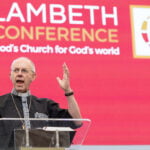
Andrew Goddard writes: On Tuesday at the Lambeth Conference there were a number of significant developments in relation to the questions of sexuality and ecclesiology. The Global South, headed by Archbishop Justin Badi of South Sudan, issued a resolution in relation to Lambeth I.10 with a covering explanatory letter. Archbishop Justin Welby also issued a letter … Continue Reading
What is the meaning of ‘transfiguration’?

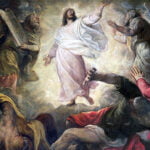
Philip Seddon writes: We are so used to speaking of ‘transfiguration’ in Christian terms that we have not realised how remarkable it is that Mark and Matthew used the Greek verb metamorphoō (in the passive: metamorphoumai) at all.  In classical Greek and Latin literature, the verb, and the noun metamorphōsis, are both slippery, ambivalent words, largely … Continue Reading
Paying attention to power in Lambeth ‘Calls’

Andrew Goddard writes: Among the Pastoral Principles for Living Well Together developed by the Church of England and commended by the Archbishop of Canterbury and the College of Bishops is “Pay Attention to Power”. Applying this to the Lambeth Calls process raises important and worrying questions. The Gestation of “Invitations”  The Lambeth Conference would, if it … Continue Reading
Does Jesus bring peace or ‘division and a sword’ in Luke 12?

The Sunday lectionary reading (Trinity 9, Year C) continues on its journey through Luke’s ‘special section’ of Jesus’ ministry and teaching on road to Jerusalem from Luke 9.51 to Luke 18.14. In this short (and again, inexplicably truncated by the lectionary) reading from Luke 12.49–56 (you might choose to read on to verse 59 to … Continue Reading
Lambeth ‘Calls’, Lambeth I.10, and the nature of the Anglican Communion (2): the future

Andrew Goddard writes: in my previous article, I explored the place of Lambeth I.10 in the Communion, mapped how different people and provinces had responded, and explored this as the background to the present controversy about the Lambeth Calls at this conference. I now turn to look at the Call on Human Dignity in detail, … Continue Reading