How should Luke 16.19­–31 shape our view of heaven and hell?

The story of the rich man and Lazarus appears on first reading to depict a detailed ‘map’ of ‘heaven’ and ‘hell’, but is this the right way to read it?

First, it is worth noting that the words ‘heaven’ and ‘hell’ themselves do not occur in the parable. The NT talks about post-mortem life in a range of ways, not all of them easy to reconcile with one another. Perhaps the most controlling one would be the idea of ‘sleep’ as used by Paul in, for example, 1 Cor 15. ‘Heaven’ in the NT mostly appears to refer to the realm of God’s presence, reign and reality, and the central NT hope is not that we will leave the earth to go to heaven, but that God’s realm will come down to the earth (see Rev 21). (See Tom Wright’s Grove booklet for the most accessible exposition of this.)

Continue Reading

Undesigned coincidences and historical reliability

Dr Tim McGrew of the Library of Historical Apologetics just posted a fascinating document in a private Facebook group of which I am a part:

Sometimes two historical records incidentally touch on the same point in a manner that would be very unlikely if one of them were copied from the other or if both were copied from a common source. For example, one account of an event may leave out a bit of information, leaving some natural question unanswered, while a different account indirectly supplies the missing detail and, in so doing, answers that question. When this happens, the best explanation is that both records are grounded in the actual historical event; that is why the two bits fit together so well.

Forgers do not want to leave loose ends like this that might raise awkward questions; they take care to tie everything together neatly. But these are just the sort of things we would expect to find in authentic records of the same real event told by different people who knew what they were talking about.

He then goes on to give some key examples from the gospels:

Continue Reading

Women and authority in ministry

I have posted this comment in response to some reflections on John Richardson’s blog. I am hoping we might have a further exchange of views based on a more detailed critique from John. You can find extracts from the booklet at these posts: Gen 1, 2 and 3, Luke 24, John 20, Acts 18, Romans 16, 1 Cor 11, 1 … Continue Reading

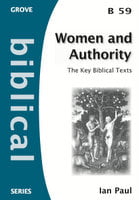
Women and Authority

My Grove booklet Women and Authority: the key biblical texts is now available (after a small printing hiccup!) from the Grove website. My final conclusion was a reflection on the process of engaging with these texts: “On a personal note, engaging again with these texts has been a challenging and transforming experience for me. I … Continue Reading
Tom Wright on Osama Bin Laden

Tom Wright has written a fascinating reflection on the killing of Osama Bin Laden, and he has given permission for me to post: Consider the following scenario. A group of IRA terrorists carry out a bombing raid in London. People are killed and wounded. The group escapes, first to Ireland, then to the United States, … Continue Reading
Preaching on narrative

Last week I had the interesting experience of preaching on Mark 14–15.15, which covers the anointing at Bethany, Judas agreeing to betray Jesus, the last supper, Gethsemane, Peter’s denial, Jesus’ trial before the Sanhedrin, and Jesus before Pilate. Whew! But I learnt a lot from the experience.

1. This is not the usual way we treat these passages—most of the time I would imagine we aim to preach on each episode in detail. That is one way to read them, but another (and probably more common) way of reading in the early centuries would have been to have heard larger pieces of narrative, and so have a better feel for the whole ‘shape.’ At St Nic’s we have been working through Mark, and

Continue Reading