Do we ignore the biblical teaching on usury?

It is often claimed that contemporary Christians ignore the biblical teaching that prohibits usury—usually interpreted to mean either lending at interest or lending at excessive interest. This is significant for three main reasons: The suggestion is then made that in other areas of ethical debate (sexuality, divorce, gender relations, the Sabbath principle, other areas of …

Continue Reading

What does it mean to call myself ‘evangelical’?

Thomas Renz writes: Labels can be powerful – and problematic. When we use a label to define ourselves, we generate expectations in others which we may or may not be willing to fulfil. In the USA the term “evangelical” has become so highly politicized that some who used to think of themselves as evangelicals have dropped …

Continue Reading

Do we ignore biblical teaching on usury?

It is often claimed that contemporary Christians ignore the biblical teaching that prohibits usury—usually interpreted to mean either lending at interest or lending at excessive interest. This is significant for three main reasons: The suggestion is then made that in other areas of ethical debate (sexuality, divorce, gender relations, the Sabbath principle, other areas of …

Continue Reading

Theological discourse and the sexuality debate

A week is a long time in politics, and it is just as long in church politics and the media coverage of it. Just three weeks after perhaps the most important gathering of the Primates of the Anglican Communion for a decade, almost everyone in the media has moved on, as if there is nothing to …

Continue Reading

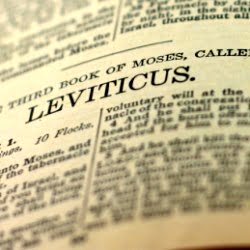
The Grammar of Leviticus 18.22

Last year, I wrote a Grove booklet on the text relating to same-sex unions; some of this material has also contributed to the resources for the ‘facilitated conversations’ in the Church of England. I posted on the blog an extract on the texts from Leviticus 18 and 22, which generated quite a bit of discussion. …

Continue Reading