How do we handle the complexities of the Bible, sexual ethics, and contemporary culture?

Sam Evans writes: Earlier this year I had the opportunity to study a module in Christian Ethics.  I was both daunted and excited. Once I’d vaguely orientated myself in the worlds of Plato, Aristotle, Kant and others, I thought I was ready to explore some contemporary issues.  Little did I realise that I would actually find … Continue Reading

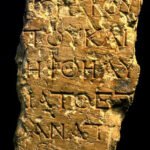
How do inscriptions help us read the New Testament?

Dr Clint Burnett is Lecturer of New Testament at Johnson University in Knoxville, Tennessee USA, and has just published Studying the NT Through Inscriptions: An Introduction (Hendrickson, 2020), and I had previously heard him present some of his research at the annual Society of Biblical Literature (SBL) conference. I asked him about his research, and why inscriptions … Continue Reading
‘Did God really say…?’ (Gen 2–3)

Richard Briggs writes: The Bible does not begin with trouble. It actually begins with a gloriously peaceful creation story, stripped of concerns with competing powers, other gods, original chaos, and the politics of ancient Israel battling its way through the nations. Hence Genesis 1: six days of divine creative work, all pretty good, as we have … Continue Reading
Celebrating the Transfiguration of Jesus

The Transfiguration is included as a Feast Day (liturgical colour: white) on August 6th in the Revised Common Lectionary, presumably as an ecumenical nod to the traditions of the Eastern churches. But it is already included on the last Sunday in Epiphany as well! Since we are reading Matthew this year, we have already read … Continue Reading
Meeting Jesus on the road to Emmaus video

The lectionary reading for the Third Sunday in Easter in Year A is Luke 24.13–35, the very well known story of Jesus drawing alongside the two disciples on their journey to the village of Emmaus. The narrative is long and detailed, but it is also wonderfully engaging, not only beautifully structured, but full of irony … Continue Reading
How do we discern ethics in the writings of Paul?

Tim Murray offers this review of Ruben Zimmermann’s The Logic of Love: Discovering Paul’s ‘implicit ethics’ through 1 Corinthians (Lexington/Fortress, 2018). Why care about this book? It seems to me that any of us who care for the state of the church and academic theology (including biblical studies) are likely regularly to find ourselves confronting important … Continue Reading
What was ordinary life like in the first century?

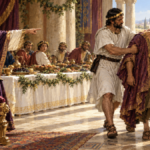
Bruce Longenecker is Professor of Christian Origins and W. W. Melton Chair of Religion at Baylor University, Waco, Texas. He has a long-standing interest in the cultural context of the early Christian movement, and has just published In Stone and Story, an exploration of the Roman world of the first century, and how Christian faith engaged with, … Continue Reading