Giving it up for God: Leviticus

I am working with Sarah Julian and Celia Kellett at BBC Radio Nottingham on an idea to present most of the books of the Bible, one a week, during 2011 as part of the celebrations of the King James Bible. The plan is to read some verses from the book, to give a one-and-a-half minute summary, to hear a human interest story which relates, and then include a short discussion making the connections.

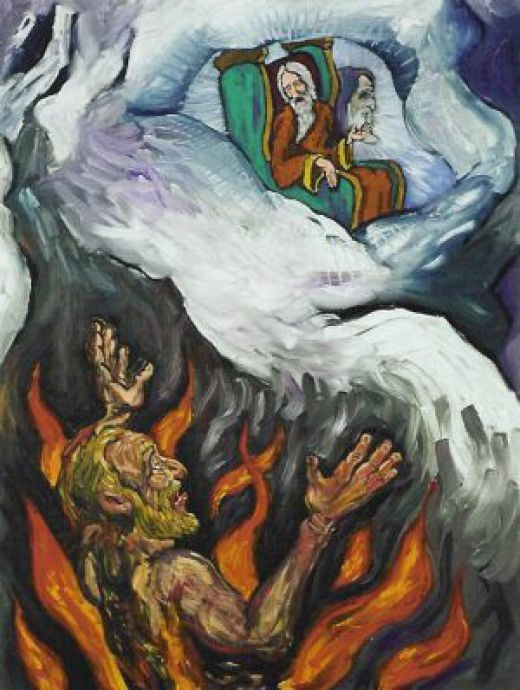
Here are the key verses and summary for the story of Leviticus (‘Giving it up for God’), to be broadcast this Sunday 6th March from around 8.20 am:

Verses: from Leviticus 19
The LORD said to Moses, “Speak to the entire assembly of Israel and say to them: ‘Be holy because I, the LORD your God, am holy.

Continue Reading

Making sense of the Derby fostering court case

What are we to make of the court case of Eunice and Owen Johns, apparently refused permission to continue fostering because they could not tell a child that they thought homosexuality was a good thing?

Simon Vibert of Wycliffe Hall thinks that a Rubicon has been crossed. This judgement signals a fundamental change in English law. In a similar vein the blogger Cranmer sees the comments from the judges on equality and secularism as making nonsense of elements of our constitution,

Continue Reading

Finding our way

Footprints in the snowIt was the end of a really good week. The snow had been great, the sun had been out, and we had had a lot of fun as a family. The bags were packed, the skis returned, and all we needed to do now was find the car.

Alas, it was parked at the bottom of the hill, quite a long distance below us vertically, and an even longer way by the typically winding Swiss mountain roads. How were we going to get there? Was there a quicker way, a sure route down?

At last, we saw it. Others had had the same challenge as us, and we could see their

Continue Reading

What’s the use of Facebook?

I am half way through watching The Social Network (with my daughter…!) and can already see why it has won awards. So far the most interesting observation is that Mark Zuckerberg aimed to replicate online the sorts of social things that people do in real life. In the film this arises from a conversation with his friend, who is wondering who is in a relationship with whom, from which Zuckerberg adds the ‘In a relationship’ feature to his programme.

So what are the kind of ‘human relating’ things that we can use Facebook for? Here are examples of how I have used Facebook in the last few weeks. What about you?

Life in the city: 1 Corinthians

Lechaion Way with Acrocorinth in backgroundI am working with Celia Kellett at BBC Radio Nottingham on an idea to present most of the books of the Bible, one a week, during 2011 as part of the celebrations of the King James Bible. The plan is to read some verses from the book, to give a one-and-a-half minute summary, to hear a human interest story which relates, and then include a short discussion making the connections.

Here are the key verses and summary for the story of 1 Corinthians (‘Life in the city’), to be broadcast this Sunday 20th Feb from around 8.20 am:

Verses: 1 Cor 13.1–4

Continue Reading

Do we need more sacrificial giving?

As we approach Lent, the subject of giving things up and discipline. At St Nic’s, where I worship, we are also exploring giving, as it is approaching our ‘Firstfruits Sunday’ where we review our planned giving to the church. In the C of E, giving is not very impressive overall; we have struggled to reach … Continue Reading

Does John 1.1 mean ‘The Word was a god’?

This is a question I quite often get asked in relation to conversations with Jehovah’s Witnesses and the New World Translation (NWT). The NWT translates the end of John 1.1 as ‘the Word as a god’ in order to avoid the identification of Jesus with the God of the Old Testament, and avoid seeing Jesus as God incarnate, part of the Trinity, as does orthodox Christian belief.

As we will see, this is an incorrect translation of the Greek text. It is quite straightforward, though sounds a little technical to explain. Here goes.

The Greek of John 1.1 is as follows, transliterated into English letters:

Continue Reading

Love Story with a difference: Ruth

I am working with Celia Kellett at BBC Radio Nottingham on an idea to present most of the books of the Bible, one a week, during 2011 as part of the celebrations of the King James Bible. The plan is to read some verses from the book, to give a one-and-a-half minute summary, to hear a human interest story which relates, and then include a short discussion making the connections.

Here are the key verses and summary for the story of Ruth (‘A love story with a difference’), to be broadcast this Sunday 11th Feb from 8.20 am:

Verses: Ruth 1.1–2, 11, 16–17

In the days when the judges ruled, there

Continue Reading

What is wrong with Common Worship?

General Synod, the Church of England’s ‘Parliament’ has voted to look at a revision of the Common Worship Baptism service. There has been debate about the difficulty of the language; can you expect non-church-goers to understand the idea of the ‘kingdom of God’ for example? But that is not the issue for me—it is much broader than that. The whole service is far too complex, and the language is fussy and, to be honest, at times pompous. The double set of triple vows simply seems unnecessary, and does not make practical sense when it is used.

But this is not the first time Common

Continue Reading

Was the text of the NT ‘unstable’ and ‘evolving’?

The BBC started their new series ‘The Beauty of Books’ looking at two epoch-making books, the Winchester Bible (from around 1100) and Codex Sinaiticus, from around 350. Sinaiticus is hugely significant, since it is the earliest complete Bible, and was the fruit of the stability for the Christian faith in the Roman Empire resulting from the Constantinian settlement. (Janet Soskice’s Sisters of Sinai about its discovery is supposed to be a ripping read.) You can view the manuscript for yourself in amazing detail at its website.

The programme highlighted what an extraordinary technical achievement its

Continue Reading

Mitre joints

Last night Louis Theroux was at his best, achieving the near-impossible of giving a balanced view on ultra-Zionists in Israel. It was particularly interesting, late on in the show, to hear Arabs in Hebron complain about Jews moving into the heart of the city, pushing the Arabs out, for the Jews to respond ‘This is just what you did! This area was Jewish until you expelled us in the 1920s!’

Continue Reading