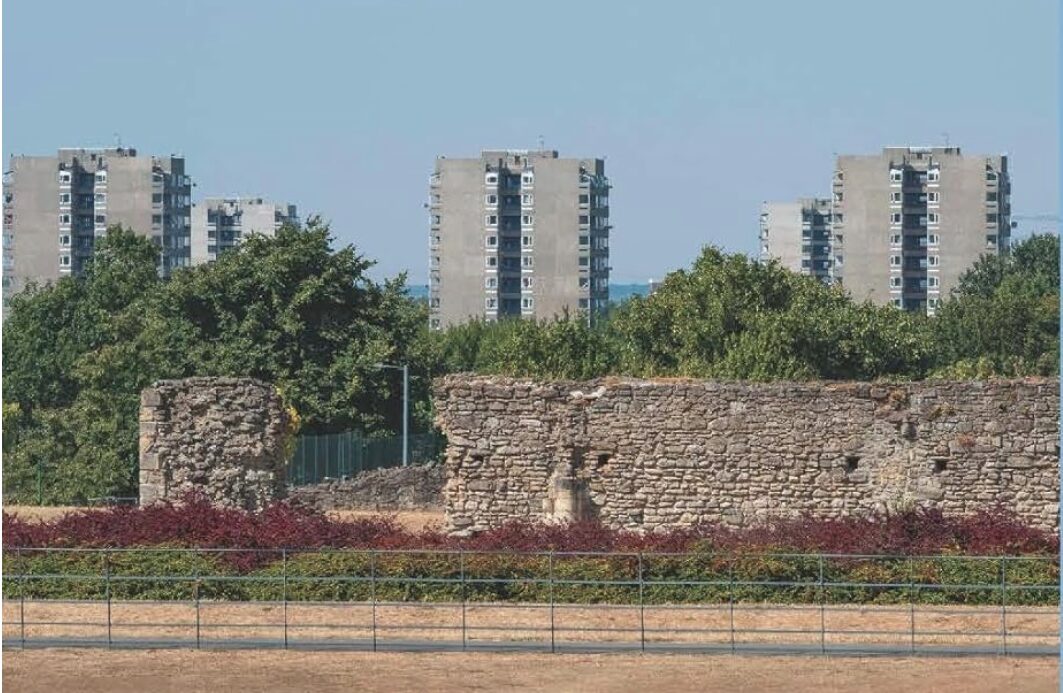
John Root offers this review of Jonathan Macy Sowing Seeds with Songs of Joy: Growing God’s Garden in Forgotten Places.
Jonathan Macy’s book began as a 13,000 word position paper for the Church of England Evangelical Council on Privilege, Class and Poverty, which he has extended into the present book looking at the response to class and poverty by, very largely, the Church of England. It is written both from his own experience as a minister on the Thamesmead estate in south-east London, but also from interviews and discussion with a wide group of clergy in a variety of contexts. To this he also brings a shrewd and creative awareness of social dynamics, a very thorough biblical understanding, and great discernment of the processes by which class and wealth differentials play out across the church.
It some ways it still has the rough-hewn characteristics of a privately circulated position paper. An editor in a major publisher would have noted the occasional repetitions and of the text jumbled by having been re-processed, but the informality of style effectively expresses the creativity and informality of the church context that it comes from.
My own primary interest is in issues of church and race—but this book’s relevance is that race and class are intimately entwined, with the bulk of Britain’s minority ethnic population sharing the issues facing all poor or working class communities, and noting the observation of Sunder Katwala included in the Sewell Report that ‘Britain is doing better on race than on class’. Macy’s sub-title on the book’s commitment to ‘growing God’s garden in forgotten places’ is, proportionately, more relevant to the ethnic minority population than to the white English population. (His shrewd comment that ‘it can be more expensive to be poor’ (p 24) is paralleled by the title of Bashy’s rap cd on Afro-Caribbean experience ‘Being Poor is Expensive’, the focus of an illuminating inter-disciplinary project organised by Robert Beckford).
In passing he also makes some points directly relevant to ethnicity:
While bishops were diverse in the sense of heritage and culture, they were politically, and in terms of class, education and parish background…pretty monochrome (p 91).
(Thus the American observation that ‘diversity groups look different and think alike’). He warns against the ‘privilege narrative being based around racial and cultural heritage’ and ignoring widespread white deprivation (p 199). He also notes the important distinction between estates with very widespread ethnic diversity and those that are very largely white English.
Features
Understanding of Society
Macy begins by looking at the context that shapes the church’s understanding rather than its faith. Maslow’s hierarchy of needs structures his essential framework. Churches flourish where people’s basic needs are already met and the church can effectively minister to the upper levels of love and belonging, esteem, and self-actualisation. But we find it hard to make headway in poorer areas where the more basic physiological (food, shelter, clothing) and safety (employment, health, resources) needs are unmet. Yet our ministry is very largely directed to the former contexts when it should be the latter that receive our energy and resources. He stresses that a particular issue in poor areas is the compounding of problems—the interaction of lack of money and employment, emotional distress and marital breakdown, poor education and job opportunities with a resultant ebbing away of a sense of hope.
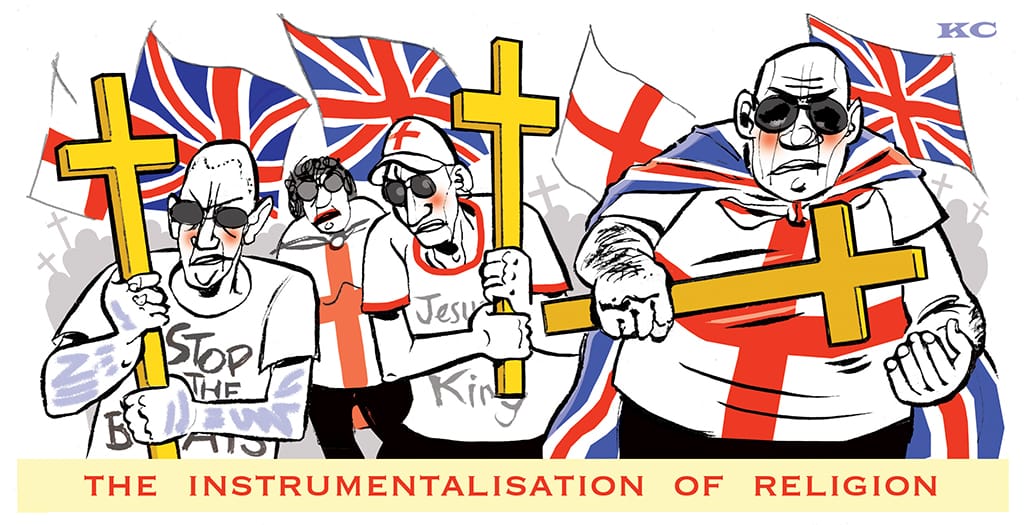 Allied to this is a running theme (frequent in my articles) of the contrast between the Somewheres and Anywheres, as exemplified in the Brexit vote and the stark disjunction between the votes of church leaders and church members. The former (those who have prospered through mobility) lead and shape our churches whilst the latter are often ignored, looked down on or even despised by church leaders. (The Church Times for 27 March included a cartoon featuring over-weight, bald headed, heavily tattooed white men in t shirts carrying ‘exclusionary’ placards. Had they portrayed militant Islamists or Black Lives Matter supporters with such crude negative stereotypes the outrage at their racism would have caused an immediate apology).
Evangelical Basis
Following the opening chapter on society there is fully referenced account of the Old Testament understanding of the poor, followed by the teaching of Jesus and the first apostles. This is continued in a chapter following the theme at various points in church history.
He is strong on the importance of both the vertical (relating to God) and the horizontal (relating to neighbours), and at times is sharply critical of liberals being weak on the former.
We must preach the full fat gospel of power and change and not vague notions of love and affirmation (p 196).
Running through the book is a strong confidence on the potential of born again people from poor backgrounds to both lead and minister in the church and to be effective servants and witnesses in their communities. The priesthood of all believers is strongly emphasised. A heart touching moment for me was his emphasis that even in situations where people are acutely conscious of their deprivation, the call to ‘count your blessings’ is an important antidote to self pity (p 70).
Local
A chapter is devoted to Macy’s ministry on Thamesmead, describing both his underlying principles and some of the stories emanating from them. Subsequent chapters give welcome but often neglected attention to the church addressing poverty in rural areas, seaside towns, and (a feature of his pre-ordination employment) people with disabilities.
I would have valued more specific, practical attention as to how churches might address the bottom two layers of Maslow’s pyramid. Food banks are often mentioned, but little on approaching the more intractable issues of lack of employment and pressure on accommodation. It would have been interesting if his already wide remit had extended more to the north of England, especially towns with strong Muslim populations.
Thoroughly grounded
The book is clearly the outcome of both thorough engagement in an estate parish and wide-ranging awareness of the current dynamics of the Church of England. He has an excellent chapter on leadership and the demands of ministering in high needs/low resources situations, such that leaders often have to create their own resources since off-the-peg materials are too characterised by the ‘anywhere’ favouring of the abstract and theoretical. Thus it is that ministers in poor areas need to develop a wide range of skills if they are to survive—he argues that they are thus more able than the leaders of large churches, who can buy in capacities they themselves lack, but who are often moved into more prestigious posts. (The book might have benefitted from a guide to the resources that are available for churches in poor areas).
‘Adaptability’ is high on Jonathan Macy’s agenda. Pre-formed clerical plans will crash to the ground. It is by absorbing the feel of a church and of its community, and by sensing, with the help of the Spirit, directions that need to be taken that will eventually lead to a church responding effectively to the opportunities and challenges that its community presents. The over-confident neglect of that humble attentiveness is the reason that evangelical initiatives in deprived areas often fail to thrive. (I am aware of one such situation in east London at present).
Issues for the Wider Church
Ministerial help
Macy is acutely aware that the minister on his own has an uphill task to simply keep the church running, given the ever-increasing administrative burdens that are to be carried. He writes appreciatively of the ‘transformative’ impact for a friend’s ministry when he was joined by a contact who helped to develop children’s and youth work, it becoming eventually a part-time post, and the growth that ensued from that. In similar vein he writes of the value of thorough links with more prosperous parishes, the benefit of a skilled musician or two greatly enhancing the church’s worship, and the possibility of administrative and financial work being done on-line from a distance.
It is this small scale incremental resourcing that he favours over the large-scale revitalisation through the importation of leaders and members from flourishing churches. He is generally critical of his evangelical constituency for lacking enthusiasm and vision for ministry in deprived areas. He mentions at a couple of places instances where people were unwilling to come to parishes because they lacked what were assumed to be essentials of administrative help, youth workers etc. He makes an interesting contrast between ‘planters’ and ‘pioneers’—the former want to create something new from outside, the latter to patiently develop from within a specific context.
Training and leadership
This leads on to a running concern through the book, the need for appropriate training patterns. He writes:
This would require a shift in belief into realising that clergy are missionaries and not some form of ecclesiastical civil servant, who sits in the community with a level of status and influence (p 186).
Central to this is raising the expectation that ministry in deprived areas is a live possibility without needing an array of resources behind you. Macy knows that reluctance of clergy to minister in difficult areas shows that something is seriously wrong and that training is often failing to equip people for the task. He speaks of the importance of apprenticeship. Having taught in a theological college I know of the problems in reshaping training to be appropriate for deprived areas. (It is no accident, I think, that all our residential colleges are set in ‘Anywhere’ communities). Perhaps Macy’s passion has not helped him to shape clear proposals. Nonetheless he is absolutely right in stressing that training must generate a sense of hope, expectancy, indeed the passion to work in deprived areas, which his book brims with and is summed up in his italicised mindset for approaching such posts:
I know what that looks like and what it demands and I know that I can do it by God’s grace.
 Conclusion
It is difficult to judge who needs this book the most: clergy, often grappling single-handedly with the manifold challenges of poorly resourced parishes, and looking for encouragement and guidance; or leaders at diocesan, training or major network levels who need to listen much more closely to the needs coming up from ground level, and shape appropriate policies that will address what has been referred to (in the 1860s!) as ‘the great problem of our time’; and which is now even more acute as regards our inability to minister effectively in order to grow ‘God’s garden in Forgotten Places’.
But of course, it needs reading by all parties for its thoughtful and original assessments and for its faith-filled trust (referring to his running theme from Luke 13:6-9) that with patient cultivation the trees will bear fruit.
 John Root was a curate in Harlesden, led an estate church plant in Hackney, and planted two Asian language congregations in Wembley, before enjoying retirement ministry in Tottenham.
This article was first published on John Root’s substack here.
 Buy me a Coffee

















Excellent review of what looks like a fascinating book. I will pass on the message!
Interesting John
I have a friend I supported who was a London City Missionary on Thamesmead for many years who went door to door all over it. Have no idea what the Church is like there now,but I know that he sowed a great deal of seed.
On the review and reaching the poorer parts of the land and the allocation of “resources”.
I wonder if Jonathan has considered that High Churchman once eschewed from the Church, Mr Wesley or Messer’s. Booth, Whitfield, Darby, Fox et al.
What were their “resources”. Why universally impactful
and transformative? What were their Methods and why was
Holiness central to their proclamations?
How different were they to the “Love is God” doctrine?
I wonder if it is time to eschew that church and “go into the Highways and byeways”outside it. Shalom.
Before we were married my wife took me along a road near The Mildmay Mission Hospital in East London [itself founded in the dead end of London] On this long road she pointed out that every other building was once a Gin Palace, today not even a Pub! and we think that we have a problem with drugs and alcohol today! Shalom.
Reading this my first thought was how it echoes themes from “Faith in the City” Church of England report the annoyed Margaret Thatcher by appearing left wing. Has much changed in 40+ years?
I love our church (I’m not the minister, one of its members). It’s in a poor coastal area and does much varied work amongst the disadvantaged. Many of them have joined teams helping with the pantry, free café and so on. Some have become paid part timers alongside many volunteers. Dozens have been baptised as adults in the last few years. Different worship services often include one or two homeless, several coming of addictions…the typical raft of issues associated with wealth inequality – alongside retired teachers and so on.
But everything costs something…we need money from richer areas! Part timers are paid a real living wage, the ‘plant’ needs maintenance….and most of the congregation are not well off for giving (even though the level of individual giving is twice the CofE average according to Cornerstone.)
Yes Dave the Jerusalem Church was greatly helped by the various churchplants in prosperous parts of the empire.
Thanks, John, for this insightful book review. It’s a long term issue (someone’s already referred to the Faith in the City report of 1985.)
My experience is that all the larger (say 300+ congregation) C of E churches I know are either gathered commuter congregations in in city/town centres or in affluent suburbs, none are in the kinds of communities this book describes. Your point that clergy from such churches are ‘often moved into more prestigious posts’ is absolutely right – they’re held up as the exemplars for some reason. ‘Pre-formed clerical plans will crash to the ground. It is by absorbing the feel of a church and of its community, and by sensing, with the help of the Spirit, directions that need to be taken that will eventually lead to a church responding effectively to the opportunities and challenges that its community presents.’ Amen. It’s parish ministry which takes the parish seriously as the place where God is already present with people – Sam Wells’ work is helpful here I think – and it takes time and patience and a willingness to learn with others what the gospel means there. A vicar who learns with others as together they discover the presence of Christ – a different approach to leadership.
Thanks again.
Being a member of the clergy in a poor area is rather like being a teacher in a state school in a poor inner city, seaside or ex industrial town. You need to have some connection with that demographic, perhaps having come from a working class background yourself without much money. You also need to have high aspirations and set clear standards, based on the teachings of Christ as a teacher expects a disciplined and well ordered classroom to follow their subject.
It also doesn’t involve treating the views of the members of the Parish as unacceptable, indeed dare I say it might even be worth having a few clergy in largely white working class Parishes who are Reform voters from working class backgrounds. Having the usual middle class Labour, LD clergy with a dash of Tory or Green and often private or grammar school or leafy suburb comprehensive or academy followed by Oxbridge or Durham might work in wealthier middle class areas. However in working class areas they don’t just want liberal intellectuals but those with a common touch who can deliver clear and charismatic sermons which they can relate to
Well it could be a case of ‘horses for courses’ which I guess was the thinking behind the unhappy Iwerne experiment. But I reckon the best of the ‘middle class’ clergy (those who are bright and imaginative) ought to be well capable of relating to people regardless of their life circumstances: their passion for people in all walks of life should be cutting right through English class trivia, releasing the Holy Spirit and witnessing amazing transformations as a result.
After all, that kind of passionate concern for the lost is the very essence of being Christ-like; surely it’s something that perspective ordinands need to have sorted out in their minds long before they’re accepted for training. On the other hand if the call of a nice vicarage with a nice study in a nice leafy suburb with nice people and potential for upward advancement in the institution remains a significant motivation, it’s time to read the New Testament – again and again until the penny drops!
In theory, in reality your final sentence is more appealing to most of them. While the rise of Reform in white working class communities is just going to increase the cultural divide of middle class liberal clergy from working class parishes, at least when they voted Labour they could tell themselves the heart of those communities was in the right place. Now having fallen for Farage their liberal heart can’t even tell them that, so they will stick to a nice parish in a middle class suburb or Oxford or Cambridge or another university town or if they want to tell themselves they are still doing Jesus work a parish with plenty of still Labour voting ethnic minorities in London or Manchester with maybe a nice chocolate box rural parish near retirement (preferably in somewhere like Surrey or Hampshire. the Cotswolds or the Lake District where Reform still aren’t very strong)
It was the nonconformists who first moved into the burgeoning new towns of the Industrial Revolution, and the Church of England lagged behind. It seems to me that the same is happening now with poverty-stricken post-industrial towns. Mez McConnell founded the ’20Schemes’ family of churches in the most deprived 20 housing schemes in Scotland, which is doing fine work for the Kingdom. I love his “if you aren’t serious about Jesus, don’t bother with us” approach, and he has also warned that, of all the volunteer Christian helpers he got, it was the middle-class ones wanting to ‘do good’ who found it toughest.
There is also the story of John Funnel, who left the financial sector in London and became a pastor in a deprived ex-mining area in South Wales. He and his wife now live in a house with no locks on the doors because, as he says, the locals know they have nothing worth stealing – just like Jesus. The church that John Funnel leads is full of young men and growing. The secret is obviously that they can tell he loves them. See him speak about it by tacking /watch?v=pLx9iIiLeBs onto YouTube’s web address.
I agree charismatic evangelicals tend to have to best success in recruiting in poorer working class areas, followed by the Roman Catholic church. Traditional Anglicans tend to be more middle class
The Methodists (especially the Primitives) were very effective in poor communities e.g. mining areas. But by the later C19 the Wesleyans were starting to become respectable and suburban, attracting the lower middle classes more than the poor. Great book by SC Williams about late C19 South London which shows the urban poor attended the high church C of E parishes run by upper middle class priests, because the local Methodist and Baptist churches were too respectable for them. The background of the clergy mattered less than their willingness to commit themselves to the people for the long term and be with them. Spurgeon’s congregation at the MT came from the suburbs more than the local area so commuter church is nothing new.
The Methodists yes are quite middle class now too. Pentecostals do well in deprived areas and maybe some of the Roman Catholic success in those areas was also reflected by high church Anglicans in the 19th century
We can of course look at the issue of ministering to deprived areas through the political lens, but that takes us down a pretty deep rabbit hole. Today’s Western politics involves the steady rolling out of new totalitarian ways of organising society based on unimaginably powerful digital technology. And in this world our politicians, whether they realise it or not, are simply the guardians in a global ‘Master, Guardian, Slave’ arrangement (the ‘Slaves’ are of course the ordinary people!). The true ‘Masters’ are unseen but wielding influence far above national politicians who are mostly unwitting purveyors of diversionary narratives to ordinary voters (whipping up war fever is one time honoured tactic!).
But whether or not people accept this discomforting picture is irrelevant. The Christian’s perspective must always be looking to God who reigns supreme, as he always has done, over the world he created, including every possible expression of evil which has occurred through history. The gospel of Christ cuts through all the evil, the diversions and deceptions, and speaks straight to the hearts of people irrespective of their circumstances. Thereafter, it is for each individual to respond as he or she chooses. There is evidence that the poor and marginalised may respond somewhat more readily than others; yet, as we’ve mentioned, the C of E seems to find it all a bit problematic or even distasteful. But there are circumstances where you have to stop over thinking things and just get on with the job; I should have thought that such a response exactly describes the call to ordination.
Often ‘Churches in Deprived Areas’ were, and still are, found in large parishes. I don’t know if it is still in use, but for many years the CofE Sheffield Formula determined the allocation of clergy to parishes. Large parishes were to get 1 per 6,000 population, small (up to 2000) 1 per 2000.
In practice many parishes with about 1000 (some even less) still got their 1, while those with 20000 or even 30000 might still only get 1. I knew more than a few 30000 strong parishes (often well up the UPA scale) but I never heard of one with 5 clergy! Does this say something about priorities & resourcing?
This whole topic is not new – I could quote quite a few earlier studies, but it might be worth mentioning somewhat lesser known studies:
Gibbs E, Urban Church Growth. Clues from Latin America and from Britain, Grove Booklet on Ministry and Worship No. 5
Haw G, Christianity and the Working Classes, London, 1906
Hollenweger W J, “Theology of the New World, III. The Religion of the Poor is not a Poor Religion, The Example of Latin American Pentecostal and African Independent Spirituality”, Expository Times
Moore R, Pit Men Preachers and Politics, Cambridge University Press, 1974
Verney S, People and Cities, Collins/Fontana, 1969
Wasdell D, The Church of the Inner City – A Paper Prepared for the BMU Home Committee, 1981
Wickham E R, Church and People in an Industrial City, Lutterworth Press, 1957
It was a great privilege to work with Jonathan on the CEEC paper and his book. One of the points we tried to get across is that deprivation not only occurs in a variety of contexts but also across the country. I have been working for over 20 years in inner-city Plymouth and it was good to add my experiences of deprivation there. Yet I have still been asked, “Is there any deprivation in Devon?” Yes, there is – rural, coastal and urban just as in any other part of the country. But as I hope also comes out, there are great blessings from gospel work in such areas. We would just love more evangelicals to respond to the opportunities and the challenges of this particular ministry. The harvest field is ripe but the labourers are few