Gospel commentary index Lectionary Year A

On this page, you can find an index to all the commentary articles on the gospel lectionary readings for the whole of Year A, together with links to the video discussions between Ian and James. The articles will be reposted with updates during the year—but they are listed here for convenience and planning ahead.
The trouble with the ‘inclusive’ Jesus
In the Synod debates on sexuality and marriage last February, I started playing ‘inclusive Jesus’ bingo. How many times would speeches protesting against our current doctrine and urging change mention that Jesus (or the gospel) was ‘inclusive’? I had to stop, since I ran out of cards because I was marking them so fast.
In reading Andrew Atherstone’s new biography of Sarah Mullally, I was taken by surprise at how consistent, especially during her time in Salisbury and as bishop of Crediton, Sarah used the term ‘inclusive’ as summarising her understanding of the gospel. And of course there is an organisation called Inclusive Church which people can sign up to.
But is the Jesus we meet in the gospels ‘inclusive’ in the way the term is used?
At one level, the obvious answer is ‘yes’, in that the teaching and actions of Jesus appear to cause scandal throughout the gospel narratives because he engages with, speaks to, and heals those whom others regard as beyond the pale. In fact, our phrase ‘beyond the pale’ is a reference to a stake, fence, or boundary marker, and this was highly significant for Jews in the first century.
Holey Exegesis: Schreiner versus Sprinkle on women and authority in Scripture

Andrew Bartlett, author of Men and Women in Christ: Fresh Light from the Biblical Texts (IVP Books, 2019) writes:
New Testament scholar Preston Sprinkle has created quite a stir with his new book, From Genesis to Junia: An Honest Search for What the Bible Really Says About Women in Leadership. Formerly ‘complementarian’, Sprinkle has changed his mind. Though he did not initially know where his study would land, after three years of intensive study of Scripture, he concludes (page 288):
The Bible says that women can teach and exercise leadership at every level in the church.
The Gospel Coalition are committed to the view which Preston Sprinkle has decided is mistaken. The day before the book’s publication, they posted a review of it. The reviewer is Tom Schreiner, who declares he’s not persuaded by Sprinkle’s argument and has said why. Sprinkle has responded.
Sprinkle’s response praises Tom Schreiner as sincere, gracious, and a top-tier scholar. Having read Schreiner’s writings, and having done a joint three-hour session with him at the Evangelical Theological Society, I agree.
I’m not going to discuss the details of Sprinkle’s response. Here is what most interests me: Schreiner’s review exposes some of the gaping holes in complementarian exegesis of Scripture.
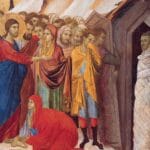
Lazarus is raised by Jesus in John 11
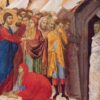
This Sunday, Lent 5 in Year A, we come to the last of our for explorations of Jesus’ encounters with individuals that formed a catechumate in the early church in her raising of Lazarus in John 11.1–45. Next week, on Palm Sunday, we will return to our gospel of the year, Matthew, in the lead in to Holy Week, Good Friday and Easter Sunday.
(The epistle is Romans 8.6–11, Paul’s exploration of the contrast between the realms of This Age and the The Age to Come, and you can watch the video discussion of that here, and it is linked at the foot of this article too.)
This remarkable extended narrative forms a turning point in the Fourth Gospel. The gospel is commonly seen as being in two halves, the so-called ‘Book of Signs’ running from the prologue until now, and the ‘Book of Glory’ which runs from chapter 12 to the end. (In a previous scholarly generation, these were understood to reflect two different [written] sources behind the final form of the gospel; but we don’t need to have this obsessed with sources to note that there is different language, a different emphasis, even a different ‘feel’ in the first half and the second half of the gospel.) The seven signs in the gospel are most commonly understood to be:
Changing water into wine at Cana in John 2:1-11 – “the first of the signs”
Healing the royal official’s son in Capernaum in John 4:46-54
Healing the paralytic at Bethesda in John 5:1-15
Feeding the 5000 in John 6:5-14
Jesus walking on water in John 6:16-24
Healing the man blind from birth in John 9:1-7
The raising of Lazarus in John 11:1-45
There is some debate here, because they are not each explicitly identified in the narrative as a ‘sign’, so some readers see the feeding of the 5,000 and the walking on the water as one, combined, sign, making Jesus’ own resurrection the seventh. However, the signs are quite clearly depicted as partial revelations which point forward to ultimate reality, and it makes more sense to see each of these seven pointing forward to the eighth, the reality of Jesus’ resurrection, which (if ‘seven’ signifies this age, with its seven days of creation and rest) depict this as the beginning of the new age to come.
The two realms of flesh and Spirit in Romans 8 video discussion
The lectionary epistle for Lent 5 in Year A is Romans 8.6–11, a slightly odd choice in cutting out verse 5, or even in missing verses 1 to 4. Paul…
What is the story of Sarah Mullally?

Andrew Atherstone has continued the tradition of being the biographer of our archbishops. He published two on Justin Welby, and has brought his proficient pen to bear on Sarah Mullally,…
Should churches look inwards or outwards?

I write a quarterly column for Preach magazine, in which I explore a significant word, phrase, or idea in the Bible, or a theme or section of Scripture, and the…
Jesus meets the man born blind in John 9
For the Mothering Sunday gospel of Jesus’ presentation in Luke 2, the written commentary is here and the video discussion is here. The epistle is 2 Cor 1.3–7, and the…
Affliction, comfort, and patient endurance in 2 Cor 1 video discussion
Lent 4 is also Mothering Sunday in the calendar, and the readings for Mothering Sunday in Year A are 2 Corinthians 1.3-7 and the dedication of Jesus in Luke 2….
Is the war in Iran the start of Armageddon?
It has been reported that US troops have been told that the war in Iran is the beginning of the final Battle of Armageddon that will lead to the return…
How do you best spend £730,000?

John Root writes: The diocese of London has been awarded a grant of £730,000 from the Church of England’s Racial Justice Unit to develop its racial justice work over a…
The woman meets Jesus by the well in John 4
The gospel lectionary reading for Lent 3 is John 4.5-42, probably the longest reading in the lectionary! The epistle is Romans 5.1–11, and you can find video discussion of that…