Great commentary on Ephesians

There is a very good, detailed survey of commentaries, published Biblical Studies Bulletin (which is sent to subscribers to the Grove Biblical series) and available online here. We did a full survey of commentaries on Ephesians some time ago in 1999, and updated it in 2004. Since then Ben Witherington has contributed a volume (on his way to writing commentaries on all the books of the New Testament) and I would strongly recommend anyone adding it to their ‘must buy’ list. It combines comment on Philemon, Colossians and Ephesians as three ‘captivity’ epistles directed at an Asian audience.

Witherington is well known for his use of ‘socio-rhetorical’ criticism, and whilst not all are persuaded of its value, I think it is a very significant approach, particularly for those interested in the application of scholarship in a ministry context. Since this approach focuses on the original impact of the forms of language we have before us, it bridges the divide between ‘historical’ and ‘literary’ approaches to text, and potentially offers a disciplined way of engaging with the formational power of the text.

Was the text of the NT ‘unstable’ and ‘evolving’?

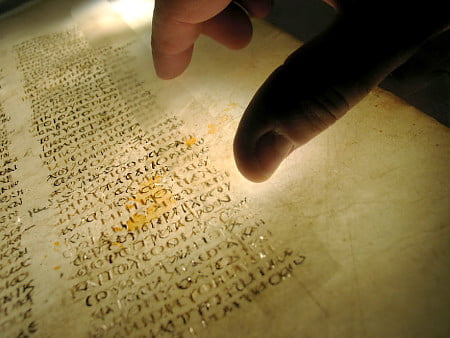
The BBC started their new series ‘The Beauty of Books’ looking at two epoch-making books, the Winchester Bible (from around 1100) and Codex Sinaiticus, from around 350. Sinaiticus is hugely significant, since it is the earliest complete Bible, and was the fruit of the stability for the Christian faith in the Roman Empire resulting from the Constantinian settlement. (Janet Soskice’s Sisters of Sinai about its discovery is supposed to be a ripping read.) You can view the manuscript for yourself in amazing detail at its website.

The programme highlighted what an extraordinary technical achievement its

Continue Reading