The historic reading of 1 Tim 2

The debate about the rather challenging verses in Paul’s first letter to Timothy continues to surface at regular intervals, and it is often characterised as being between those who maintain the ‘historic’ understanding of these verses, so requiring women not to teach or have authority in church, and those who want to offer an ‘innovative’ … Continue Reading

Was Jesus funny?

For some time, I have been intrigued by the question of whether Jesus was funny. In his teaching, did he tell what we might call jokes, and did his listeners find themselves laughing when they listened to him? There are many prima facie reasons why we might suppose Jesus was funny. If Jesus was fully human—indeed, … Continue Reading

Tyndale NT Study Group 27–29 June 2018: the Gospel of John

We have a really interesting line-up of papers for the NT Study Group this year focussing on the Gospel of John. Do come and join us to engage in some world-class scholarship! The Tyndale New Testament Study Group is part of the Tyndale Fellowship for biblical and theological research, based at Tyndale House in Cambridge, and including evangelical scholars … Continue Reading

What did Jesus really look like?

I have written previously about whether Jesus had a beard, and three years ago commented on the discussion by Joan Taylor (of King’s College, London) about what Jesus looked like. Joan has now produced a terrific book drawing together her research, and the book takes us an intriguing journey into how people thought about Jesus. The … Continue Reading

Reading Scripture with our past, with others and with God

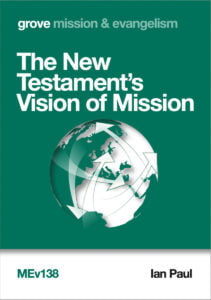
My latest Grove booklet is on How to Interpret the Bible. After exploring the four questions of genre (kind of writing), (historical) context, content and canon, I offer the following conclusion. You might by now be wondering ‘What happened to simple, believing reading of the Bible that I was taught to do when I first came … Continue Reading
How to interpret the Bible

Many ordinary readers of the Bible feel very nervous when interpretation is mentioned. For some, ‘interpretation’ means ‘making the Bible mean what it doesn’t say.’ For others, it becomes the realm of experts who are schooled in complex issues of language and philosophy and threatens to remove the possibility of reading for themselves. They are … Continue Reading