Loser! The Art of the Insult

Mike Starkey writes: During the 2018 Centennial of World War I, Donald Trump was scheduled to visit the Aisle-Marne American Cemetery in France. The relentless rain made helicopter travel to the Cemetery impossible, but aides informed the President he could be driven instead. Trump’s response, according to accounts from a senior Defence Department official, was that he didn’t want to visit the cemetery, as it was ‘filled with losers’.

On the same trip, Trump reportedly said the 1,800 US marines killed in the World War I Battle of Belleau Wood were ‘suckers’ for being killed. When reports of Trump’s dismissive language about dead American service personnel appeared in the Atlantic magazine, a media storm erupted. Trump denied the reports, but in 2023 his former Chief of Staff John Kelly confirmed that Trump had, in fact, used both slurs on the French trip. 

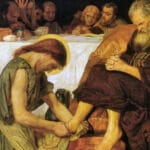
What is beyond doubt is that the language of losers and winners has long been Trump’s characteristic benchmark for evaluating humanity, the trumpian equivalent of Jesus’s sheep and goats. In interviews, social media posts and rally speeches, loser has been his insult of choice.


Resetting LLF: Whose unity? Which doctrine?

Andrew Goddard writes: A new article by the Lead Bishop for LLF, Martyn Snow, offers some promising signals as to how the LLF “reset” is progressing, particularly in relation to the importance of doctrine and its relationship to the form of our unity, but it also leaves major questions unanswered. The following article explores six … Continue Reading

What is the place of charismatic theology after Mike Pilavachi?

Christopher Landau writes: These are testing times for anyone even loosely connected with charismatic life within, or adjacent to, the Church of England. To discover that a figure whose ministry was widely celebrated ‘used his spiritual authority to control people and that his coercive and controlling behaviour led to inappropriate relationships, the physical wrestling of … Continue Reading

The politics of the cross

Elaine Storkey writes: As we reflect on the significance of the Cross this Easter, in the forceful political atmosphere of our times, its own political dimension hits us afresh. Like each of us, Jesus was born into a political context; he lived and died experiencing its pressures, posturing, and power-mongering.  Politics is wrapped up in the … Continue Reading