How John the Baptist points us to Jesus in John 1
For the Second Sunday of Epiphany in Year A, the readings are 1 Corinthians 1.1–9 and John 1.29–42. You can find the video discussion of the epistle here and posted at the end of the article, and the video discussion of the gospel reading here and also posted below. Here is my written commentary on John 1.
One of my favourite films of recent years is Arrival. It begins with a prologue which appears to be quite distinct from the rest of the narrative, but it is only once you have seen the whole film that you understand what the prologue was actually telling you. The phrases, ideas and narrative in the prologue only make sense with the benefit of hindsight, and when you watch it a second time you keep saying ‘Ah, now I understand why that was included!’
The beginning of John’s gospel functions in the same kind of way. This Sunday’s lectionary reading for Epiphany 2 in Year A continues the seasonal theme of the manifestation of Jesus, often in veiled and allusive ways, in the gospel reading from John 1.29–42. The passage is full of suggestions, anticipations and allusions which only gain their full meaning in the complete narrative of the gospel.
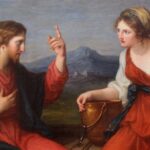
Time is an important theme in the Fourth Gospel, and shares with many other aspects of the narrative a double meaning, both literal and symbolic. Thus Nicodemus comes to Jesus in the evening in chapter 3, and his spiritual sight is dim, whilst the woman at the well in chapter 4 comes at noon, and she can see perfectly clearly who Jesus is. The timing of the last meal with the disciples means that Jesus is sacrificed at the time of the Passover lambs, and Judas leaves the meal ‘at night’ (13.30) in the darkness of his rejection and betrayal of Jesus. In this episode, it is the ‘next day’ from the interrogation by the Jerusalem party in the previous verses—but counting the days on makes the miracle at Cana occur on the seventh day in the gospel’s counting (‘next day’ John 1.35, ‘the next day’ John 1.43, ‘on the third day’ John 2.1), a day of rest and feasting when the glory of Jesus is first revealed. This is the beginning of a new creation (compare 2 Cor 5.17).