Is it time to scrap the ‘curacy’?
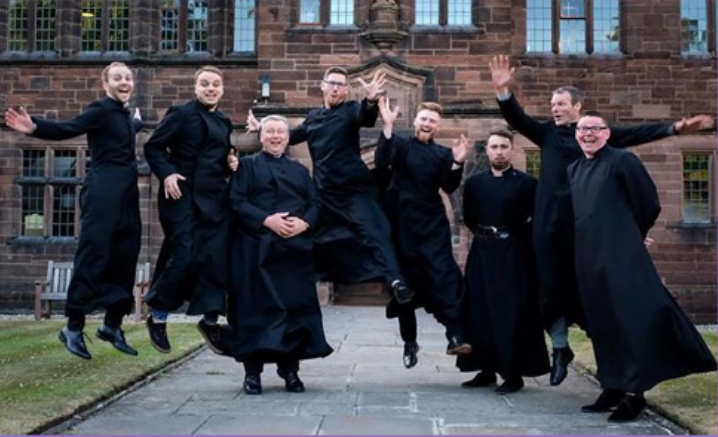
For many years (how many?) the Church of England has had a standard pattern for ordination training, that starts with two or three years residential (or now, three years part-time course-based or two or three years contextual training), followed by a three- or four-year curacy. This is so standard that initial training is always considered …

Continue Reading

What state is the Church of England in?

The Church of England statistics department released its Statistics for Mission report last week, quite a bit earlier than last year, and it is was not good news—though curiously there was almost no comment on it on the airwaves, in contrast to last year. We will be discussing this at the next meeting of the …

Continue Reading

Should clergy count their days and hours?

A few days ago, Donald Allister, Bishop of Peterborough, wrote to his clergy and talked about self-management in relation to time keeping and time off. It has garnered some interesting reactions. This is the extract in question: Clergy Care In a number of dioceses, bishops have started instructing clergy to take two consecutive days off …

Continue Reading

Finding hope amongst grief and sadness

John Bentham was Coordinating Chaplain at the University of Nottingham at the time of his sudden and tragic death on 6th August from a pulmonary embolism. John was well known and much loved in the Diocese of Southwell and Nottingham, having trained at St John’s College, Nottingham, been vicar of St Saviour’s in the Meadows …

Continue Reading

What can Christians say about Britain and Europe?

The question of Britain’s relationship with the EU is rapidly becoming the most pressing question of our time—and perhaps the most pressing question for our national life for several generations, certainly since the end of the Second World War. Yet Christian leaders seem to fall into one of two traps—either saying something partisan which alienates …

Continue Reading

Where can worship leaders find wisdom for their leading?

John Leach writes: The role of the ‘worship leader’ and the ‘worship band’ are relatively new on the church scene, coming into mainstream denominations with the rise of charismatic renewal from the 1960s. Before that a worship leader, at least in Anglican circles, was the minister (often but not exclusively ordained) who led the congregation …

Continue Reading

Should Christians become vegetarians?

On 3rd January 2019, a new product hit the British high street. It sold out almost immediately, precipitating a nationwide launch and extensive media attention. The company was bakery giant, Greggs, and the product was the vegan sausage roll. Within weeks, Greggs’ sales had increased by almost ten percent, and annual sales broke through the …

Continue Reading

Third Festival of Theology: Tuesday 8th October 2019

Following the success of our first two Festivals of Theology last year, I will be hosting a third Festival of Theology on Tuesday 8th October 2019, once again at Christ Church, Chilwell. Come and listen to great speakers address some vital questions for Christian living, mission and discipleship in TED-style talks, with the opportunity to …

Continue Reading

Is there no hope without children?

Will Jones, who has contributed to this blog in guest posts as well as comments, wrote an interesting and challenging piece on the political website Conservative Woman. The website describes its values as being “unashamedly those of faith, married family and nation-state”, though it actually dissociates itself from a direct link with the Conservative party. It …

Continue Reading

Should cathedrals be used as playgrounds?

Another unusual use of a cathedral—another slew of ‘Disgusted, Tunbridge Wells’ letters to the press. That, at least, is how it often feels. The latest episode of this is the conversion of the nave of Rochester Cathedral to be used as a crazy golf course, with each hole featuring a bridge to be crossed, for …

Continue Reading

What is the best size for a church?

One of the fringe meetings at July’s session of the General Synod focussed on the needs of ‘mid-sized churches’, in this case defined as worshipping communities of 20 to 60. The reason for this was a question that William Nye, Secretary General of Synod and the Archbishops’ Council, had raised: Without meaning to, a lot …

Continue Reading