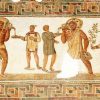
What was slavery like in the NT world?

The latest Grove Biblical booklet is on Slavery in the New Testament and is by Caryn Reeder, Professor of New Testament at Westmont College, Santa Barbara. It offers a really helpful exploration of the phenomenon of slavery in the New Testament world, and highlights the importance of our understanding since the mention of slavery, both literal and … Continue Reading
Can we read of the Unjust Steward in Luke 16 with irony?

Andrew Talbert writes: Perhaps the oddest of parables of Jesus (at least in its interpretation), is that of the unjust steward (Luke 16:1–13). Commentators and pastors alike squirm through this parable with virtually the same conclusion: Jesus teaches that there are select occasions in which one can be dishonest with money. Not only does this … Continue Reading
What is ‘the Word of God’?

I have started writing a column for Preach magazine, in which I explore a significant word or phrase in the Bible and the ideas that it expresses. The first one was on the phrase ‘Word of God’. Despite the fact that many churches use this phrase with reference to the reading of Scripture, its meaning … Continue Reading
What does John 17 say about unity?

If I was given sixpence every time I heard someone quoted John 17.21 ‘…that they might be one…’ then I’d have a lot of change that I wouldn’t know what to do with. It is commonly suggested that, in this, Jesus’ ‘high priestly prayer’, we see his last desire expressed to his heavenly Father, and … Continue Reading
The costly grace of Jesus in Luke 14

In the gospel reading for Trinity 12 in Year C, we complete our navigation through this section of Jesus’ intermingled teaching and action until we hit the landfall of the ‘parables of the lost’ next week in Luke 15. The double focus on the crowds and discipleship, the drawing together of teaching found in different … Continue Reading
The Politics of the Table in Luke 14

The lectionary gospel reading for Trinity  11 in Year C, Luke 14.1, 7–14, continues to engage with material that is unique to Luke, arranged in Luke’s distinctive order, and bridging the worlds of the original context of Jesus and Judaism and Luke’s context in wider Roman culture. The passage comes in a sequence of episodes … Continue Reading
Will we be male and female in the resurrection?

In recent debates about the meaning of marriage, one area of speculation has been whether our differentiated sex identity as male and female (this is biological sex identity, not ‘gender’ as it is often called, which, properly understood, is about social constructions of masculine and feminine identity) will persist into the new creation. Two people … Continue Reading